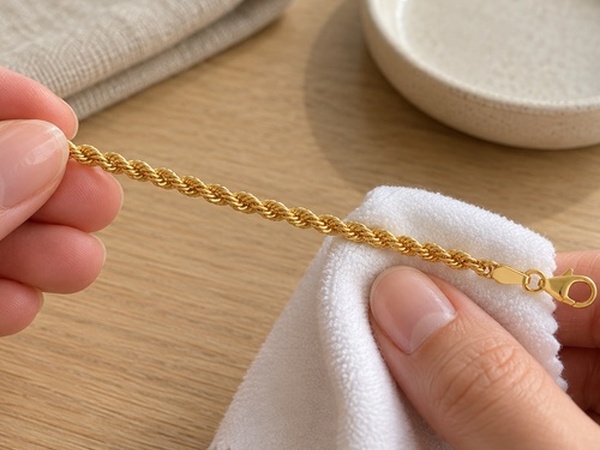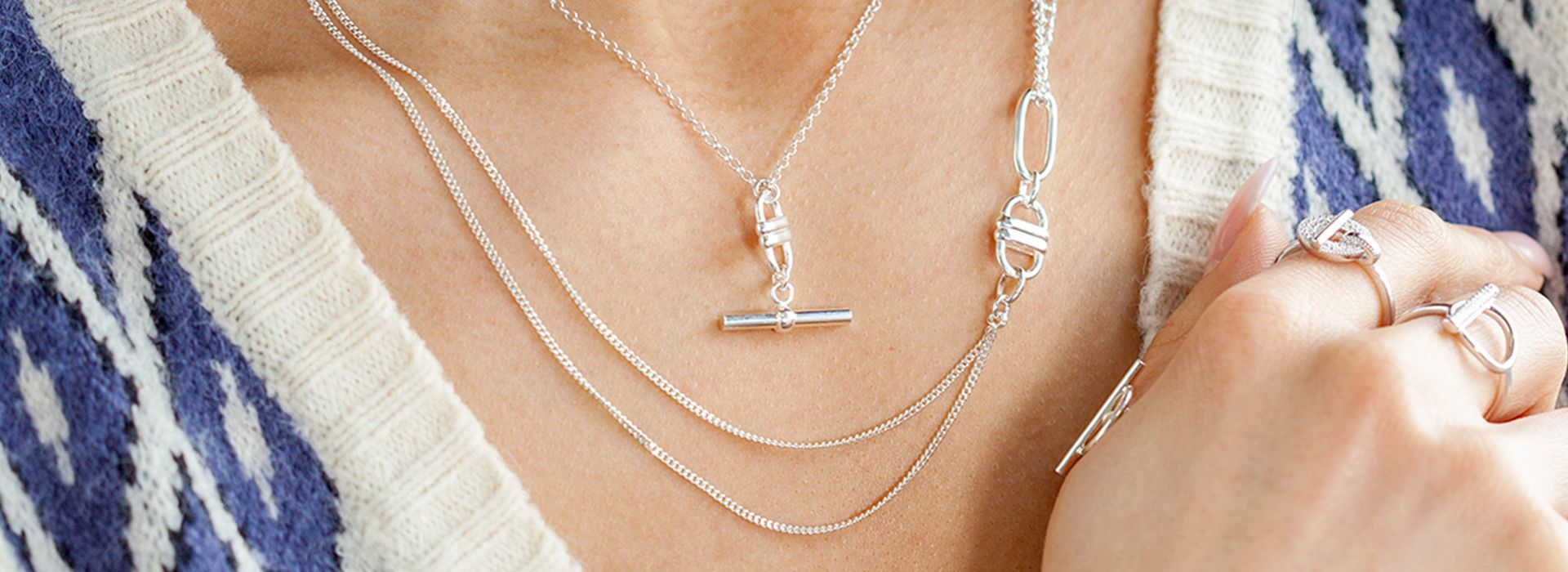
Delicate, dainty, and sometimes adorned with a precious pendant, a chain can quickly become tangled when stored with other jewelry or carried in a pouch. When you encounter a knot, your first instinct might be to pull on the ends. However, this can cause the knot to tighten further, twist the links, or even break the chain.
To untangle a chain without damaging it, sit on a stable surface, open the clasp, and proceed carefully. Depending on the situation, a few drops of oil, a little talcum powder, or two fine needles may help you gradually loosen the knot.
In summary: the right steps to untangle a chain
-
Open the clasp before you begin.
-
Lay the chain flat on a clean, stable surface.
-
Identify the knot without pulling on the ends.
-
Start by gently working it with your fingers.
-
Use a few drops of oil or a little talcum powder if the knot is tight.
-
Use only two thin needles to gradually pry the links apart.
-
Clean and then dry the chain thoroughly after using oil or talcum powder.
-
Take the piece of jewelry to a professional if the chain is very thin, made of precious metal, or fragile.
Why does a chain get tangled?
Thin chains are particularly prone to tangling. Their small links can easily become entangled and then tighten as a result of movement and friction.
Several factors contribute to the formation of knots:
-
several necklaces are stored together;
-
the clasps remain open and catch on the other links;
-
the chains move freely inside a pouch or bag;
-
A pendant pulls on the chain and causes it to coil;
-
chains of different lengths intersect;
-
The piece of jewelry is placed on the finger without being fastened;
-
The chain is transported without a pouch or individual compartment.
A small loop can turn into a tight knot when the chain is moved or handled. To prevent it from tightening further, it's best to take action as soon as you notice it.
How do you prepare a chain before untangling it?
Before trying any of the suggested methods, set up your workspace. This first step will allow you to see the knot more clearly and handle the piece of jewelry with greater precision.
Choose a clean, stable surface
Place the chain on a perfectly flat table or tray. A light-colored surface makes it easier to see the links, especially if the piece of jewelry is delicate.
You can also place the chain on a smooth piece of fabric or a sheet of paper. However, avoid thick or fuzzy materials, as the links could get caught in them.
Ensure there is sufficient lighting
Find a well-lit room. For a small knot or a very thin chain, a magnifying glass may come in handy. The zoom feature on a smartphone camera can also help you get a better look at how the links are intertwined.
Open the clasp
Opening the clasp frees the ends of the chain and allows the links to move more easily. This step is especially important when several necklaces are tangled together.
Also check to make sure the clasp hasn't gotten caught in the knot or around another chain.
Identify the loosest part
Examine the knot before handling it. Look for a small loop or a spot where the strands seem less compressed.
Always start with this area rather than pulling on the ends of the chain. The goal is to gradually loosen the knot before releasing the links.
|
Location |
Preferred Method |
Essential Precaution |
|
Lightweight node |
Flat Chain and Finger Manipulation |
Do not pull on the ends |
|
Tight knot |
A few drops of oil or a little talcum powder |
Clean the jewelry after use |
|
A small, precise knot |
Two thin needles |
Gradually spread the links apart |
|
Very thin chain |
Light-colored surface, magnifying glass, and fine needles |
Never force it |
|
Several tangled strands |
Open all the clasps and separate the chains one by one |
Do not pull on the assembly |
|
Necklace with pendant |
Secure the pendant before tying the knot |
Avoid twisting the eye |
|
A precious or fragile piece of jewelry |
A Jeweler's Presentation |
Stop as soon as you feel resistance |
How do you untangle a chain using oil?
Oil can help the links slide more easily against each other. This method is suitable for a tight knot on a single chain that is in good condition.
Lay the chain flat, then apply a very small amount of neutral oil to the center of the knot. A few drops are enough—there’s no need to soak the entire piece of jewelry.
Next, gently roll the knot between your fingers to distribute the oil and loosen the links. When a small opening appears, gradually widen it with your fingers or using two thin needles.
Once the knot has been untied, carefully clean the chain to remove all traces of grease. Depending on the jewelry’s composition, lukewarm, slightly soapy water may be suitable. Then rinse it gently and dry it thoroughly with a soft cloth.
Do not use this method without taking precautions when the string contains:
-
beads;
-
a porous or brittle stone;
-
a glued component;
-
an antique pendant;
-
a special finish;
-
a material whose strength you do not know.
In these situations, it's best to ask a jeweler for advice before applying any product to the jewelry.
How do you untangle a chain using talcum powder?
Talcum powder is another option for making the links slide more easily. Its texture can reduce friction inside the knot and help loosen it.
Sprinkle a small amount of talcum powder directly onto the tangled area. Then work the knot between your fingers, without squeezing or pulling on the chain.
When the links start to move, find the most accessible loop and gently loosen it. You can finish untangling it by hand or use two needles if part of the knot is still hard to reach.
After separating the links, carefully remove the talcum powder. Rinse the chain if its material and any stones allow it, then dry it with a soft cloth.
Be sure not to leave any powder in the clasp, under a pendant, or between tightly spaced links.
How do you untangle a chain with needles?
Two thin needles can help when working on a very small knot, when your fingers aren't enough to separate the loops.
Choose needles that are clean, smooth, and in good condition. A damaged needle or one with a rough surface could scratch the jewelry or get caught in the stitches.
Gently insert the tip of each needle into an opening in the knot. Then, very gradually pull them apart in opposite directions to enlarge the central loop.
Use gentle circular motions rather than pulling sharply. As soon as the knot begins to loosen, continue working with your fingers to untie the remaining loops.
You can replace the needles with thin safety pins, as long as their tips are perfectly smooth. Avoid using thick or sharp tools that could distort the chain.
This method requires patience. If the links don't move or start to twist, stop and take the piece of jewelry to a professional.
How do you untangle several chains that are tangled together?
When several necklaces are tangled together, trying to untangle them all at once may create new knots. It’s best to proceed methodically, one necklace at a time.
Start by opening all the clasps. Then lay out the jewelry on a surface large enough for you to distinguish their lengths, pendants, and different types of links.
Identify the ends of each strand, then look for the loosest knot. Untangling one strand first will create more space for the others and gradually make it easier to untangle them all.
To help you find your way around:
-
Space the pendants apart;
-
Place the chains in different directions;
-
Start with the widest loops;
-
Loosen the ends before working on the center;
-
Apply oil or talcum powder only to the affected area;
-
Never pull on more than one chain at a time.
When a chain is removed, set it aside immediately and close its clasp. This will prevent it from getting tangled with other jewelry again while you are handling it.
How do you untangle a very thin chain without breaking it?
A very fine chain requires more patience and precision. Its links can become misshapen or break even when subjected to only slight tension.
Sit down on a light-colored, perfectly flat, and well-lit surface. A magnifying glass or the zoom feature on a smartphone can help you see which way the knot is facing before you handle it.
Start by gently wiggling the knot with your fingertips. If the links are still stuck, use two very fine needles to create a small opening, without applying pressure to the chain.
Avoid holding the jewelry by its ends while you're working on the knot. Instead, hold the part right next to the tangled area so you don't put tension on the entire chain.
If the knot is tight, if a link appears flattened, or if the chain has significant financial or sentimental value, do not proceed. A jeweler has the proper tools to handle the situation with precision.
How do you untangle a chain with a pendant?
A pendant can weigh down the chain, get caught inside a knot, or cause the links to jam around its bail.
Before you begin, lay the pendant flat and hold it in place with one finger. Check whether the knot is located directly on the chain or whether it wraps around the bail—that is, the ring that connects the pendant to the necklace.
If the pendant is simply caught in a loop, gradually widen the loop until you can slide it through. Do not pull on the pendant to free it: you risk deforming its bail or weakening the chain.
If the jewelry is set with gemstones, adorned with pearls, or made of multiple materials, avoid using oil or talcum powder without first checking to see if they are compatible.
A heavy pendant should also be handled with care. Its weight can increase the strain on the thinnest links.
What should you do if the knot is near the clasp?
A knot located near the clasp may be more difficult to work with, because the various parts of the clasp restrict the movement of the links.
Open the clasp if possible, then lay it flat. Make sure the ring, extension chain, or carabiner hasn't slipped through the knot.
Use your fingers or two thin needles to create some space around the clasp. Don't try to force it through a loop that's too tight.
Take this opportunity to check its condition. If the clasp is bent, difficult to open, or partially detached, it’s best to take the chain to a jeweler. A weakened clasp could come undone while you’re wearing the necklace.
What mistakes should you avoid to prevent damage to the chain?
Dealing with a tangled chain requires patience above all else. Moving too quickly can tighten the knot or permanently damage the links.
Things to Avoid
-
Pull firmly on both ends.
-
Try to untie the knot while holding the chain up in the air.
-
Use a serrated metal clamp.
-
Scrape the links with a sharp object.
-
Using a rusty, damaged, or overly thick needle.
-
Heat the piece of jewelry to try to soften the metal.
-
Apply nail polish remover or a household cleaner.
-
Use a generous amount of oil.
-
Force it when a link won't move.
-
Handle a beaded or antique necklace roughly.
-
Forgetting to clean the jewelry after using oil or talcum powder.
-
Store the chain before it is completely dry.
Excessive tension can stretch or deform certain links even before the chain breaks. If you notice any change in their shape, stop using the chain immediately.
How do you clean the chain after untangling it?
After using oil or talcum powder, the chain must be cleaned to prevent residue from remaining between the links or around the clasp.
If the jewelry material allows it, prepare a container with lukewarm water and a small amount of mild soap. Gently run the chain through the water, taking care not to let it soak for too long.
Then rinse it with clean water over a bowl or sink with the drain plugged. Pat it dry with a soft cloth, then let it dry completely while lying flat.
The cleaning method must always be appropriate:
-
the metal of the chain;
-
in case he tackles him;
-
the presence of stones;
-
on the pendant;
-
to the glued parts;
-
the overall condition of the jewelry.
A gold-plated chain, a pearl necklace, or a piece of antique jewelry may require special care. If in doubt, use only a soft cloth or ask a professional for advice.
When should you take a tangled chain to a jeweler?
Home remedies work for many small knots, but some chains are too delicate to handle without a professional tool.
It is best to seek the help of a jeweler when:
-
the knot is extremely tight;
-
the chain is very thin;
-
the links are starting to warp;
-
the jewelry is made of gold or is of significant value;
-
the pendant is stuck in the knot;
-
there is a stone or a pearl nearby;
-
the clasp is worn;
-
The chain is old;
-
The piece of jewelry has great sentimental value;
-
Several gentle attempts failed to untie the knot.
A professional will be able to inspect the chain, untie the knot using the appropriate tools, and check that the links have not been weakened.
If the chain is already broken, bent, or damaged, MATY's maintenance and repair services can advise you on the options available depending on the model.
How can you keep the chains from getting tangled?
Once the chain has been untangled, a few simple habits can help prevent new knots from forming.
Close the clasp before storing
A closed chain forms a loop that is easier to store and less likely to snag on other jewelry. This also prevents the clasp from slipping between the links.
Store each chain separately
Ideally, each necklace should have its own compartment, pouch, or hook.
Jewelry boxes with compartments allow you to separate necklaces, bracelets, and pendants while protecting them from dust and friction.
Hanging the necklaces
A vertical display stand keeps the chains spread out. Be sure, however, to space the hooks far enough apart to prevent the pendants and links from getting tangled.
Secure the pendant
If a pendant is heavy, place it flat in its compartment, making sure the chain is properly spread out around it.
Avoid mixing several necklaces with pendants in the same pouch.
Protecting Chains While Traveling
To transport your jewelry, use an individual pouch, a small jewelry box, or a travel case with compartments.
You can also close the chain and then thread a section of it through a small, clean straw before closing the clasp. This method limits the chain's movement during transport, as long as you don't pull too hard on the links.
Never leave several loose chains at the bottom of a pencil case or bag.
Our necklaces and chains
Whether it's a delicate chain, a necklace with a pendant, or a bolder link style: discover MATY's designs in gold, silver, gold-plated, or stainless steel.
To keep your new piece of jewelry in good condition, be sure to close the clasp and store it separately after wearing it. A suitable jewelry box or display stand will protect the links while keeping your necklaces within easy reach.
FAQ: Untangling a Chain
How can you easily untangle a chain?
Open the clasp, place it on a light-colored surface, and start by loosening the knot with your fingers. If it’s stuck, a few drops of oil, a little talcum powder, or two thin needles can help the links slide apart.
How do you untangle a very thin chain?
Work on a flat, well-lit surface without pulling on the ends. Use two fine needles to gradually spread the links apart. If the chain seems fragile or begins to lose its shape, take it to a jeweler.
How do you untangle several tangled necklaces?
Open all the clasps, identify the ends, and separate the necklaces one by one. Start with the loosest knots, and set each chain aside as soon as it is untangled.
Can you use talcum powder to untangle a chain?
Yes, a small amount of talcum powder can reduce friction and help the links slide. The jewelry should then be thoroughly cleaned and dried.
Can you use oil to untangle a necklace?
A few drops of neutral oil can help loosen a knot in a simple chain. This method should be avoided or adapted if the necklace contains beads, fragile stones, glued components, or a special finish.
What should you do if a chain's knot is too tight?
Avoid pulling on it. Use a gentle method with oil or talcum powder, then try to loosen the knot with two thin needles. If the links won't budge, ask a jeweler for help.
How do you untangle a gold chain without breaking it?
Lay it flat, open the clasp, and work on the knot without pulling on it. Use fine, perfectly smooth tools. A very fine, antique, or valuable gold chain should be taken to a professional if the knot won’t come undone.
How can you keep the chains from getting tangled?
Close the clasps and store each chain separately in a compartment, a pouch, or on a display stand. When traveling, use a suitable jewelry box and avoid placing several loose necklaces in the same pouch.
When should you take a tangled chain to a jeweler?
Consult a jeweler if the knot is very tight, if the chain is thin or valuable, if the links are twisted, if the clasp is damaged, or if a pendant is stuck.
Our necklaces and chains

Gold-plated horse chain 50 cm
75€

925 silver singapore chain with polished balls 45 cm
39€

Gold-plated zirconia anklet 25 cm
69,30 99€ (30)

45cm solitaire silver necklace with closed-set zirconia stones
€36 €45 (-20%)

Necklace gold-plated steel orange aventurines 45,5 cm
27,50 55€ (50)

Necklace silver 925 zirconia 45 cm
35€

Necklace silver 925 and zirconias 45cm
48,80 115€ (58)

925 silver chain with curb chain 45 cm
79€

Silver 925 butterfly amber necklace 42 cm
€100 €200 (-50%)

925 Silver Necklace with Treated Blue Topaz, 45 cm
42,50 85€ (50)

375 yellow gold chain with curb chain 40cm
139€

Gold-plated necklace synthetic blue stones and zirconias 45cm
108,30 255€ (58)

Gold-plated horse chain 45 cm
69€

Necklace silver 925 amethyst 45cm
29,50 59€ (50)

925 silver necklace intertwined hearts zirconias white red and green 44.5 cm
39,50 79€ (50)