Does you have a ring that’s lost its luster, a chain that’s turned black, or a bracelet that’s lost its shine? Tarnishing is a common occurrence with silver jewelry. It doesn’t necessarily mean the piece is of poor quality or beyond repair: with the right method, it’s usually possible to restore its shine.
Soapy water, a special silver-cleaning cloth, baking soda… However, not all cleaning methods are suitable for all types of jewelry. In particular, jewelry featuring gemstones, pearls, surface treatments, or attached elements requires extra care.
Find out how to clean your silver jewelry without damaging it, which tips to follow, and when it's best to seek advice from a jeweler.
In summary
-
For routine cleaning, start by using lukewarm water, mild soap, and a soft cloth.
-
Always check to see if the piece of jewelry has gemstones, pearls, glued elements, or a special finish.
-
A cloth or a product specifically designed for silver is better than improvised household products.
-
Baking soda and aluminum should be used only on simple solid silver jewelry without stones or decorative patina.
-
Avoid abrasive products and scrubbing too hard.
-
If there is a scratch, a loose stone, or if you have any doubts about the composition of the jewelry, take it to a professional.
Why does silver jewelry turn black?
Over time, silver jewelry can lose its luster, turn gray, or develop areas that are almost black. This natural phenomenon is generally referred to as tarnishing or, in everyday language, oxidation.
In fact, silver reacts primarily with sulfur compounds present in small amounts in the air and in our environment. This reaction forms a thin layer of silver sulfide on the surface of the jewelry, which gradually darkens in color.
Moisture, sweat, pollution, certain cosmetics, and cleaning products can accelerate this process. Chlorine, sea air, or contact with certain sulfur-containing substances can also contribute to dullness.
925 silver jewelry is made of at least 92.5% silver, combined with other metals to make it more durable. These alloy metals, often copper-based, can also react with the environment and contribute to changes in the jewelry’s appearance.
This discoloration is generally superficial and reversible. Proper care can remove the tarnished layer without compromising the quality of the jewelry.
What precautions should you take before cleaning a piece of silver jewelry?
Before you begin, take a close look at your piece of jewelry. A simple 925 silver chain isn’t necessarily cleaned the same way as a gemstone ring, a piece of antique jewelry, or pearl earrings.
Identify the composition of the piece of jewelry
Whenever possible, check the following:
-
whether it is sterling silver, 925 silver, or a silver-plated metal;
-
if the jewelry is rhodium-plated, patinated, blackened, or intentionally aged;
-
if it contains stones, pearls, or glued elements;
-
if any parts appear fragile, warped, or loose;
-
if the clasp and prongs are in good condition.
A cleaning method that is too abrasive can scratch the silver or damage a thin layer of precious metal. Similarly, cleaning intended to remove tarnish can also remove a black patina that was intentionally applied to highlight the jewelry’s relief details.
Check the condition of the gemstones and the setting
Before submerging a piece of jewelry with gemstones in water, make sure none of the stones are loose. If any part seems loose, avoid thorough cleaning: handling and rinsing could make the problem worse.
Beads, certain porous or treated stones, and glued components are particularly sensitive. They may react poorly to acids, heat, prolonged soaking, or chemicals.
Test the method on a small area
When using a cloth or cleaning product for the first time, start with a small, inconspicuous area. This will allow you to make sure the jewelry's finish isn't affected in any undesirable way.
MATY's tip: If you're unsure about the material, stones, or finish of your jewelry, opt for the gentlest method: a soft, slightly damp cloth. A jeweler can then determine whether a more thorough cleaning is possible.
What's the best way to clean silver jewelry?
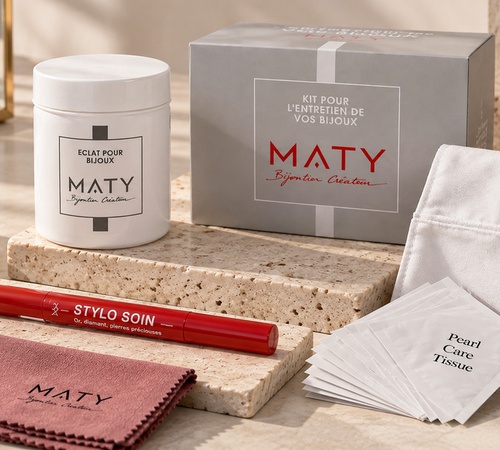
EXPLORE OUR JEWELRY CLEANING PRODUCTS >
The choice depends on the condition of the jewelry, its composition, and whether it contains any gemstones or fragile elements.
|
Type or Condition of the Jewelry |
Recommended Method |
Precautions |
|
Jewelry that is slightly dirty or dull |
Warm water, mild soap, and a soft cloth |
Rinse thoroughly and dry immediately |
|
Simple 925 silver jewelry |
Special silver-cleaning cloth or suitable product |
Follow the manufacturer's instructions |
|
Heavily tarnished piece of jewelry, without a stone |
Special silver product or baking soda and aluminum method |
Do not use on a decorative patina |
|
Jewelry set with durable stones |
Warm water, mild soap, and a small, very soft brush |
Check the crimp before cleaning |
|
Jewelry with pearls or delicate gemstones |
Soft cloth or a method suitable for the stone |
Avoid acids and abrasive products |
|
Antique, fragile, or valuable jewelry |
Assessment by a jeweler |
Do not attempt deep cleaning at home |
|
Scratched or deformed jewelry |
Polishing or Professional Service |
Cleaning alone will not remove the scratch |
In any case, start with the gentlest solution. If that isn’t enough, you can consider a more targeted method after making sure it’s suitable for your jewelry.
How do you clean silver jewelry using a gentle method?
Warm water and mild soap are the first step in cleaning slightly tarnished silver jewelry. This method removes traces of sweat, dust, lotion, or soap that have accumulated on its surface.
The Steps in Cleaning
-
Fill a small container with lukewarm water.
-
Add a few drops of mild soap.
-
Place the piece of jewelry in water for a few minutes, provided it does not contain any components that are sensitive to being submerged.
-
Gently clean the surface with your fingers, a soft cloth, or a brush with very soft bristles.
-
Gently apply pressure in the recesses, around the clasp, or under the ring.
-
Rinse the jewelry in a second container of clean water.
-
Dry it immediately with a clean, soft, lint-free cloth.
-
Let it finish drying flat before putting it away.
Avoid rinsing directly over an open sink. A small stone, a clasp, or the piece of jewelry itself could fall down the drain.
This method is suitable for regular maintenance and should be the first choice before trying stronger solutions.
How do you make silver shine after washing it?
Once the jewelry is completely dry, gently wipe it with a polishing cloth designed for silver. Use even strokes without applying excessive pressure.
A suitable cloth can remove surface smudges and restore shine. It is preferable to a rough cloth or paper towel, which could leave fine marks on polished surfaces.
How do you clean tarnished silver jewelry?
Heavily tarnished jewelry may require a product specifically formulated for silver. Always follow the instructions on the packaging and make sure the product is suitable for the gemstones and other materials used in the jewelry.
For a simple piece made of solid silver—with no stones, no pearls, no glued-on elements, and no intentional patina—the baking soda and aluminum method can also be considered, provided it is used with caution.
Cleaning Silver with Baking Soda and Aluminum Foil
This method relies on a reaction that helps transform the layer of silver sulfide on the surface of the jewelry.
-
Line the bottom of a non-metallic container with aluminum foil.
-
Place the piece of jewelry so that it touches the aluminum.
-
Add a small amount of baking soda.
-
Pour in hot water, but not boiling water.
-
Let it sit for a few minutes, keeping an eye on how the jewelry is changing.
-
Remove it as soon as the tarnish has faded enough.
-
Rinse it thoroughly with clean water.
-
Dry it immediately with a soft cloth.
This process should not become a routine maintenance task. Intensive or repeated cleaning can eventually alter the surface and details of the jewelry.
When should you not use this method?
Do not use baking soda and aluminum on:
-
a piece of jewelry adorned with pearls;
-
a piece of jewelry set with stones whose sensitivity you are unaware of;
-
glued parts;
-
plated or silver-plated jewelry;
-
an antique or fragile item;
-
a piece of jewelry that has been intentionally aged or blackened;
-
a design that combines several metals;
-
a piece of jewelry whose setting appears loose.
In these situations, it's best to use a suitable cloth or ask a jeweler for advice.
Can you clean money with vinegar, lemon, or toothpaste?
These home remedies are often mentioned, but they aren't always the safest ways to clean jewelry.
White vinegar
The acidity of vinegar can remove certain stains, but it can also damage pearls, delicate gemstones, adhesives, surface treatments, or patinas.
Even with a simple piece of jewelry, using the wrong dilution or soaking it for too long can produce uneven results. Therefore, it’s best to use a mild soap or a product specifically designed for silver.
Lemon juice
Like vinegar, lemon is acidic. It is not recommended for use on gemstone jewelry, pearls, porous stones, or treated surfaces. It should not be considered a one-size-fits-all solution.
Toothpaste
Toothpaste often contains abrasive particles designed to clean teeth. These can cause fine scratches on polished silver, damage a veneer, or dull certain gemstones.
It is therefore best not to use toothpaste, especially on a shiny surface or on jewelry with decorative elements.
Cola, ash, and salt
Cola is acidic, while ash and salt can be abrasive. Their effects are difficult to control, and they can leave residue in the crevices of the jewelry.
To ensure the long-term preservation of your jewelry, choose cleaning methods whose formulas and abrasiveness are suitable for jewelry.
MATY's Advice
A cleaning tip that works well for a spoon or a silver object may not necessarily work for a gemstone ring or a necklace made of multiple materials. Before cleaning, consider the jewelry as a whole, not just the silver parts.
How do you clean different types of silver jewelry?
The shape of the piece of jewelry determines the areas where residue can accumulate and the precautions to take when cleaning it.
How do you clean a silver ring?
A silver ring easily picks up traces of soap, lotion, and sweat, especially under the band and around the stones.
To clean it:
-
Check that the stones are securely held in place;
-
Leave it in lukewarm soapy water for a few minutes, if its composition allows it;
-
Gently clean the inside of the ring and the underside of the setting;
-
Use a very soft brush without applying pressure to the claws;
-
Rinse and dry all areas thoroughly.
If the ring has deep scratches or an uneven appearance even after cleaning, professional polishing may be necessary.
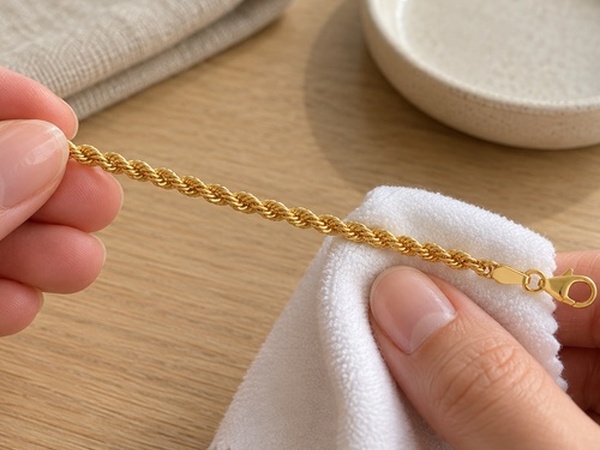
How do you clean a silver chain?
The links in a chain easily trap dust and cosmetics.
To keep it from getting tangled:
-
Close the clasp before cleaning;
-
Gently place it in lukewarm soapy water;
-
use your fingers to circulate the water between the links;
-
Do not use a stiff brush or pull on the chain;
-
Rinse it in a clean container;
-
Let it air dry flat on a soft cloth.
Make sure it is completely dry before putting it away.
How do you clean a silver bracelet?
For a link bracelet, focus on cleaning around the joints and the clasp. Handle each part carefully so as not to distort the links.
If it is a rigid bracelet, use a soft cloth to wipe the entire surface. Do not attempt to open or tighten a bracelet that appears to be misshapen on your own.
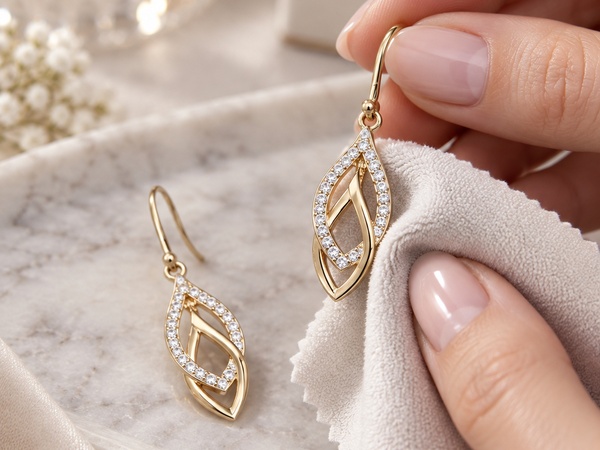
How do you clean silver earrings?
The stems, prongs, and clasps can accumulate residue. Clean these parts with soapy water and a cloth or a small, soft brush, if the design allows it.
Remove the clasps and clean them separately so you can reach all areas. Dry each piece before putting the silver earrings back on.
For models decorated with beads or glued-on elements, avoid submerging them completely.
How do you clean a piece of silver jewelry with gemstones?
There is no single method that works for all types of stone. Their resistance to water, heat, acids, and cleaning products varies considerably.
For many durable gemstones that are properly set, lukewarm water, mild soap, and a very soft brush are sufficient. However, pearls and certain porous or treated gemstones require special care.
For pearls, use a very soft cloth to clean them after each time you wear them. Occasional cleaning with lukewarm soapy water is acceptable if done carefully, but ultrasonic and steam cleaners should be avoided. Acids, such as vinegar and lemon, can also damage them.
If you are unsure of the type of stone or how it has been treated, do not soak the jewelry in a cleaning solution. Ask a professional for advice.
What mistakes should you avoid to keep your silver jewelry from getting damaged?
When cleaning, avoid:
-
use a stiff brush, an abrasive sponge, or a rough cloth;
-
vigorously scrub a polished surface;
-
use toothpaste, scouring powder, or ash;
-
soaking a stone or a pearl without knowing its sensitivity;
-
use boiling water;
-
mixing several cleaning products;
-
apply vinegar or lemon juice to a piece of jewelry with gemstones;
-
clean a piece of jewelry in which a stone seems to be loose;
-
attempt to remove a deliberately applied black patina;
-
increase the frequency of intensive polishing;
-
Rinse the jewelry directly over an open drain;
-
Put the jewelry away while it is still damp.
Polishing removes a tiny amount of material along with the tarnished layer. It should therefore be done sparingly, especially for plated, antique, or intricately crafted jewelry.
How can you prevent silver jewelry from tarnishing?
It's difficult to completely prevent tarnishing, but good habits can slow it down.
Wipe the jewelry down after wearing it
After each use, wipe the jewelry with a clean, soft cloth. This simple step removes some of the sweat, moisture, and cosmetics that have accumulated on its surface.
Store each piece of jewelry separately
Store your silver jewelry in a jewelry box, a closed compartment, or an individual pouch. This will provide better protection against air, moisture, dust, and friction.
Avoid mixing different pieces of jewelry in the same pouch: chains can get tangled, and the surfaces can scratch each other.
Check it out: How to store your jewelry in style?
Avoid water and chemicals
Remove your jewelry before:
-
to swim in a pool or in the ocean;
-
to take a shower or a bath;
-
to play sports;
-
to do the dishes or clean the house;
-
to use products containing chlorine;
-
apply perfume, hairspray, lotion, or makeup.
A good habit is to put on your jewelry last, after your makeup has dried, and to take it off first at night.
How often should you clean your silver jewelry?
How often you should clean your jewelry depends on the piece, how you use it, and its environment. Gently wiping it down after each time you wear it is the best preventive care.
For jewelry worn regularly, gentle cleaning every few weeks—or as soon as residue becomes visible—may be sufficient. Jewelry worn only occasionally can be cleaned before being stored for an extended period and checked when it is taken out again.
It isn't necessary to polish silver thoroughly every month. Take action when the jewelry visibly loses its luster, always starting with the gentlest method.
How do you remove a scratch from silver jewelry?
Cleaning removes dirt and dullness, but it doesn't get rid of an actual scratch.
Silver is a relatively malleable metal. Rings and bracelets, which are more exposed to impacts and friction, can therefore become marked over time.
To reduce the appearance of a scratch, the piece of jewelry generally needs to be polished using the appropriate tools and techniques. An overly abrasive treatment performed at home could create an uneven surface, erase a raised design, or weaken a plating.
If the scratch is deep or near a stone, take the jewelry to a professional.
When should you take your silver jewelry to a jeweler?
Cleaning jewelry at home isn't always enough. It's best to consult a jeweler when:
-
the jewelry is antique, fragile, or of great value;
-
you don't know what it's made of;
-
it contains pearls or sensitive stones;
-
a stone is loose or a prong appears bent;
-
the clasp is no longer working properly;
-
The piece of jewelry has deep scratches;
-
Silver remains very dark even after gentle cleaning;
-
the surface has a patina or a special finish;
-
the jewelry is misshapen, broken, or has come apart;
-
You want to restore its smooth finish.
MATY jewelers can examine your jewelry, determine the most appropriate course of action, and recommend cleaning, polishing, or repair as needed.
EXPLORE MATY'S MAINTENANCE AND REPAIR SERVICES >
FAQ: Cleaning Silver Jewelry
What is the best product for cleaning silver jewelry?
For routine cleaning, use lukewarm water, mild soap, and a soft cloth. If the jewelry has become noticeably tarnished, use a cloth or product specifically formulated for silver and suitable for the jewelry’s composition.
How do you clean silver jewelry that has turned black?
Start by cleaning it with warm water and mild soap. If the tarnish persists, use a special silver cleaner. The baking soda and aluminum foil method should be reserved for simple solid silver jewelry without stones, glue, plating, or patina.
Can you clean silver jewelry with baking soda?
Yes, but use it with caution. Baking soda should not be rubbed directly onto the surface as an abrasive paste. When combined with aluminum and hot water, it can help clean a simple silver item, but this method is not recommended for jewelry that is set with stones, plated, antique, or patinated.
Can you clean silver jewelry with toothpaste?
This is not recommended. The abrasive particles in toothpaste can cause fine scratches on silver, mar polished surfaces, and damage certain gemstones or finishes.
Can you clean silver jewelry with stones?
Yes, but the method depends on the stone and how it has been treated. Warm water and mild soap are suitable for many durable stones, provided the setting is intact. For a pearl, a porous stone, or a glued piece, consult a professional.
How do you make a silver chain shine?
Clean it in warm, soapy water, rinse it thoroughly, and lay it flat to dry. Finish by polishing it with a special silver polishing cloth, taking care not to pull on the links.
Why does my silver jewelry turn black?
Silver reacts with sulfur compounds present in the air and the environment. This reaction forms silver sulfide on its surface—a dark layer that can generally be removed with proper care.
How often should you clean your silver jewelry?
Ideally, wipe them down after wearing them. Give them a gentle cleaning as soon as you notice any residue or loss of luster. More intensive polishing should be done only occasionally.
Keep Your Silver Jewelry Shining for Years to Come
Regular care and a few simple steps are usually enough to keep a silver ring, bracelet, or necklace looking its best. Always start with a gentle method, take the stones and finishes into account, and avoid abrasive products.
If your jewelry is fragile, scratched, or heavily tarnished, MATY's jewelers are here to advise you and provide the best care for your pieces.

925 Sterling Silver Ring with Amethysts and White Topazes
34,50 69€ (50)

925 silver amethyst earrings
49€

Bracelet argent 925 boules ouvragées et polies 19 cm
45€

Silver necklace 925 Chinese pearls 45cm
37,80 89€ (58)

925 silver hoop earrings 25 mm
29€

925 silver amber ring
44,50 89€ (50)

925 silver identity bracelet heart alternate link 16 cm
65€

925 silver ring with blue synthetic stone and zirconias
34,50 69€ (50)

925 silver earrings with imitation blue synthetic stones and zirconias
22,50 45€ (50)

925 silver and zirconia ring
€84 €105 (-20%)

925 silver ring with imitation blue stones and zirconias infinity motif
27,50 55€ (50)

Alliance argent 925 diamanté 4 mm
85€

925 silver ring amethysts green quartz
29,50 59€ (50)

925 silver bracelet with clover and infinity design 19cm
34,50 69€ (50)

925 sterling silver earrings with treated topaz stones
34,50 69€ (50)
How do you clean a chain?
How do you clean earrings?