Getting your ears pierced is something that often happens during early childhood, but there’s no set age—it’s never too late to take the plunge. You probably have a lot of questions: When should you change your earrings after getting your ears pierced, and how can you do so without risking further irritation to the still-fresh piercing?
Healing time varies depending on the piercing method used (needle or gun) and the area pierced. This timeframe can vary from person to person. This guide, created by Maty, helps you better understand the healing process, how to care for your piercing, and, most importantly, the ideal time to switch from your medical earrings to your first permanent earrings.

LEARN MORE ABOUT OUR EAR PIERCING SERVICE >
Contents
-
When should you change your earrings after getting your ears pierced?
-
How can you remove your medical ear piercings without hurting yourself?
-
What earrings should you wear after wearing medical earrings?
-
What kind of aftercare is needed after changing earrings for the first time?
MATY, an ear-piercing service at a jewelry store
MATY offers an ear-piercing service right in the store, performed by staff trained in this procedure, in accordance with hygiene standards. The piercing is performed using sterile, single-use equipment, and the medical-grade earrings applied during the session are specially designed to promote proper healing.
When you get your ears pierced at MATY, you’ll receive expert advice right from the start: choosing the piercing location, selecting the right type of medical-grade jewelry, and receiving care instructions tailored to your skin type. The in-store staff is also available throughout the healing process to answer your questions and help you choose your first pair of permanent earrings.
Why is it important to keep your medical ID tags?
Medical earrings, also known as piercing earrings or piercing jewelry, are not simply temporary jewelry: they play an essential role throughout the healing process. When the ear is pierced, it naturally forms a new channel around the earring post. This healing process takes several weeks, or even several months, depending on the area pierced.
Medical earrings help keep this canal open, minimizing the risk of irritation, promoting gradual healing, and making care easier. Made of a special type of steel—or sometimes gold or silver with the same properties—they are hypoallergenic, sterilized, and feature a screw-back clasp that prevents pressure on the earlobe.
After piercing, the ears should be disinfected twice a day with the lotion recommended by the professional, taking care not to get them too wet between applications. At MATY, the Post-Piercing Care Lotion (50-ml bottle) is specially formulated for this step: apply it directly to the medical earring and the area around the piercing, morning and night, to promote proper healing. The first thing to do is wash your hands and avoid touching your ears except when applying the lotion. Also, avoid swimming pools and baths for a few weeks.

How long does it take for a drill hole to close?
For a recent piercing, the hole may close within a few days to a few weeks. For an older piercing, it may take several months—or it may never close completely. How quickly it closes depends on the location of the piercing, your skin type, and how well you care for it: to prevent the hole from closing, it’s best to wear earrings regularly, even after the piercing has fully healed.
Medical hearing aids, hearing aids, and starter hearing aids: What's the difference?
|
Loop type |
When? |
Role |
|
Medical hearing aids (or hearing aids) |
Immediately after drilling |
Keep the wound open throughout the healing process |
|
First runs after healing |
After the removal of the medical loops |
Replace the ear loops with a lightweight, comfortable, and well-tolerated model |
|
Classic Earrings |
Once the healing process has fully stabilized |
Allows you to freely wear different styles of curls however you like |
When should you change your earrings after getting your ears pierced?
The ideal time to change your earrings depends primarily on the location of the piercing, how quickly it heals, and the recommendations of the professional who performed the piercing. Therefore, there is no single timeframe that applies to all ears.
Wait at least the recommended amount of time before making your first jewelry change. To prevent the piercing from getting infected: keep your medical-grade earrings in for at least 1½ months for a lobe piercing, and 9 to 12 weeks if you had your cartilage pierced. This is the minimum time frame: if your ears are sensitive, wait 2 months for the lobe, and add 3 weeks for the cartilage.
Table of Lead Times by Drilled Area
|
Pierced area |
Minimum waiting period before the first change |
Precautions |
|
Lobe |
At least 6 weeks |
If the ear is still sensitive, wait 7 to 8 weeks instead |
|
Second hole in the earlobe |
About 6 weeks |
Make sure the wound has healed completely, especially if it is close to the first one |
|
Cartilage (General) |
At least 9 to 12 weeks |
Cartilage heals more slowly than the earlobe: don't remove the earrings too soon |
|
Helix |
Varies depending on healing |
Seek advice from a professional before the first change |
|
Tragus |
Varies depending on healing |
Handling should be kept to a minimum during the first few weeks |
|
Conch |
Varies depending on healing |
The duration depends on the exact area and how your ear reacts |
|
Daith, Rook, Snug… |
Varies depending on the type of piercing |
These areas may take several months to heal |
Why does cartilage take longer to heal than the earlobe?
The lobe, which consists mainly of soft, well-vascularized tissue, generally heals more quickly. Cartilage has a lower blood supply, and this characteristic slows down the healing process. Cartilage piercings are also more exposed to friction from hair, headphones, glasses, and cell phones. This frequent friction can delay healing.
Even after several weeks, these areas may still be sensitive to touch. That is why the amount of time that has passed should never be the only factor taken into account: the actual condition of the ear always takes precedence over the timeline.
Can you replace just one earring?
Yes, but only if that specific ear has healed completely. One ear may heal faster than the other: if one becomes red, or if pain or slight swelling develops, it’s best to wait a few more weeks before removing the medical earring. Patience is still the best way to ensure complete healing.
How can you tell if the piercing has healed?
It is essential to wait the recommended amount of time before changing your earrings, but the amount of time that has passed is not the only factor to consider: the piercing site, how well you’ve cared for it, and your skin type also play a role.
Signs that healing is complete
An ear is generally considered to have healed when:
-
the pain has completely gone away
-
No persistent redness is visible around the hole
-
the earlobe or cartilage is no longer swollen
-
no discharge is observed
-
The skin around the piercing is dry and supple
-
The buckle can be handled gently without causing discomfort
All of these criteria must be met before considering the first loop change. The absence of pain alone is not enough to conclude that the healing process is complete: even under skin that appears to have already closed, the canal may still continue to heal deep within.
Signs That Indicate You Should Wait
If you notice any of the following symptoms, keep the medical loops on for a few more days or even a few more weeks:
-
a slight pain when you touch the buckle
-
a sensation of warmth
-
persistent redness
-
swelling
-
a clear or yellowish liquid
-
a small scab that forms again regularly
The Risks of Withdrawing Too Early
Removing your medical jewelry before the piercing has fully healed is one of the most common mistakes made after getting a piercing. The absence of pain alone is no guarantee: the canal formed around the post may remain fragile long after the sensitivity has subsided. Changing your jewelry too soon increases the risk of complications and can, paradoxically, prolong the healing process rather than bring it to a close.
The hole may close up
The first and most immediate risk is the partial or complete closure of the piercing. When the canal is not fully stabilized, it can begin to narrow within just a few hours after the medical rings are removed, making it difficult or even impossible to reinsert a new ring without pain. In some cases, a new piercing becomes necessary.
Healing may be delayed, and the risk of infection increases
Removing medical ear studs too early can sometimes cause minor irritation inside the ear canal. The body then has to restart part of the healing process, which delays recovery. Changing the studs too soon—or doing so with unwashed hands—also increases the risk of bacterial infection. Pay particular attention to any unusual pain, significant redness, swelling, discharge, or a sensation of warmth: if you experience any of these symptoms, seek advice promptly from the professional who performed the piercing or from a doctor.
The first change can be painful
When the hole begins to close up, you may sometimes need to apply force to get the new loop through. Forcing the post can irritate the canal, cause bleeding, prevent proper healing, and increase sensitivity in the ear. If the loop does not slide in easily, it is better to stop rather than keep trying.
How can these risks be minimized?
There are some simple steps you can take to mitigate these risks: follow the jeweler’s recommended healing time based on the piercing site; make sure the wound has fully healed before removing the medical-grade earrings; sanitize your hands before handling the piercing; and choose lightweight, post-style earrings made from a hypoallergenic material.
How can you remove your medical ear piercings without hurting yourself?
The first time you change your earrings, it often causes some anxiety. Many people worry about pain, bleeding, or having trouble removing the medical earrings. Often, if the healing period has been properly observed and the ear has healed completely, removal is easy.
Before removing your medical earrings
Before handling the device, take a few simple precautions:
-
Wash your hands thoroughly with soap and water
-
Gently clean your ears and medical earrings with an antiseptic solution, such as MATY After-Piercing Care Lotion
-
Stand in front of a mirror in a well-lit area
-
Get your new earrings ready in advance to minimize the amount of time the piercing will be left without jewelry.
How do you remove curls, step by step?
-
Step 1: Hold the clasp in place. Hold the decorative part at the front of the ear firmly to prevent the clasp from rotating while you're handling it.
-
Step 2: Remove the clasp. Using your other hand, gently remove the clasp located on the back (butterfly clasp, push-button clasp, or safety clasp specific to medical bracelets, depending on the system used). Never pull sharply.
-
Step 3: Gently remove the post. Once the clasp is removed, slide the post out of the hole. If the earring seems to be stuck to the skin, gently rotate it without using force. A small amount of petroleum jelly can help it slide out more easily if needed.
What should you do if the loop doesn't come out, or if removing it is painful?
If the clasp is difficult to remove, never pull on it forcefully: make sure it is fully open, and gently clean the area if debris has accumulated around the pin. If the clasp remains completely stuck, do not force it.
A slight tenderness may be normal during the first change. However, if you experience significant pain, unusual resistance, bleeding, swelling, or recurring redness, you should stop there: these are possible signs that the wound has not yet fully healed.
When should I put in the new curls?
Once you've removed the medical earrings, insert the new ones right away: the piercing canal can start to close up quickly, especially with a recent piercing. It's best to choose lightweight earrings—such as studs or small posts—with a straight shank made of a well-tolerated metal like gold, titanium, or silver.
What earrings should you wear after wearing medical earrings?
Choosing the right first pair of earrings is just as important as allowing enough time for the piercing to heal. Even after the piercing has healed, the tissue remains under strain for several weeks: the goal is to choose jewelry that is comfortable, lightweight, and made of a material that is well-tolerated.
The subject matter
Choose materials known for their skin-friendly properties: gold, silver, titanium, or hypoallergenic materials. These metals generally minimize the risk of irritation and are particularly suitable for newly pierced ears. Conversely, costume jewelry may contain alloys that are less well tolerated—particularly nickel—and can cause irritation, redness, or itching on an ear that is still sensitive.
Shape and Weight
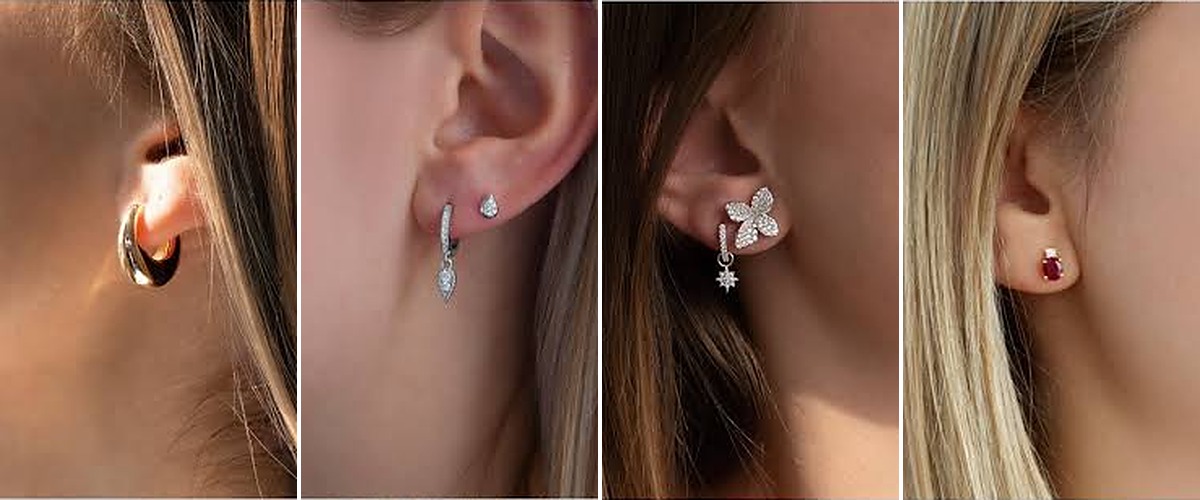
During the first few weeks, stick to simple styles: stud earrings, small posts, thin hoops, and barback earrings. These styles put little tension on the lobe and are easy to clean. Conversely, earrings that are too heavy, large hoop earrings, or dangling earrings exert prolonged tension: they can slow down healing, cause the hole to widen, or even lead to deformation of the lobe over time. Large hoop earrings increase the risk of getting caught in your hair while you sleep, while dangling earrings create a lever effect that irritates the piercing canal.
The clasp
A good clasp should be comfortable, easy to use, secure enough to prevent the earring from falling out, and should not put excessive pressure on the earlobe. A clasp that is too tight can compress the earlobe and restrict airflow; conversely, a clasp that is too loose increases the risk of the earring falling out. The ideal clasp holds the earring securely in place while leaving a slight gap between the earring and the earlobe.
The Interview
Highly openwork designs, with numerous joints or decorative elements, tend to trap more dirt and require more careful maintenance than simple stud earrings or ear posts, which are recommended during the first few weeks.
Summary Table
|
Criterion |
Best to focus on this at the beginning |
Things to Avoid at the Beginning |
|
Material |
Gold, 925 sterling silver, titanium, hypoallergenic |
Alloys of unknown composition; jewelry that may contain nickel |
|
Shape |
Studs, nails, small, delicate hoop earrings, post earrings |
Large hoop earrings, dangling styles, XXL styles |
|
Weight |
Lightweight |
Heavy |
|
Clasp |
Comfortable stroller, safe stroller |
Clasp is too tight or too loose |
|
Interview |
Earrings that are easy to clean |
Designs with extensive cutouts or that are difficult to access |
The Best First Runs Based on Your Profile
|
Your Situation |
Recommended loops |
|
You have just had your medical ear piercings removed |
Ear studs or small earrings made of gold or titanium |
|
You have sensitive skin |
Hypoallergenic earrings made of 750 gold, titanium, or 925 silver |
|
You exercise a lot |
Simple, well-fitted styles without dangling elements |
|
Do you sleep with your curls? |
Ear studs with rounded edges and a comfortable clasp |
|
Would you like to wear hoop earrings? |
Start with small, delicate hoop earrings before moving on to wider styles |
At MATY Jewelry, we often remind our customers: the primary purpose of these earrings is not to be fashionable, but to be comfortable. A simple design, made with the recommended materials and weight, allows the ear to heal completely without any additional strain.
When will we be able to wear all kinds of earrings?
Once the piercing has fully healed and stabilized, you can gradually try different styles: hoop earrings, dangling earrings, XXL designs, gem-set jewelry, and combinations of multiple earrings. It’s best to introduce these new styles one at a time to make sure your ear tolerates them well before moving on to the next one. The first few weeks after removing the medical earrings are still a transition period: even after healing, it’s still a good idea to wear light, comfortable earrings for a while longer.
The Case of Children
A child’s first ear piercing is an important milestone. After a few weeks, parents often ask themselves: When can we replace the medical earrings with “real” earrings? Just as with adults, it’s essential to wait until the ears have fully healed before making the first change: an ear that appears healed may still have fragile internal tissue. The waiting period (at least 6 weeks for the lobe) and the criteria for choosing the first earrings (lightweight, made of gold or titanium, with a post) remain the same as for adults.
Special Caution Is Needed in Children
When it comes to children, extra caution is needed: wait at least the minimum recommended time before making any changes, avoid touching the jewelry too much, choose first earrings that aren’t too heavy, and make sure the child isn’t pulling on them. Before changing the earrings, make sure the ear isn’t red, the lobe isn’t swollen, the child is no longer in pain, there is no discharge, and the earring rotates without causing discomfort.
To ensure that the ear heals properly, remind your child to avoid touching the earrings with dirty hands, clean the posts and clasps regularly, and check the condition of the earlobe frequently.
When should you see a professional?
It’s important to remember that most piercings heal without complications; however, certain signs should raise concern and prompt you to consult the professional who performed the piercing or a doctor: throbbing pain lasting several weeks, swelling of the earlobe, redness that spreads and persists, discharge, a stud that sinks into the skin, or an inability to rotate the stud slightly. Prompt treatment generally helps prevent complications.
One last tip for parents: For that first diaper change, always choose a discreet, lightweight, and easy-to-clean model over a decorative clasp.
What kind of aftercare is needed after changing earrings for the first time?
The first change of medical ear loops marks an important milestone, but the healing process doesn't stop there: beneath the closed surface, the tissues continue to strengthen for several more weeks. During this transition period, a few simple steps can help keep your ear comfortable and minimize irritation.
Continue cleaning the helix and lobe
After the first change, it is recommended that you continue to clean your earrings, even if the piercing has healed. The posts, clasps, and parts that come into contact with the earlobe naturally accumulate sebum, dead skin cells, and shampoo residue. These deposits can cause the jewelry to lose its luster and may lead to irritation.
When washing, gently clean the earlobe with lukewarm water and mild soap, then dry the skin thoroughly before putting your jewelry back on. This simple habit helps prevent the buildup of impurities.
Sleeping with your new curls: Is it a good idea?
After the first change, continue to wear the new earrings day and night for the first few weeks, unless otherwise instructed by the professional who performed the piercing. Leaving the earrings in place helps keep the piercing canal open while the healing process stabilizes deep within the tissue: at first, the canal may still narrow slightly if left without jewelry for several hours. If you sleep on your side, opt for stud earrings, small posts, comfortable clasps, and slim designs, which minimize pressure points on the lobe. Once the healing process is fully complete, you can remove your earrings as you normally would.
Check the condition of the loops regularly
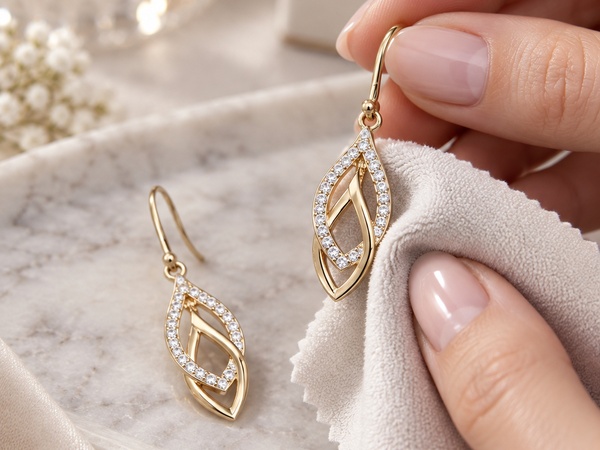
Regular inspection allows you to quickly spot a loose part before a link or a stone is lost. Take advantage of every cleaning session to examine your jewelry: check the clasps, prongs, settings, and hinges.
When should you use a jewelry cleaner?
Once the healing process is complete, you can supplement your regular cleaning routine with a product specially formulated for jewelry. At MATY, we offer several solutions to help you care for your earrings based on their composition.
The MATY Care Pen is particularly well-suited for gold jewelry set with diamonds or compatible gemstones: its applicator brush allows for precise cleaning of hard-to-reach areas, especially around prongs and settings.
The MATY Éclat Liquid Jewelry Cleaning Kit is recommended for restoring the shine of compatible jewelry and removing impurities that have accumulated in the engravings and clasps. However, it should not be used on pearls, opals, emeralds, semi-precious stones, rhinestones, or antique silver: always check that your jewelry is compatible with the chosen product before use.
|
To Do |
Why? |
|
Clean the chains and clasps regularly |
Remove sebum and impurities |
|
Also clean the earlobe |
Maintain good drilling hygiene |
|
Wear lightweight earrings for a few weeks |
Minimize stress on the hole |
|
Check the clasps regularly |
Preventing a loop from coming undone |
|
Store the earrings in a clean, dry case |
Prevent scratches and oxidation |
|
Clean jewelry with a product suitable for its material |
Preserve their luster without damaging them |
|
Continue to monitor the drilling |
Quickly detect irritation or a healing problem |
Mistakes to Avoid After the First Change
-
Change your ear studs every day for the first few weeks
-
immediately wear very heavy earrings
-
regularly run your fingers through your curls
-
sleeping with large hoop earrings
-
forget to clean the clasps
-
using a cleaning product that is not suitable for the material or gemstones in your jewelry
To sum up the essence of this routine: the first time you change your earrings marks the beginning of a new phase of care, not the end of precautions. Good habits established in the first few weeks benefit both the health of the piercing and the luster and longevity of the jewelry.
IMAGE 6
FAQ: Changing Your Earrings After Getting Your Ears Pierced
Can you change your earrings after 3 weeks?
This is generally not recommended: even if the pain has subsided, the piercing site often hasn’t fully healed after just three weeks. For a lobe piercing, it’s recommended to wait at least six weeks—or even longer if the ear remains tender. For a cartilage piercing, the healing time is generally longer.
Can you change your earrings after 6 weeks?
Yes, six weeks is generally the minimum recommended waiting period for an earlobe piercing. Before removing the medical-grade earrings, however, make sure the ear has healed completely: there should be no pain, redness, swelling, or discharge.
How can I tell if my piercing has healed?
A piercing is generally considered healed when the hole no longer causes pain, redness, swelling, or discharge. The skin around the jewelry should be supple, and the stud should be easy to handle without discomfort. If in doubt, it’s best to wait a few more days before changing the studs.
What happens if you remove your medical ear piercings too soon?
Removing the jewelry before the piercing has fully healed can cause irritation, delay healing, lead to infection, or result in the hole closing partially. Even if the piercing appears to have healed on the surface, the internal tissue may still be fragile.
Can medical ear loops be worn for too long?
You can keep the medical-grade earrings in longer than the recommended time if the piercing hasn't healed yet. It's a good idea to continue cleaning them to prevent the buildup of oil or impurities around the posts and clasps.
How can you remove medical ear piercings painlessly?
Wash your hands thoroughly, gently remove the clasp, and then slide the post out very gently. If you feel significant resistance or any unusual pain, it’s best to stop and consult the professional who performed the piercing.
What are the best first sets of earrings to wear after getting your ears pierced?
Your first earrings should be lightweight, comfortable, and easy to clean. Stud earrings or small posts made of gold, titanium, or silver are generally the best choices after you remove your medical earrings.
Can you wear hoop earrings right after getting medical piercings?
It's best to wait a few more weeks before wearing large hoop earrings. Small, lightweight hoops are an option once the piercing has fully healed, but larger styles put more strain on the earlobe.
Can you wear dangling earrings after getting your ears pierced?
Dangling earrings are not recommended immediately after the first change: their weight and movement put additional strain on the piercing. It's best to wait until the piercing has fully healed.
Which materials should you prioritize after drilling?
Gold, titanium, and high-quality 925 sterling silver are generally well tolerated. People with sensitive skin may also want to choose hypoallergenic materials to minimize the risk of irritation.
Can you sleep while wearing your new earrings?
Yes, during the first few weeks after the change, it's best to keep the new piercings in at all times to prevent the hole from closing up. Choose styles that are discreet and comfortable.
What should I do if my ear bleeds after changing my earring?
A little bleeding may indicate that the piercing was handled a bit too soon or that the piercing site is being rubbed. Gently clean the area and monitor it; if pain, swelling, or bleeding persists, seek professional advice.
When should you see a professional?
Seek medical attention if you experience severe pain, persistent swelling, noticeable redness, unusual discharge, or if a stone or clasp appears to be damaged. A healthcare professional can check the healing process and the condition of your earrings.
What products should you use to clean your earrings?
In most cases, cleaning with warm water and mild soap is sufficient. For more thorough cleaning, you can use a product specifically designed for jewelry, such as those offered by MATY, provided it is compatible with the metal and stones used in the earrings.
Our earrings

925 silver and zirconia earrings
37,80 89€ (58)

Set of 3 pairs of 925 sterling silver earrings with cubic zirconia
49€

Silver earrings 925 cultured pearls from China
39€

Gold-plated hoop earrings 43 mm
59€

375 emerald yellow gold earrings
115€

Créoles gold 375 yellow 11 mm
25€

925 sterling silver earrings with zirconia stones set with 4 prongs
29€
How do you clean earrings?