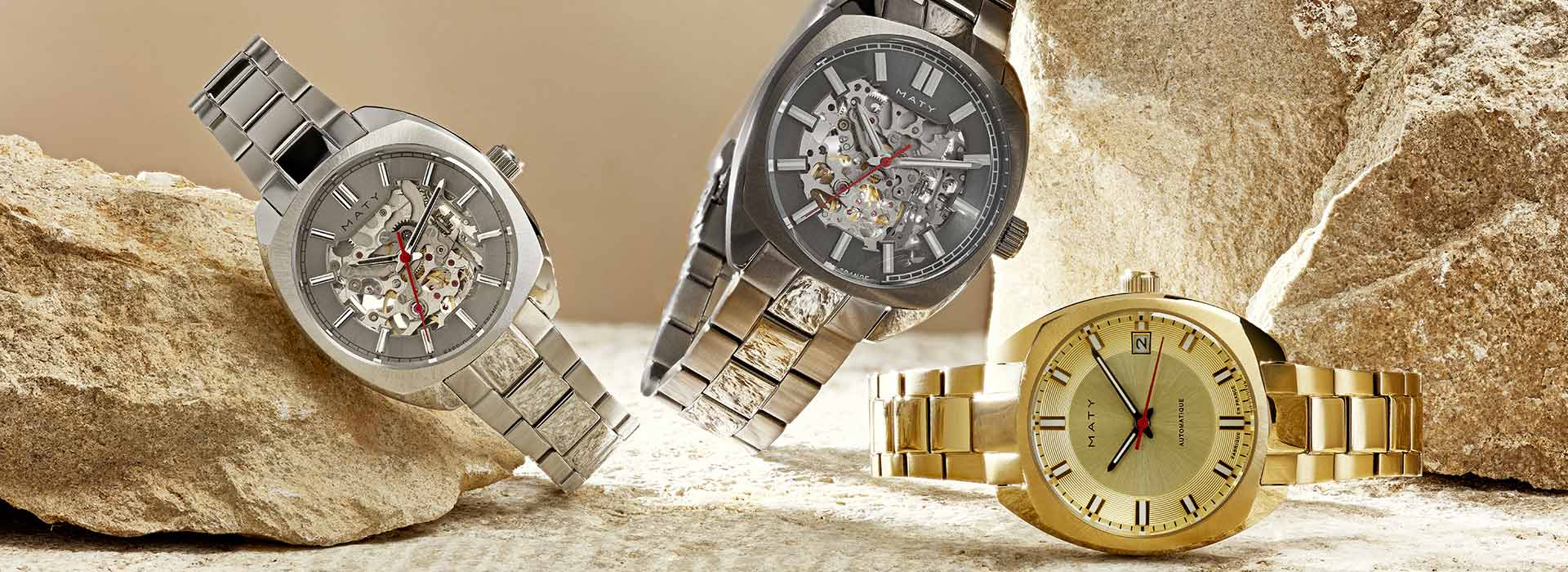
Choosing a new watch is often a matter of love at first sight. The shape of the dial, the color of the strap, or the look of the case catch the eye, but comfort also depends on how well the watch fits on the wrist.
To find a watch with the right proportions, start by measuring your wrist circumference. You can then compare this measurement to the case diameter, while also taking into account the case thickness, the length of the lugs, the strap, and the weight of the watch.
These guidelines will help you narrow down your choices, but they aren't set in stone. Above all, it should appeal to you, match your style, and be comfortable to wear all day long.
In summary: What size watch is right for your wrist?
-
Measuring your wrist circumference is the first step.
-
The diameter of the case should be proportional to the width of the wrist.
-
Thickness, weight, and the distance between the horns also affect comfort.
-
A watch that's too big may rotate, stick out from the wrist, or get in the way of your movements.
-
A very small watch may look more understated on a wide wrist, without necessarily being ill-suited.
-
The strap should be tight enough to hold the watch in place without constricting the wrist.
-
The comparison charts provide general guidelines: your personal style and preferences are still what matter most.
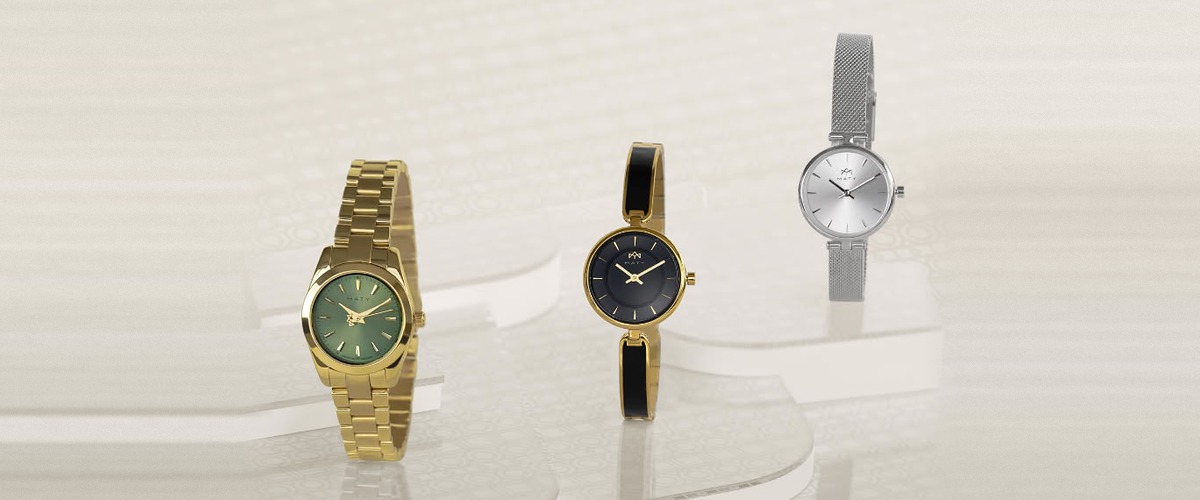
Why is it important to choose the right size watch?
A well-proportioned watch sits naturally on the wrist. It stays in place when you move, doesn't get in the way of your hand, and remains easy to read.
The choice of size affects several factors.
Everyday Comfort
A very wide or particularly heavy case can become uncomfortable if it rests on a slender wrist. The lugs may stick out, the crown may press against the hand, and the watch may rotate around the wrist. Conversely, a more understated and lightweight model will be easy to forget you’re wearing, especially under a sleeve or during a workday. The strap also plays an essential role. If it’s too tight, it can leave marks on the skin and become uncomfortable. If it’s too loose, it allows the case to slide and rotate.
Visual Balance
The size of the case plays a key role in the watch’s style. A small dial generally gives the watch a delicate or dressy look, while a larger case makes a bolder statement. On a slender wrist, a very large watch can become the focal point of an outfit. This choice can work perfectly well in an oversized style, provided that the lugs do not protrude excessively and the watch remains comfortable.
On a wide wrist, a larger case often helps create a balanced look. However, a smaller model may be chosen for its elegance or vintage appeal.
The readability of the dial
Chronographs, digital watches, and models that display multiple pieces of information often have a larger dial. This size makes it easier to read the counters, the date, or the various functions.
A dress watch with a minimalist dial, on the other hand, can still offer excellent readability even with a more understated diameter.
Adapting to Your Lifestyle
A watch worn every day doesn't necessarily meet the same expectations as a model intended for formal occasions or sports. A slim watch slips more easily under a shirt sleeve. A sports watch may have a wider case, additional buttons, and a more robust construction. An automatic watch may also be thicker due to its movement.
The ideal size therefore depends on your body type, your style, and how you plan to use it.
How do you measure your wrist circumference correctly?
To choose a watch, measure your wrist where you usually wear it, which is generally just above the bone.
With a tailor's tape measure
Wrap a flexible measuring tape around your wrist, without pulling it too tight. The tape should remain in contact with your skin while still feeling comfortable. Record the measurement in centimeters or millimeters. Repeat the process a second time to verify the result.
With string or ribbon
If you don't have a sewing tape measure, use a thin string, ribbon, or strip of paper. Wrap it around your wrist, mark the point where the two ends meet, and then measure that length with a ruler.
Make sure the string isn't stretchy, as this could skew the results.
When should you take the measurement?
Your wrist circumference may vary slightly depending on the temperature and the time of day. If you tend to swell when it's hot, it's best to take your measurement at the end of the day and avoid pulling the tape measure too tight.
For a large purchase or a bracelet that doesn't adjust very easily, you can measure your wrist at different times to find a comfortable fit.
Should we add a margin?
The wrist measurement does not always correspond directly to the length of the strap. The necessary allowance depends on the material and the desired fit. A leather strap is generally worn close to the wrist, with enough space to easily slip a finger underneath. A metal strap should hold the case securely while allowing for slight movement. A silicone sports strap can be adjusted differently depending on the activity.
So avoid automatically adding the same margin. Instead, check the instructions provided for the strap and the model's adjustment options.
What watch diameter should you choose based on your wrist size?
The diameter refers to the width of the case, which is generally measured without including the crown. It is the most commonly used measurement to describe the size of a watch.
The following table provides general guidelines.
|
Wrist circumference |
Approximate case diameter |
Typical result obtained |
|
Less than 14 cm |
26 to 32 mm |
Very understated, delicate, or with a jewelry-watch vibe |
|
From 14 to 15.5 cm |
30 to 36 mm |
Slim, well-balanced, and easy to wear |
|
From 15.5 to 17 cm |
34 to 40 mm |
Versatile, from dress watches to everyday watches |
|
From 17 to 18.5 cm |
38 to 42 mm |
Balanced to more assertive |
|
From 18.5 to 20 cm |
40 to 44 mm |
A more pronounced presence, tailored to sport models |
|
More than 20 cm |
42 mm and larger |
Wide case, chronograph, or distinctive watch |
These measurements are for reference only. Two watches with the same diameter can look very different depending on their shape, dial, thickness, and the length of their lugs.
For example, a 40-mm round case with short lugs may appear more compact than a rectangular watch or a 38-mm model with long lugs.
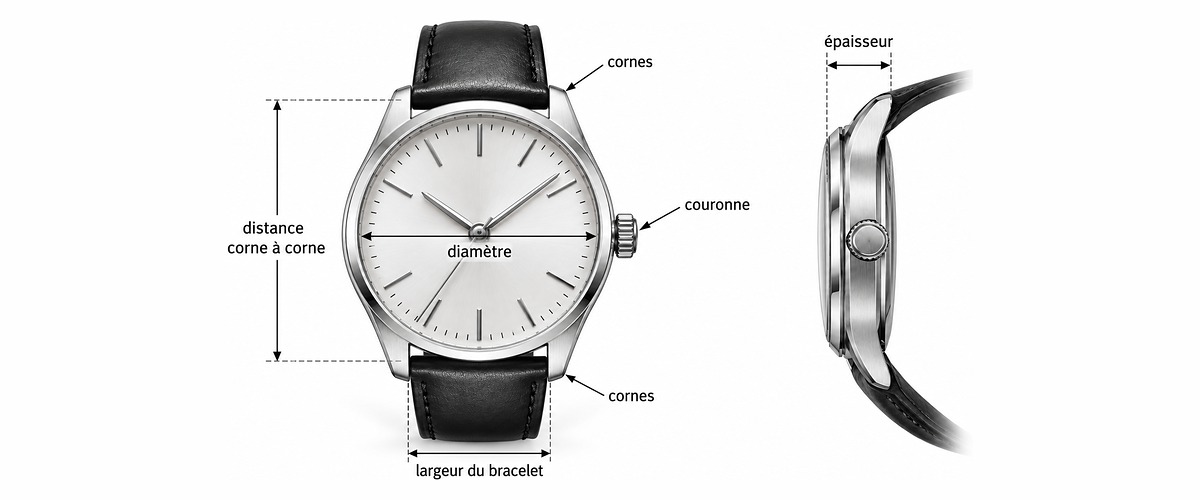
Diameter, thickness, and lugs: What measurements should you look for?
Diameter alone isn't enough to determine whether a watch will fit your wrist. Several other dimensions affect its appearance and comfort.
The diameter of the case
The diameter refers to the main width of a round case. It is generally measured from one edge to the other, excluding the crown. For a square or rectangular watch , refer instead to the width and height listed in the model's specifications.
The thickness of the case
Thickness refers to the height of the watch from the case back to the crystal. A slim watch often has an elegant look and fits easily under a sleeve. A chronograph, a sports watch, or certain automatic models may be thicker.
A thick watch isn't necessarily uncomfortable, but its weight and thickness should be appropriate for your wrist and your lifestyle.
The length from horn to horn
The lugs are the attachments that connect the case to the band. The distance between their ends—sometimes called “lug-to-lug”—determines the total surface area the watch occupies on the wrist.
For a balanced look, the lugs should ideally stay within the width of the wrist. If they extend significantly beyond either side, the watch may appear too large or may not fit the wrist as well.
Short or slightly curved lugs can help a relatively wide case sit more comfortably on a slender wrist.
The width of the strap
A wide strap enhances the watch’s visual presence and generally balances out a large case. A narrower strap gives the watch a lighter look. The width must also match the space between the lugs if you want to replace the strap.
Weight
The weight depends on the material, the movement, the strap, and the built-in features. A steel strap and a bulky case will generally be heavier than a slim watch with a leather strap. For everyday wear, ask yourself whether you like to feel the watch on your wrist or if you prefer a lightweight, discreet model.
The shape of the case
An oval, square, rectangular, or cushion-shaped watch is perceived differently than a round case. A rectangular watch may appear taller, even if its width is modest. A dark dial sometimes appears more compact, while a light or very open dial visually accentuates the watch’s dimensions.
Which watch should you choose for a slim wrist?
A wrist measuring less than 15.5 cm is often best complemented by a compact, lightweight case with relatively short lugs.
Diameters ranging from 26 to 36 mm are generally a good starting point. However, some 38- or 40-mm models may be suitable if they are slim and well-designed.
For a slender wrist, pay special attention to:
-
the length of the horns;
-
the thickness of the case;
-
weight;
-
the flexibility of the strap;
-
the position of the crown;
-
the way the case rests against the skin.
A slim leather strap, a Milanese mesh strap, or a metal bracelet with delicate links creates an elegant look. A jewelry watch can also be worn as a true fashion accessory.
Of course, you can choose an oversized watch to create a more fashion-forward contrast. In that case, make sure the lugs don't stick out too far from your wrist and that the case doesn't get in the way of your hand movements.
Which watch should you choose for an average-sized wrist?
A wrist circumference of approximately 15.5 to 18.5 cm allows you to wear a wide variety of styles.
Lenses ranging from 34 to 42 mm generally provide a balanced look, depending on the desired effect:
-
34 to 36 mm for a slim or dress watch
-
36 to 40 mm for a versatile model
-
from 40 to 42 mm for a sport model, a chronograph, or a more bold look.
The length and thickness of the lugs remain key factors. A 42-mm case with short lugs may sometimes appear more balanced than a smaller but very elongated model.
This type of watch case also offers more freedom in choosing a strap: leather, steel, Milanese mesh, silicone, or fabric.
Which watch should you choose for a wide wrist?
A wrist circumference greater than 18.5 cm can comfortably accommodate larger watch cases.
Models ranging from 40 to 44 mm are often a good all-around choice. Watches measuring 45 mm or larger can also be a good fit, especially for a sporty or bold style.
Chronographs, dive watches, and automatic models naturally look great on a wide wrist, but comfort should always be the top priority.
Please note:
-
the total weight;
-
the thickness of the case;
-
the width of the strap;
-
the readability of the dial;
-
adjustment options;
-
the way the crown sits near the hand.
A smaller watch can also look very stylish. Vintage-inspired models and dress watches are intentionally designed to be compact, regardless of wrist size.
What size watch should a woman choose?
There is no longer just one standard watch size for women. Today’s collections feature everything from delicate jewelry watches to unisex, sporty, and oversized models.
A slim, understated watch
A 20- to 30-mm case creates a delicate look, similar to that of a piece of jewelry. It pairs particularly well with a slim strap, a Milanese mesh bracelet, or a small metal chain.
A versatile watch
Watch cases ranging from 30 to 36 mm offer a good balance between readability and elegance. They fit a wide range of wrist sizes and can be worn both for everyday use and on more formal occasions.
A unisex watch
A diameter between 36 and 40 mm makes the watch stand out more while still being easy to wear. This range applies to many contemporary and unisex models.
An oversized watch
Cases measuring 40 mm or larger create a bold look. To maintain a harmonious appearance, consider the length of the lugs, the thickness, and the weight.
An oversized watch can be paired with a slim strap to create contrast or with a wider strap to emphasize its character.
The choice should not be based solely on gender categories. Wrist size, personality, and the desired style are better guidelines.
What size watch should a man choose?
Men's watches also come in a wide variety of sizes, ranging from very slim dress watches to sporty chronographs.
A dress watch
A case measuring 34 to 39 mm generally has an elegant and understated look. Its slim profile allows it to slip easily under a shirt sleeve.
A classic everyday watch
Diameters ranging from 38 to 42 mm are particularly versatile. They offer good readability and fit a wide range of wrist sizes.
A sports watch or a chronograph
These models often feature a 40- to 45-mm case, sometimes accompanied by sub-dials, buttons, and a more prominent bezel.
Check their thickness and weight, especially if the watch is meant to be worn all day.
An automatic watch
The size of an automatic watch varies depending on its movement and design. Some models are slim, while others have a thicker case. So don’t rely solely on the diameter—also check the thickness and the lug-to-lug distance.
A man with a slender wrist can easily wear a small watch, while a larger model might be better suited for someone looking for a sporty look. Style matters more than sticking to a predefined category.
What size should you choose based on the watch style?
Proportions are closely linked to its use and its aesthetic context.
|
Watch style |
Dimensions are often customized |
Point to Watch For |
|
Dress watch |
A fairly slim case with modest contents |
Sleek Design and Elegance |
|
Jewelry Watch |
Small to medium-sized case |
Comfort and balance with the bracelet |
|
Classic Watch |
Intermediate diameter |
Versatility and Readability |
|
Sports Watch |
Medium to large case |
Weight, Durability, and Stability |
|
Chronograph |
The case is often wider and thicker |
Presence of buttons and counters |
|
Automatic watch |
Size varies depending on movement |
Thickness and Weight |
|
Connected watch |
Case designed to fit the screen size |
Comfort during extended wear |
|
Children's watch |
Small case and adjustable strap |
Lightweight, durable, and easy to read |
The dress watch
A dress watch typically features clean lines and understated proportions. It should fit comfortably under a sleeve and complement an outfit without overpowering it.
The sports watch
A sports watch often features a larger dial, highly legible hour markers, and a sturdy strap. It may be larger in size, but it must remain stable during movement.
The Chronograph
The chronograph’s various sub-dials and pushers visually enhance the watch’s presence. As a result, a 40-mm dial can appear more imposing than a classic watch of the same diameter.
The Jewelry Watch
A jewelry watch is often characterized by a small case and an intricately designed bracelet. It can be worn on its own or paired with delicate bracelets.
The smartwatch
The size of the screen directly affects the size of the case. If you wear the watch day and night, pay special attention to its weight and the comfort of the strap.
How can you tell if a watch is too big?
There are several signs that may indicate the watch's size is not a good fit for your wrist.
The watch may be too big if:
-
the horns protrude noticeably on either side of the wrist;
-
the case rotates even though the strap is properly adjusted;
-
the crown rests on the back of the hand;
-
the weight becomes uncomfortable as the day goes on;
-
It often gets caught on clothing;
-
The case restricts certain movements;
-
The strap must be tightened securely to hold the watch in place.
A bulky model can still be worn as a style choice. The real limitation is comfort and stability.
How can you tell if a watch is too small?
A watch with a small diameter isn't uncomfortable in and of itself. The main concern is its visual appeal and readability.
It may seem too small if:
-
the dial is hard to read;
-
The case looks very understated compared to the width of the wrist;
-
The bracelet seems too thin for the desired style;
-
The set does not match the desired configuration;
-
Are you looking for a sporty model or a bold chronograph?
However, a small watch may be chosen deliberately for its elegance, its vintage-inspired design, or its jewelry-like appeal. Therefore, there is no universal minimum size.
How do you choose the right size for a watch as a gift?
Giving a watch as a gift is a thoughtful gesture, but choosing the right size without knowing the exact wrist size of the recipient can be tricky.
Take a look at pre-owned watches
Look at the size, shape, and material of the watches the person owns. If they always wear small cases, a very large model might not suit their style.
You can also discreetly note down the part number or measure the case.
Take Your Style Into Account
Someone who prefers understated accessories will likely feel more comfortable with a slim, minimalist watch. A fan of sporty styles might prefer a larger dial or a chronograph.
Opt for a medium size
If you're unsure, a diameter between about 34 and 38 mm offers great versatility for a slim to medium wrist. Between 38 and 42 mm, the watch will have a more prominent look and will suit many classic or sporty models.
These guidelines should be tailored to the person's body type and style.
Choosing an Adjustable Bracelet
A leather strap with multiple holes, an adjustable Milanese mesh strap, or an adjustable metal bracelet make it easy to choose.
For a link bracelet, make sure that links can be removed or added.
Avoid models that are too extreme
If you don't know the person's preferences, avoid a case that's too small or too large. A model with balanced proportions will be easier to accept.
Allow for the possibility of adjustments
A metal bracelet can be adjusted at a jewelry store. MATY Watch Services can advise you on whether it’s possible to remove links or replace a bracelet, depending on the model.
When you're still unsure, a gift card lets the recipient choose the watch that will perfectly suit their wrist and their tastes.
How do you adjust a watch strap?
Even when the case diameter is the right size, a poorly adjusted bracelet can make the watch uncomfortable to wear.
A leather bracelet
The strap should be tight enough to hold the case in place without digging deeply into the skin. You should generally be able to slide a finger between the strap and your wrist.
If none of the holes match your measurement, avoid punching holes in the leather yourself. A professional can check for possible solutions or suggest a different strap.
A metal link bracelet
The bracelet can be shortened by removing one or more links. It is best to remove links evenly on both sides of the clasp to keep the watch centered.
Keep the removed links: they can be reattached if your wrist size changes or if you pass the watch on to someone else.
A Milanese mesh
The sliding clasp on many Milanese bracelets can be moved to precisely adjust the length.
Next, make sure the clasp is securely fastened to prevent the bracelet from coming loose.
A silicone or fabric wristband
These bracelets typically offer several adjustment options and are suitable for sports activities.
Be careful not to tighten them too much, especially when the temperature rises or during physical activity.
An interchangeable bracelet
Changing the watchband lets you alter the watch's look and sometimes make it more comfortable to wear. Check the width between the lugs before choosing a new model.
A thinner or more flexible strap can make a large case appear lighter, while a wider strap can enhance the presence of a sports watch.
Checklist: What Should You Consider Before Choosing a Watch?
Before finalizing your purchase, please check the following:
-
the circumference of your wrist;
-
the diameter of the housing;
-
the width and height of a non-circular case;
-
thickness;
-
the distance between the horns;
-
the curvature of the horns;
-
the weight of the case and the band;
-
the width of the strap;
-
its adjustment options;
-
the comfort of the crown and the buttons;
-
the readability of the dial;
-
intended use;
-
the option to wear it under a sleeve;
-
the desired style;
-
the available repair or exchange services.
When shopping online, compare these measurements to a watch you already own. This will help you better visualize the proportions of the new model.
FAQ on Watch Sizes
What size watch should you choose for your wrist?
Start by measuring your wrist circumference, then compare it to the case diameter. A wrist measuring 14 to 15.5 cm is often well-balanced with a case diameter of 30 to 36 mm, while a wrist measuring 17 to 18.5 cm can generally accommodate a case diameter of 38 to 42 mm. These guidelines are for reference only.
How do you measure your wrist for a watch?
Wrap a tailor's tape measure around your wrist, at the spot where you'll wear the watch. The tape measure should touch your skin without squeezing it. If you don't have one, use a piece of string and then measure it with a ruler.
What size watch should you choose for a slim wrist?
If you have a slender wrist, start by looking at cases between 26 and 36 mm. Also make sure the lugs don’t stick out too far, that the case isn’t too thick, and that the strap remains flexible and lightweight.
What size watch is best for a 15-cm wrist?
A diameter of 30 to 36 mm generally looks well-balanced on a 15-cm wrist. A 38-mm model can also work well if it has short lugs and a slim case.
What size watch is best for a 17-cm wrist?
A 17-cm wrist can generally accommodate watch cases ranging from 36 to 42 mm. Choose the smaller diameter for a more understated look, and the larger diameter for a sportier or more bold appearance.
What size watch should a man choose?
The choice depends more on the wrist and style than on gender. Dress watches are often between 34 and 39 mm, while classic, sport, or chronograph models can range from 38 to 45 mm or larger.
What size watch should a woman choose?
A fashion watch may have a case smaller than 30 mm, while a versatile watch is often between 30 and 36 mm. Unisex and oversized models can reach 40 mm or more, depending on the desired style.
How can you tell if a watch is too big?
A watch is probably too big if its lugs protrude noticeably from the wrist, if it rotates even when the strap is adjusted, if the crown gets in the way, or if its weight becomes uncomfortable.
How do you choose a watch as a gift?
Take note of the watches the person already wears, opt for a medium size, and choose an adjustable strap. Avoid very extreme proportions if you don't know their tastes.
What is the difference between the case diameter and the bracelet size?
The diameter measures the width of the case. The bracelet size corresponds to the length needed to comfortably wrap around the wrist. These two measurements must be checked separately.
Watches: instructions for use, buying guide and advice


