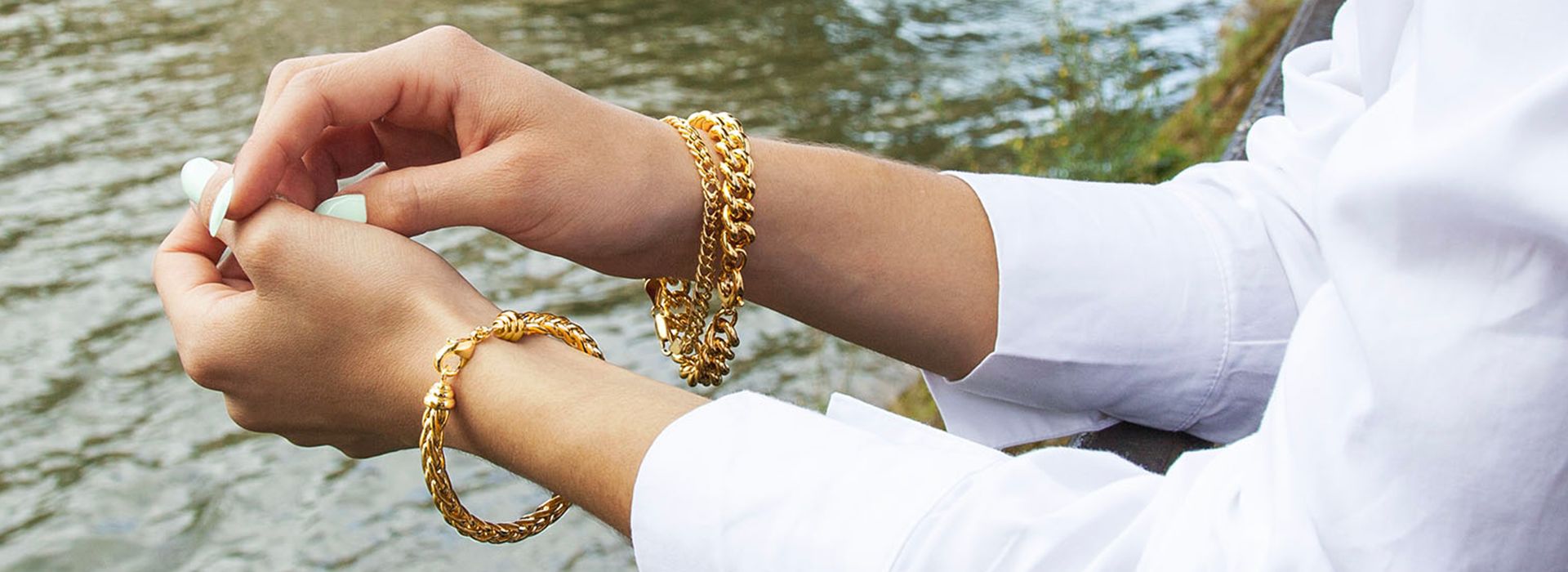
Choosing a chain isn’t just a matter of aesthetics: whether it’s a necklace, pendant, or bracelet, it influences your look, the style of the jewelry, its comfort, its durability, and how you wear it in everyday life. A fine chain will beautifully complement a subtle pendant, while a thicker chain will better showcase a statement medallion or a necklace worn on its own. This guide, published by Maty, reviews the main types of chains used in jewelry: their origins, history, structure, and key features to help you find the perfect style tailored just for you.
Contents
-
Why Is It Important to Choose the Right Chain Link?
-
A Comprehensive Overview of Mesh Types
-
Which chain should you choose for your piece of jewelry?
-
How do you maintain a chain based on its link type?
-
Classic and Timeless Chain Styles: Forçat, Gourmette, Jaseron, Venetian, Oval
-
Patterns: Coffee Bean, Horse, Navy, Figaro, Rope
-
Sophisticated, High-End Knits: Palmier, Royale, Polonaise, Américaine
-
Contemporary Stitches: Flat, Trombone, Omega, Serpentine, Tortoiseshell, Alternating, Ball
-
Fine, subtle stitches: English, Twisted, Rice Stitch
-
FAQ: Everything You Need to Know About Chain Stitch Types
Why Is It Important to Choose the Right Chain Link?
Beyond appearance, the type of link is a key factor in how a chain, necklace, bracelet, or cuff is worn: some have a delicate and subtle look, while others are bold and sturdy. A delicate oval link does not have the same appearance as a flattened, textured link—neither in the way it captures and reflects light nor in its resistance to wear and tear.
-
A delicate chain designed to showcase a pendant. When made of high-quality material, it is understated yet highlights the pendant—especially if the piece is set with gemstones—and is strong enough to support its weight.
-
A wider link for a piece of jewelry worn on its own. Some links, which are more intricately crafted, have a strong visual presence and require no embellishment: they are, on their own, the focal point of the piece.
-
Durability is a factor that isn’t given enough consideration. A chain with tightly welded links (such as a curb chain, box link chain, or marine chain) is better equipped to withstand repeated friction than a fine, openwork chain, which is more suitable for occasional use.
-
A style that ranges from minimalist to bold. Fine knits create a sense of lightness, while thick, textured, or braided knits add dimension.
Choose the Right Chain for the Type of Jewelry
-
Chain with pendant: a flexible, uniform, and durable link.
-
Worn on its own, this necklace features a more intricate chain design that becomes a stylish accent.
-
Bracelet: comfort, flexibility, and durability above all else—this is the part that can be the most fragile due to its exposure to impacts.
-
Cuff bracelet: thick or structured links.
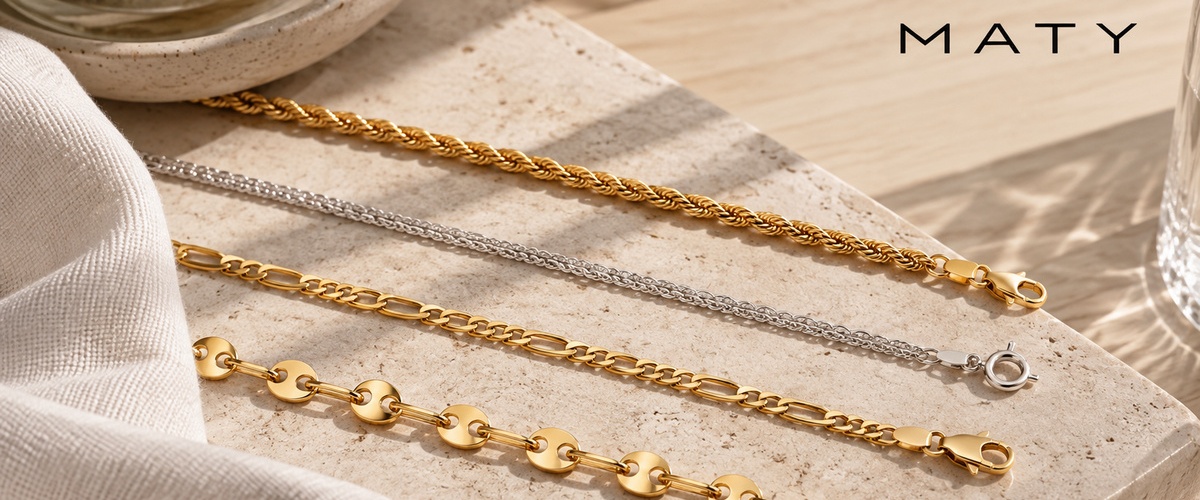
How do you choose the best mesh?
|
Your needs |
The Best Knit to Choose |
|
Wearing a pendant |
A fine, even, and durable knit |
|
Wear the necklace on its own |
A looser or more intricate knit |
|
A Everyday Gem |
A sturdy and comfortable knit |
|
An understated style |
A fine, elegant knit |
|
A Distinctive Style |
A thicker or more graphic knit |
|
A bracelet or a chain bracelet |
A soft, durable knit |
Before you set your sights on a piece of jewelry, ask yourself how you’ll wear it on a daily basis: over a sweater, in direct contact with your skin, every day, or for special occasions.
An Overview of Knit Types
|
KNIT |
Style |
Strength |
With pendant |
Ideal for |
|
Grain coffee |
Vintage and bold |
★★★★★ |
⭐⭐☆☆☆ |
Bracelets, chunky chains, retro jewelry |
|
English |
Slim and discreet |
★★★☆☆ |
⭐⭐⭐⭐☆ |
Delicate chains, lightweight pendants |
|
Horse |
Authentic and sturdy |
★★★★★ |
⭐⭐⭐☆☆ |
Stylish Cuff Links and Bracelets |
|
Forçat |
Classic and timeless |
★★★★★ |
⭐⭐⭐⭐⭐ |
Everyday necklaces, pendants |
|
Marine |
Inspired by the nautical world |
★★★★★ |
⭐⭐⭐⭐☆ |
Bracelets, men's or unisex chains |
|
Palm tree |
Unique and decorative |
★★★★☆ |
⭐⭐⭐☆☆ |
Elegant necklaces worn on their own |
|
Omega |
Sturdy and sophisticated |
★★★★☆ |
⭐☆☆☆☆ |
Choker necklaces without pendants |
|
Plate |
Modern and minimalist |
★★★★☆ |
⭐⭐⭐☆☆ |
Layered necklaces, contemporary jewelry |
|
Royal |
Luxurious and intricately crafted |
★★★★★ |
⭐⭐☆☆☆ |
High-end jewelry, worn on its own |
|
Twisted |
Twisted and luminous |
★★★★☆ |
⭐⭐⭐☆☆ |
Necklaces on their own or light pendants |
|
Trombone |
Trends and Charts |
★★★☆☆ |
⭐⭐⭐☆☆ |
Layering, Contemporary Delicate Chains |
|
Venetian |
Geometric and refined |
★★★★☆ |
⭐⭐⭐⭐⭐ |
Pendants, delicate and elegant necklaces |
|
Gourmette |
Elegant and traditional |
★★★★★ |
⭐⭐⭐⭐☆ |
Bracelets, bangles, sturdy chains |
|
Oval |
Simple and timeless |
★★★★☆ |
⭐⭐⭐⭐☆ |
Classic chains, versatile pendants |
|
Jaseron |
Ethereal and timeless |
★★★★☆ |
⭐⭐⭐⭐⭐ |
Lightweight chains, pendants, unisex jewelry |
|
Alternating |
Upbeat and original |
★★★★☆ |
⭐⭐⭐☆☆ |
Stylish necklaces and bracelets |
|
Serpentine |
Modern and fluid |
★★★☆☆ |
⭐⭐☆☆☆ |
Necklaces only, contemporary style |
|
Tortoiseshell |
Flowing and luminous |
★★★★☆ |
⭐⭐☆☆☆ |
Flexible bracelets and necklaces |
|
Figaro |
Stylish and graphic |
★★★★★ |
⭐⭐⭐⭐☆ |
Men's or coed teams |
|
Rope |
Twisted and luminous |
★★★★★ |
⭐⭐⭐☆☆ |
Necklaces on their own or light pendants |
|
Grain rice |
Delicate and refined |
★★★☆☆ |
⭐⭐⭐⭐☆ |
Women's chains and delicate pendants |
|
American |
Soft and elegant |
★★★★☆ |
⭐⭐⭐☆☆ |
Elegant necklaces and bracelets |
|
Polonaise |
Sophisticated and sculptural |
★★★★☆ |
⭐⭐☆☆☆ |
Jewelry with character, exceptional pieces |
|
Ball |
Playful and contemporary |
★★★☆☆ |
⭐⭐⭐☆☆ |
Fashion necklaces and lightweight pendants |
For a chain that goes with everything, the Forçat, Jaseron, and Venetian styles are definitely the perfect balance of lightness, comfort, and durability. If you’re wearing a chain without a pendant, the Corde, Figaro, Royale, Coffee Bean, or Omega styles will add a touch of elegance to your look.
Which chain should you choose for your piece of jewelry?
For a pendant, choose a fine, even, and supple chain that doesn’t overshadow the jewelry: Forçat, Jaseron, Venetian, English, Oval, and Rice Grain are the most recommended. One thing to keep in mind: make sure the chain is suitable for the weight of the pendant, especially if it’s set with gemstones.
If you wear your chain without attaching any pendants, let the chain itself be the focal point. Intricate designs such as the Gourmette, Marine, Palmier, Serpentine, Grain de café, Royale, Corde, or Écaille offer a striking style on their own.
For a bracelet—which is more prone to impact than a necklace—the links must above all be comfortable, flexible, and durable: the Cuff, Marine, Horse, and Forçat styles are undoubtedly safe bets. For added style, the Coffee Bean or Trombone styles are good options.
When it comes to children's jewelry, comfort and safety take precedence over aesthetics. Simple, lightweight links without sharp edges—such as Forçat, Jaseron, and Venetian—are best suited for a child's first necklace.
|
Are you looking for… |
The Most Suitable Meshes |
|
A chain for a pendant |
Forçat, Jaseron, Venetian, English, Oval, Rice Grain |
|
A single chain |
Bracelet, Navy, Palm Tree, Serpentine, Coffee Bean, Royal, Rope, Tortoiseshell |
|
A durable bracelet |
Bracelet, Navy, Horse, Convict |
|
A piece of jewelry for a child |
Forçat, Jaseron, Vénitienne |
|
A Channel for Every Day |
Forçat, Gourmette, Marine, Jaseron |
|
An elegant and understated necklace |
Venetian, English, Rice Grain, Flat |
|
A chain with a distinctive style |
Coffee Bean, Serpentine, Royale, Palm Tree, Bracelet |
|
A trendy necklace, perfect for layering |
Flat, Trombone, Oval, Alternating |
How do you maintain a chain based on its link type?
Some links, due to their shape or thickness, trap more dirt than others or are less resistant to friction. Don't panic—good habits are all it takes to keep a chain shiny and strong.
-
Fine links (fine Forçat, Venetian, English, oval, rice grain): prone to twisting and knotting. Handle them gently, never pull on the links, and store each chain separately to prevent them from getting tangled with one another.
-
Dense weaves (Rope, Cuff, Coffee Bean, Royal, Alternating): Their textured surfaces are more likely to trap dust and cosmetic residue. Regular cleaning with a soft cloth—supplemented, if necessary, with a soft brush or the MATY Care Pen—is enough to restore their shine.
-
Flat or smooth links (Serpentine, Omega, Flat, Tortoiseshell): more prone to visible micro-scratches. Store them separately from harder jewelry and avoid repeated friction against other pieces.
-
Chains with pendants: Choose a cleaning method suitable for the most delicate component (stone, pearl, enamel), and pay special attention to the connecting ring between the pendant and the chain. This is where residue tends to accumulate.
Does your chain have a twisted link, is it misshapen, or is the clasp at risk of breaking? It’s best not to force it: a jeweler like Maty can inspect the piece, repair it if necessary, and give it a more thorough professional cleaning.
|
Mesh type |
Point to Watch For |
Care Tips |
|
Fine Mesh (Fine Forçat, Venetian, English, Oval, Rice Grain) |
Susceptible to twisting and knots |
Clean gently; store separately |
|
Dense Weaves (Cable, Rope, Coffee Bean, Royal, Alternating) |
Trap impurities |
Soft cloth, soft brush if needed |
|
Flat or Smooth Links (Serpentine, Omega, Flat, Tortoiseshell) |
Prone to micro-scratches |
Avoid friction; store separately |
|
Necklaces with pendants |
Stones or fragile materials |
Adapt to the most delicate component |
|
Old or warped chains |
Risk of breakage |
Have it inspected by a jeweler |
Forçat Chain: The Go-To Choice for Wearing a Pendant
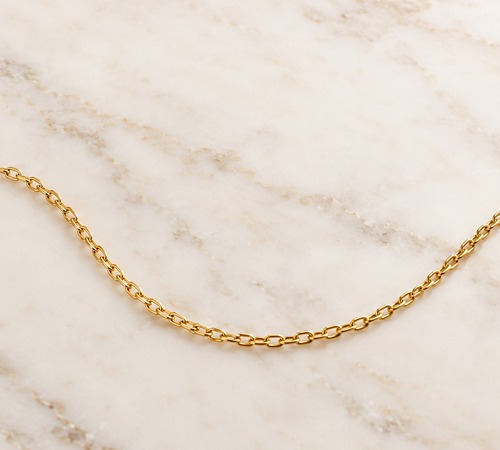
It is undoubtedly the most common chain style in jewelry, and for good reason: its oval or slightly rectangular links, joined perpendicular to one another, form a flexible chain that distributes tension evenly—an essential feature when it has to support a pendant on a daily basis.
Its main appeal isn’t visual but functional: it takes a back seat to the piece of jewelry it holds. That’s why it’s found on everything from delicate chains for children to thicker styles meant to be worn on their own. At MATY, it is available in yellow gold, white gold, and silver; as a classic chain or a necklace with a pendant; and as a bracelet in widths ranging from very fine (for a cross or a lightweight medallion) to wider versions that serve as necklaces in their own right.
Best for: chains with pendants, delicate necklaces, bracelets, children's jewelry, and layered chains.
The Gourmette Chain: Durability Above All Else
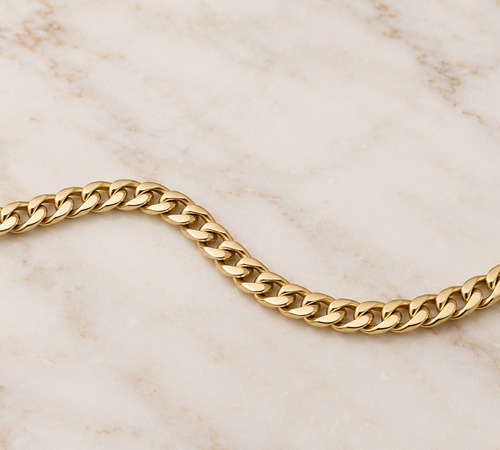
Historically associated with identification bracelets, the Gourmette is recognizable by its flattened, slightly twisted oval links, which are interlocked very tightly. This dense construction. The links are literally pressed tightly against one another, which explains why it is among the most durable bracelet styles on the market: it withstands the repeated impacts and friction of daily wear well, making it a logical choice for a bracelet worn around the clock.
Unlike the Forçat, it is not meant to blend into the background: its flat, shiny surface catches the light and becomes the focal point of the piece. It is often worn on its own, without a pendant. At Maty, you’ll find it as a chain, ring, or bracelet in 750 gold or silver.
Best suited for: bracelets and bangles, chains worn on their own, statement necklaces, and everyday jewelry.
Jaseron Mesh: Lightweight and Versatile
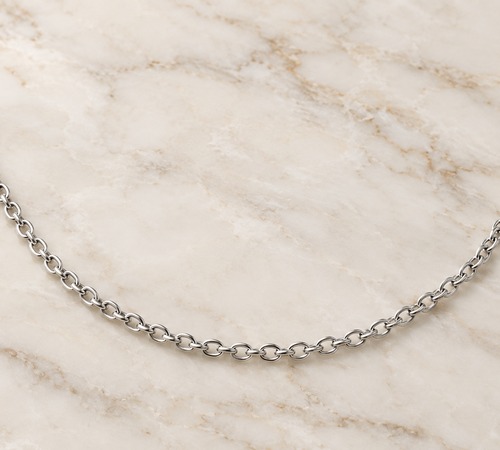
Unlike the Gourmette, the Jaseron focuses on airiness. Its round or slightly oval links are connected without being compressed, allowing light to pass through the chain—hence the characteristic shimmering effect that makes it appear light and airy.
This is probably the most versatile chain in the catalog: subtle enough for a pendant, structured enough to be worn on its own in a wide style, and light enough to easily pair with other necklaces for a layered look. Maty offers it in the form of fairly thick necklaces.
Best for: chains with pendants, thin necklaces, delicate bracelets, children's jewelry, and layered necklaces.
Venetian Weave: Geometric Precision
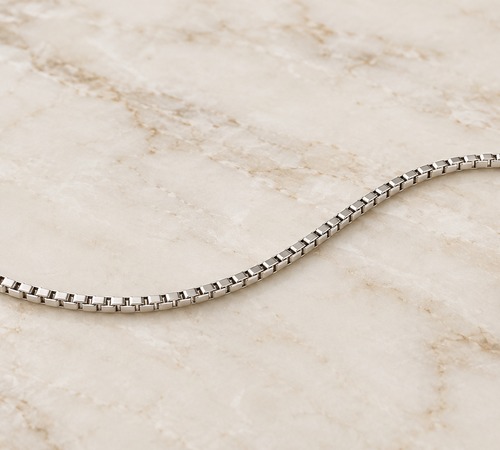
Its square or cubic links interlock with almost mechanical precision, creating a chain with a smooth, architectural profile: it is often recognizable by touch even before you see it, thanks to its sharp edges.
This smooth, even surface makes it an excellent base for a pendant: light glides over it evenly, without creating any visual focal points that might draw attention away from the pendant itself. Maty offers it primarily in the form of delicate, understated chains.
Best for: chains and pendants, delicate necklaces, children's jewelry, and delicate bracelets.
Oval Mesh: Timeless Simplicity That Transcends Trends
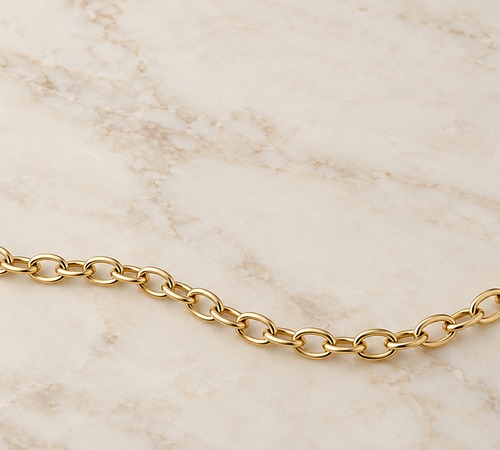
One of the oldest designs in jewelry. Its oval links, all identical in size, follow one another in a continuous chain with no variation, no pronounced relief, and no interplay of textures. It is precisely this neutrality that makes it a reliable staple: it never goes out of style because it has never followed any particular trend. Maty sells this chain primarily in the form of fairly substantial bracelets made of gold and silver.
Best for: classic chains, versatile pendants, everyday jewelry, simple bracelets.
More textured knits with a distinctive visual identity.
The "Coffee Bean" Knit: The Return of Vintage
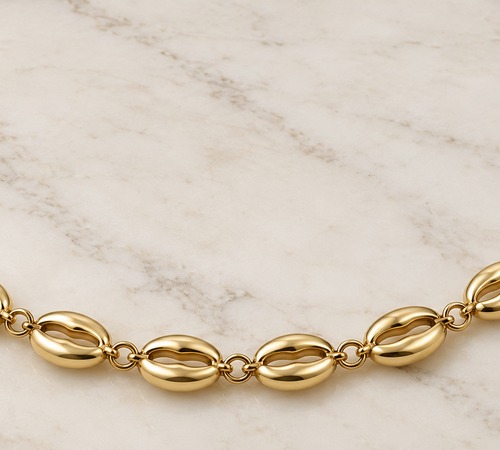
Its name comes from the shape of its links: rounded, oval, and pierced in the center like a roasted coffee bean. These links are connected by small rings that allow them some freedom of movement, resulting in a chain that looks substantial but feels supple when worn.
This chain has enjoyed several waves of popularity since the 1980s and is making a comeback today, driven by the craze for vintage jewelry and “statement” pieces. Its pronounced texture catches the light beautifully, but it also tends to collect dust—something to keep in mind if you wear it every day. At Maty, you’ll find it in our selection of bracelets and necklaces, sometimes in two- or three-tone designs.
Best for: necklaces worn on their own, chunky chains, bracelets, link bracelets, and vintage jewelry.
Maille Cheval: The Strength of the Equestrian World
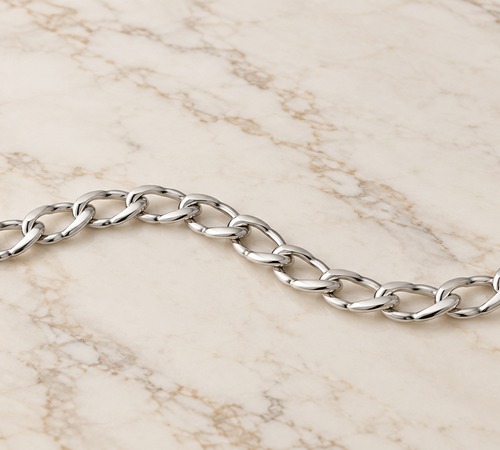
Its large, flat, perfectly identical oval links are strung together with a regularity that immediately sets it apart from the Figaro (which, in contrast, alternates link sizes). The name comes from the chains historically used in equestrian tack—a field where mechanical strength is non-negotiable.
Long confined to men's jewelry, it has become widely popular in unisex collections in recent years, driven by the current trend for bold chains. Browse the Maty selection to discover our designs that are very popular with men.
Best for: bracelets and bangles, chains and necklaces, ID bracelets.
The Marine Knit: Inspired by Anchor Chains
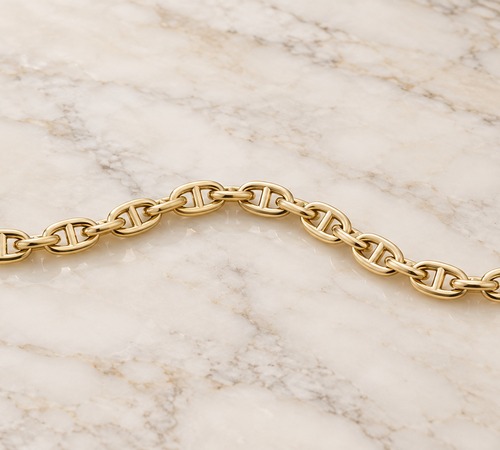
It’s recognizable by the central bar that runs through each oval link—a detail directly inspired by marine anchor chains, where this bar prevents the link from being crushed under tension. Adapted for jewelry, it provides particularly effective stress distribution, making it one of the most reliable link styles for intensive daily wear. Among Maty’s jewelry collection, you’ll find it crafted from a variety of materials.
Best for: men's and women's chains, bracelets, link bracelets, necklaces worn on their own, and everyday jewelry.
Maille Figaro: The Italian Rhythm
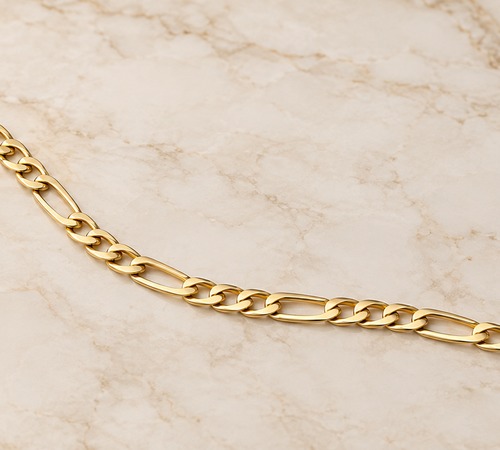
Instantly recognizable by its alternating short and long links: this most common style follows a pattern of three short links to one long link. This design, of Italian origin, breaks up the visual monotony of a classic chain without ever being garish. Maty offers it as part of its men’s jewelry collection.
Best suited for: necklaces worn on their own, bracelets, everyday necklaces, and jewelry for men and women.
Cord Knit: The Weave That Captures Light
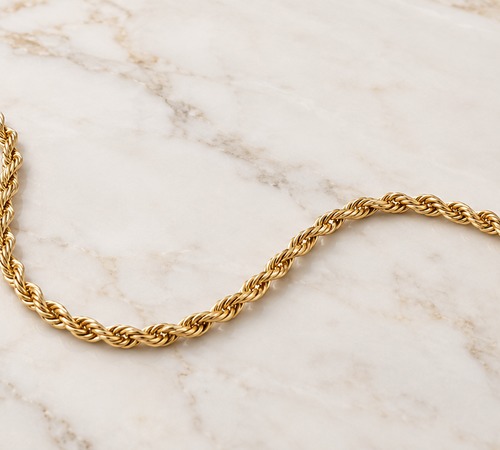
Numerous small, intertwined links coil around one another to form a continuous twist: it is the movement as a whole—rather than any single link—that gives this chain its distinctive character. The result: a multitude of facets that reflect light at different angles depending on the position of the piece. Maty, a French jeweler since 1951, offers this chain for jewelry you’ll wear around your neck.
Best for: necklaces and chains worn on their own, bracelets, and chain bracelets.
Technical constructions, reserved for pieces that stand on their own.
Palmier Knit: Three-Dimensional Weaving
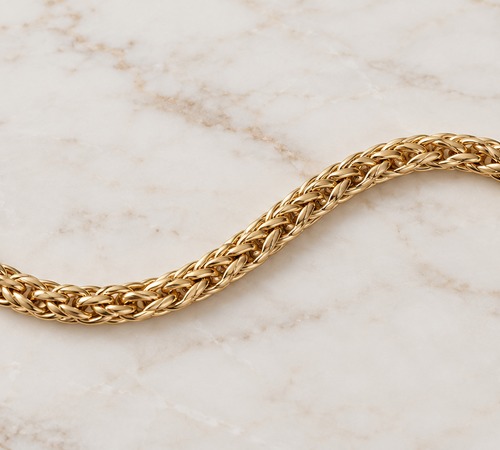
Among the most complex designs in jewelry: metal wires are braided in three dimensions, with each link connected not to the one before it but to the one before that. This technique requires a high degree of precision, which explains its positioning in the higher-end market and its striking visual impact.
A pendant would almost be unnecessary on a chain like this—the braided design alone is enough to catch the eye. Whether white or yellow gold, thin or thick, you can find it at Maty.
Best suited for: necklaces and chains worn on their own, bracelets, ID bracelets, and link bracelets.
The Royal Stitch: A Blend of Byzantine and Peruvian Stitches
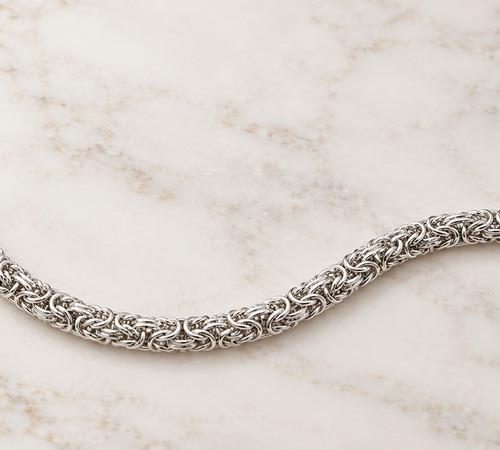
Also known by these two other names depending on regional traditions, it is based on an interlacing of rings that are first connected in pairs and then joined together to form a dense, three-dimensional structure. It is one of the most technically challenging weaves to create in the workshop, a factor that explains its almost universal presence in the most intricately crafted collections. Hoop earrings, chokers: take a look at the Maty jewelry that features this design.
Best suited for: thick necklaces and chains, bracelets, and high-end jewelry.
Polish Knit: The Sculptural Volume
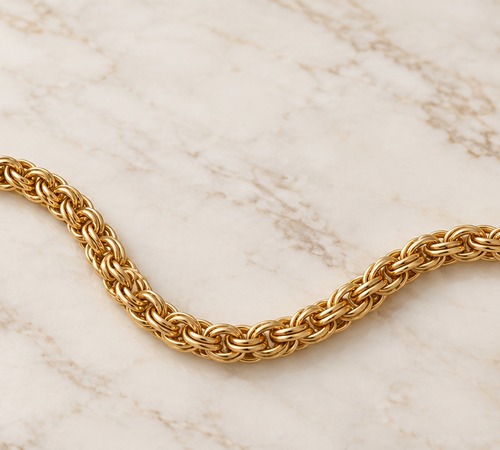
Coiled and interwoven metal wires give this piece a generous volume that, despite its apparent thickness, remains comfortable to wear. This design directly evokes the aesthetic of fine jewelry and is chosen precisely to make a statement.
Best suited for: thick necklaces and chains, bracelets, and high-end jewelry.
American Knitting: Sculpted Texture
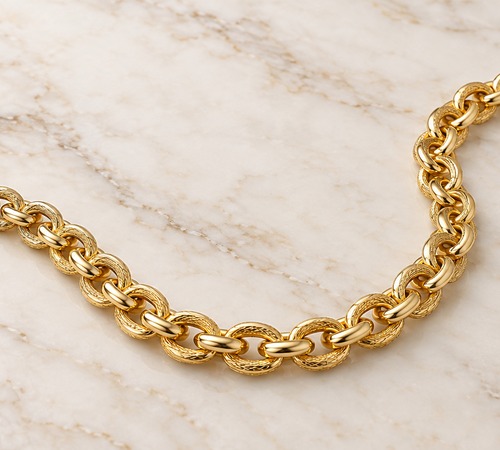
Its generous, rounded links, with their finely crafted surface, create a texture that changes in appearance depending on the viewing angle and ambient light: an effect that is more subtle than that of the “Grain de Café” style, but just as recognizable once you know how to spot it. Discover our collection dedicated to this style in our online jewelry store.
Best for: necklaces, chains, bracelets, and link bracelets.
Knitwear that reflects current trends, especially layering.
Flat Knit: Minimalism That Stays Flat
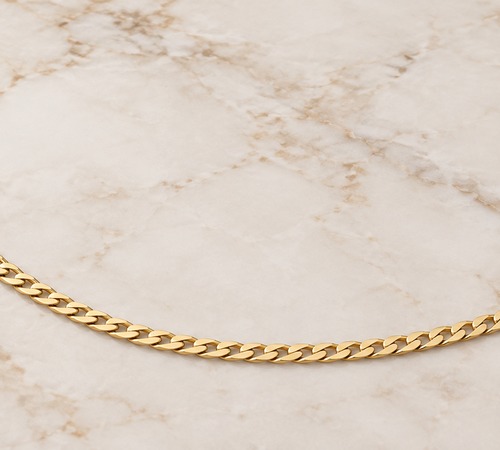
Its small, completely flattened links, joined edge-to-edge, limit the natural twisting that occurs in most other chain styles. It is this ability to lie flat against the skin without twisting as you move that explains its popularity in current layering trends, where multiple necklaces are worn together and each must remain clearly visible on its own.
Best for: layered necklaces, contemporary fine chains, understated pendants, and everyday jewelry.
The Trombone Stitch: The Paperclip Spirit
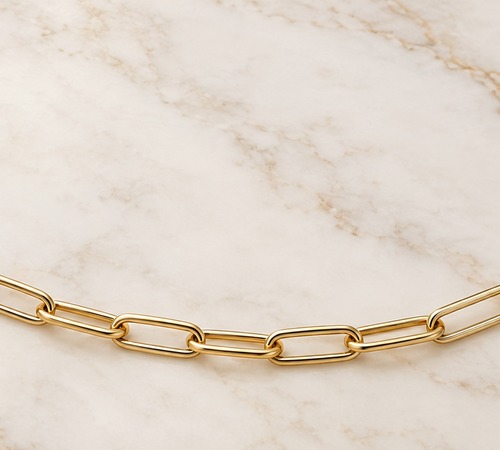
Recently popularized by fashion trends, it owes its name to its large, elongated oval links, which resemble a paperclip. Its open structure allows charms or medallions to be clipped directly onto it without needing an eyelet—a practical detail that explains its popularity for customizable jewelry. Maty has even used this design to create rings and earrings.
Best for: layered necklaces, charm chains, customizable jewelry, and trendy jewelry.
Omega Mesh: The Continuous Surface
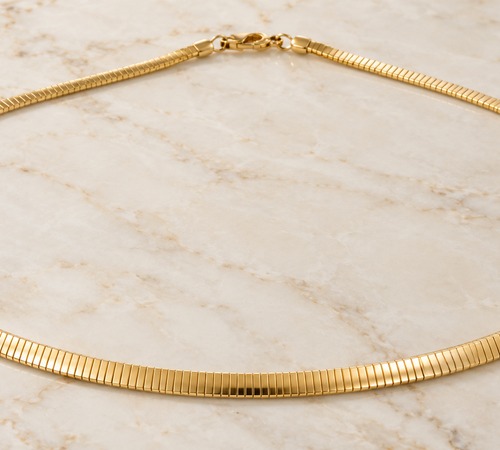
A series of small, interlocking metal discs or plates creates an almost unbroken surface that completely conceals the chain’s links. Both rigid and semi-flexible, it conforms to the shape of the neck without ever twisting—a characteristic found in no other chain on this list. Its design naturally makes it incompatible with a traditional pendant; it’s best to choose one that already features a central motif or to wear it on its own. This model is available in our online jewelry store.
Best for: chokers, chains worn on their own.
The Serpentine (or Serpent) Stitch: Smooth, Flowing Lines
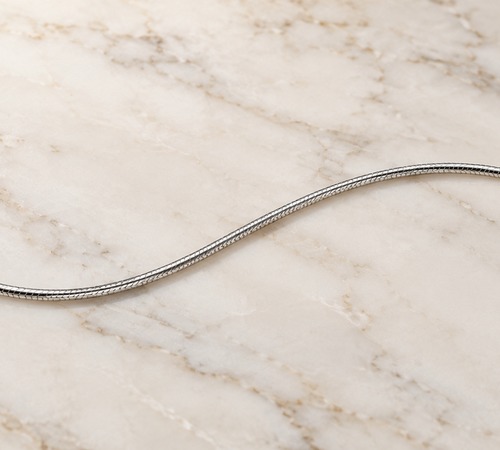
Its tiny, tightly packed links make the chain nearly invisible to the naked eye: visually, the chain appears as a continuous surface, much like a snake’s scaly skin, hence its alternative name. It doesn’t need a pendant to stand on its own: its design is already the focal point of the piece. Maty offers it in three materials: gold, gold-plated, and silver.
Best for: necklaces worn on their own, chokers, delicate chains, minimalist looks.
Tortoiseshell Knit: A Luminous Overlay
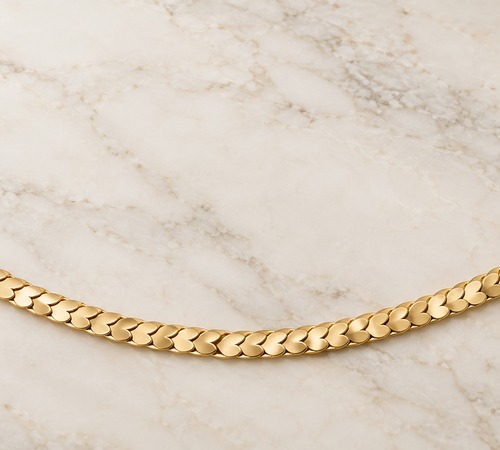
Small, slightly domed metal plates partially overlap, much like the scales of a fish: a more pronounced texture than that of the Serpentine, but with an equally supple drape. This layered structure hugs the curves of the wrist particularly well. Discover our wide bracelets that stand out for their style.
Best suited for: flexible bracelets, flowing necklaces, and contemporary designs.
The Alternating Stitch: Contrast as a Principle
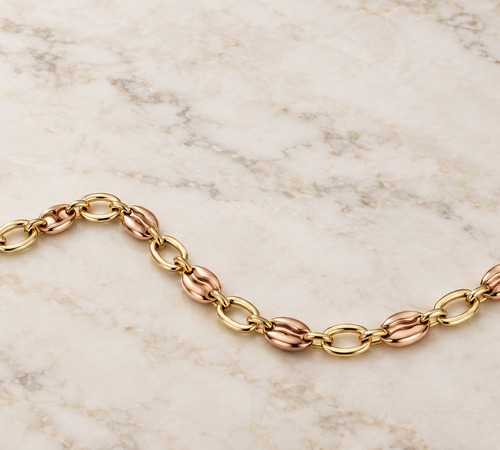
The principle is simple yet effective: one type of link, followed by a different one (in shape, size, or finish), and so on. This deliberately irregular pattern creates a richer play of light than a classic chain, without going as far as the very pronounced relief of a Royale chain. Maty has designed various models using horse-head, oval, and coffee bean links.
Best for: chains and bracelets, graphic-style necklaces, contemporary jewelry.
Maille Boule: Playful Geometry
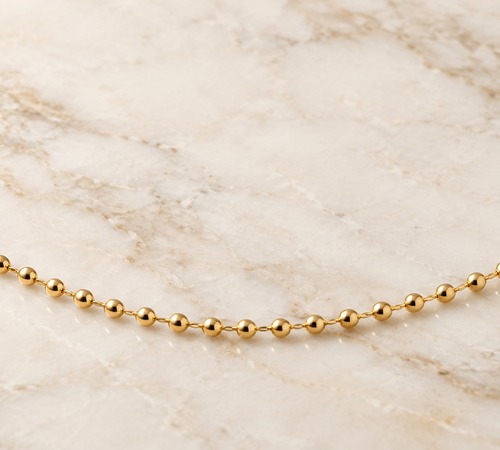
A series of small spheres, evenly spaced and connected by thin metal links—some slender, others more substantial, with a shiny or satin finish depending on the model. It’s one of the easiest link styles to recognize at a glance, and one of the lightest to wear despite its distinctive look. Find this style on our website and in our jewelry stores.
Best for: chains and pendants, necklaces, bracelets, and custom jewelry.
Lightweight chains, designed primarily to be worn with a pendant.
English Knit: The Art of Fine Knitting
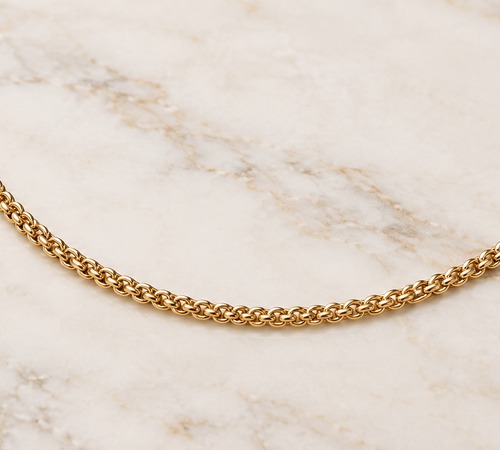
Inspired by the knitting stitch of the same name, it consists of small, slightly flattened oval links, woven together so tightly that the chain appears almost continuous. Simple by nature, it works just as well as a subtle pendant as it does in a wider version worn on its own. It is available at Maty in the bracelets and necklaces sections.
Best for: chains, necklaces, delicate bracelets, and jewelry with pendants.
Twisted Stitch: The Spiral That Plays with Light
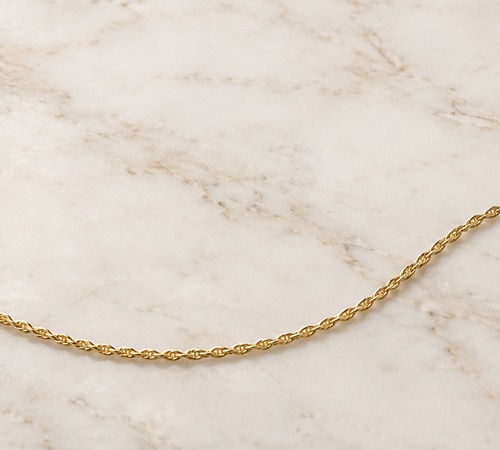
Not to be confused with the “Corde” design: here, it is not a braiding of multiple links, but rather the angular orientation of each link that creates the spiral effect. The texture is more delicate and subtle, yet just as effective at catching the light as it moves. Maty offers this design in chains of various lengths.
Best for: chains, necklaces, bracelets, pendants, layered chains.
The "Rice Grain" Knit: Delicate Texture
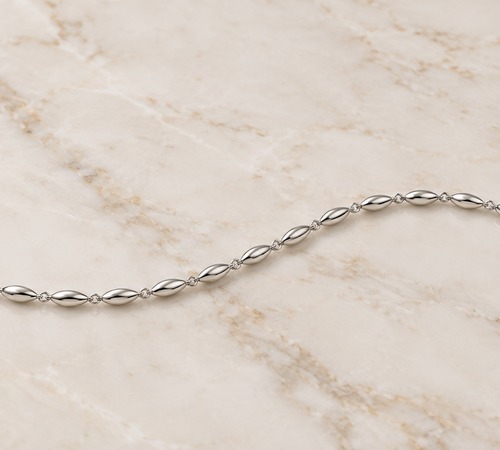
Its elongated, slightly domed links, arranged in one or more rows, create a subtle texture that is more pronounced than that of a Forçat but much finer than that of a Grain de café. It is a weave that stands out most to the touch, almost as much as to the eye.
Best for: chains, necklaces, delicate bracelets, and formal jewelry.
FAQ: Everything You Need to Know About Chain Stitch Types
What are the different types of chain stitches?
Coffee Bean, English, Horse, Convex, Navy, Palm, Omega, Flat, Royal, Twisted, Trombone, Venetian, Cuff, Oval, Jaseron, Alternating, Serpentine, Tortoiseshell, Figaro, Rope, Rice Grain, American, Polish, and Ball are among the most common. Some are designed to hold a pendant, while others are meant to be worn alone or prioritize durability.
What type of chain should I choose for a pendant?
A fine, even, and durable chain: Forçat, Jaseron, Venetian, English, Oval, or Rice Grain chains are the most suitable, as their understated appearance allows the pendant to take center stage.
Which chain link is the strongest?
Forçat, Gourmette, Marine, and Cheval are known for their durability and are suitable for chains, bracelets, and cuff links that are subject to heavy use.
What is the difference between a Forçat chain and a Gourmette chain?
The Forçat, with its uniform oval links, is delicate, understated, and designed to take a back seat to a pendant. The Gourmette, with its wider, flattened, and tightly interlocking links, has a bolder look and is often worn on its own.
What chain link should you choose for a men's or women's necklace?
Men's chains often feature visible, sturdy links (Gourmette, Figaro, Marine, Coffee Bean, Horse, Rope). For a women’s chain with a pendant, the Forçat, Venetian, Jaseron, or Rice Grain remain safe bets; for a chain worn on its own, the Serpentine, Royal, Palm, or Cuff styles offer a more assertive look. These suggestions are trends, not hard-and-fast rules.
How can you identify a type of knit?
Examine the shape of the links (round, oval, rectangular, twisted, flattened), how they are joined, and their texture. If in doubt, a jeweler can identify a chain in a matter of seconds, even if it’s an antique or heirloom piece.
Is the same type of link used for chains, necklaces, bracelets, and bangles?
Yes. Many chain styles (Forçat, Gourmette, Marine, etc.) are available in different types of jewelry: the difference lies mainly in the width, thickness, or length, not in the construction itself.
"Serpent" stitch and "Serpentine" stitch—are they the same thing?
Yes, these are two names for the same structure, which has a smooth, continuous surface reminiscent of a snake's scales.

Gold-plated palm-tree necklace 45 cm
115€

925 silver chain with curb chain 45 cm
79€

925 silver bracelet marine mesh 21cm
52,50 105€ (50)

925 silver triple horse chain 50 cm
145€

925 silver forçat chain 40 cm
49€

925 silver infinity band bracelet 60mm
59€ €139 (-58%)

925 silver infinity bracelet customizable 21 cm
59€

Necklace silver 925 and zirconias 45cm
40,30 95€ (58)

375 yellow gold necklace, heart and infinity motif 45 cm
155€

Silver bracelet 925 hearts
29€

925 silver bracelet interlaced circles zirconias 18 cm
55€

Silver necklace 925 Chinese pearls 45cm
37,80 89€ (58)

Brown multi-strand steel and leather bracelet, 20.5 cm
37,50 75€ (50)

Necklace gold 375 white white diamonds 45cm shortening ring 42cm
220,50 519€ (58)

Blue synthetic bracelet with blue natural stones, 20 cm
34,50 69€ (50)

