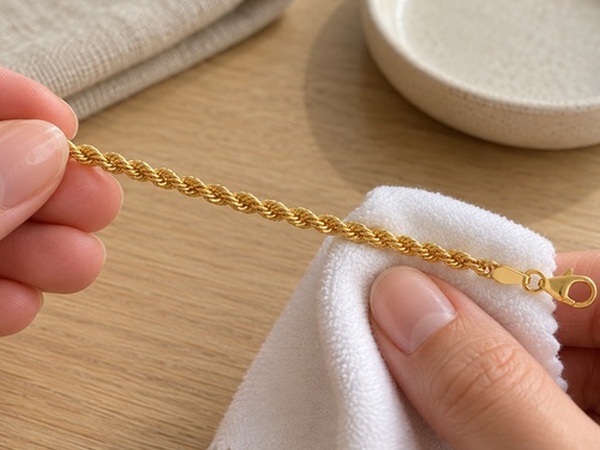
Whether worn every day or reserved for special occasions, gold jewelry often stays with us for many years. Over time, however, a ring, necklace, or bracelet can lose some of its luster due to dust, cosmetics, sweat, and friction.
To clean a piece of gold jewelry without damaging it, the first step is to choose a gentle method that is suitable for the material, the finish, and any gemstones it may contain. Lukewarm water, mild soap, and a non-abrasive cloth may be sufficient for routine care. However, white gold jewelry, pieces set with gemstones, or particularly antique pieces may sometimes require extra care.
Learn the best ways to care for your gold jewelry and keep it looking its best for years to come.
Why does gold jewelry lose its luster?
Gold does not tarnish in the same way as silver. However, it may appear duller over time, especially when a thin layer of deposits forms on its surface.
In everyday life, jewelry is exposed to many elements:
-
the sebum naturally present on the skin;
-
sweating;
-
body creams and oils;
-
makeup;
-
the perfume;
-
soaps and cosmetics;
-
dust;
-
friction against clothing or other jewelry.
These residues can accumulate in the intricate details of a setting, around the links of a chain, or beneath gemstones. As a result, the jewelry reflects light less effectively and appears to have lost its luster.
Micro-scratches caused by everyday wear and tear can also gradually change its appearance. They are particularly noticeable on smooth, polished surfaces.
The gold used in jewelry is an alloy
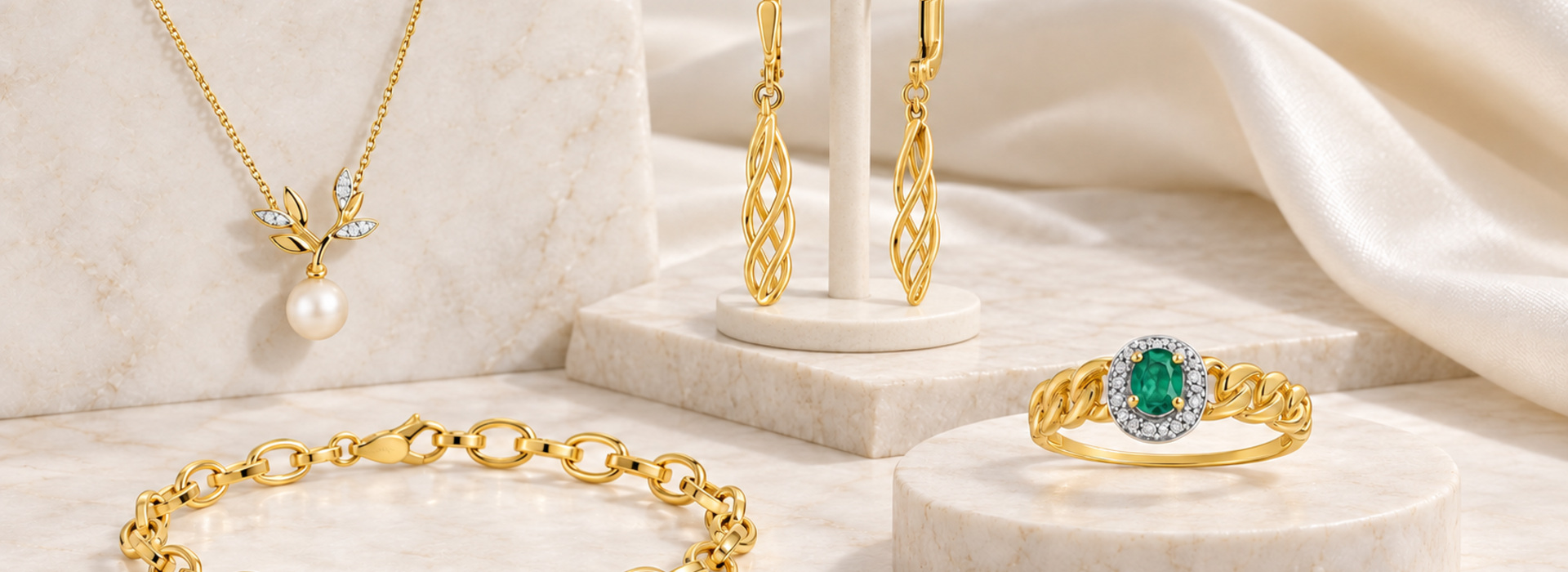
Since pure gold is naturally malleable, it is usually combined with other metals to create more durable jewelry. The composition of this alloy affects the color and certain characteristics of the jewelry.
Yellow gold retains a warm, luminous hue. Rose gold owes its color to the presence of copper in its alloy. White gold, on the other hand, is often coated with a thin layer of rhodium to enhance its bright luster.
These differences explain why not all gold jewelry needs to be cared for in the same way.
Stones and finishes require special attention
The presence of diamonds, gemstones, pearls, or decorative elements must also be taken into account. Some stones can be gently cleaned with water, while others are more sensitive to moisture, temperature changes, or the cleaning products used.
Similarly, a satin finish, engraving, rhodium plating, or patina can be damaged by rubbing too vigorously.
Before you begin, take a moment to look at your piece of jewelry as a whole—not just the metal it’s made of.
What precautions should you take before cleaning a piece of gold jewelry?
A method suitable for a simple yellow gold wedding band may not necessarily be appropriate for an antique ring set with gemstones. Before cleaning, there are a few checks you can perform to protect the jewelry and avoid using improper techniques.
Identify the exact material of the piece of jewelry
Start by checking whether it is:
-
a piece of yellow gold jewelry;
-
a piece of white gold jewelry;
-
a piece of rose gold jewelry;
-
a piece of gold-plated jewelry;
-
a piece of jewelry that combines several metals.
Gold-plated jewelry requires more gentle care than solid gold jewelry, because its gold plating can wear off due to abrasive products or repeated friction.
White gold also requires some special care: cleaning it at home can remove dirt, but it won’t restore a rhodium plating that has become less noticeable over time.
Identify stones and fragile items
Next, examine the stones, if any. Make sure they don't move and that the prongs or other parts of the setting appear to be secure.
If a stone appears loose, if a prong is raised, or if the setting seems weakened, do not clean the jewelry yourself. Take it to a jeweler first to prevent a stone from falling out.
Pearls, amber, coral, and certain more delicate gemstones should not be submerged or treated like diamonds. If you are unsure about the nature of a gemstone, it is best to seek advice before using a product.
Examine the overall condition of the piece of jewelry
A damaged clasp, a weakened chain, a bent ring, or an antique setting require special care. Handling or brushing them could worsen any existing damage.
Whether it’s a precious piece of jewelry or one steeped in family history, having it professionally maintained is often the most reassuring option.
Create a Safe Space
Before cleaning a ring or small earrings, set up a stable, uncluttered work surface. If you’re working near a sink, close the drain or use a separate container to prevent any jewelry from slipping down the drain.
Also plan for:
-
a small, clean container;
-
lukewarm water, but never scalding hot;
-
a mild soap;
-
a very soft brush, but only if it is suitable;
-
a clean, soft, lint-free cloth.
What's the best way to clean gold jewelry?
The right method depends on the color of the gold, the type of jewelry, whether it has gemstones, and its overall condition.
|
Jewel type |
Preferred Method |
Precaution Level |
When should you seek advice? |
|
Simple yellow gold ring |
Warm water, mild soap, and a soft cloth |
Moderate |
If there are deep scratches or warping |
|
White Gold Jewelry |
Very gentle cleaning with a suitable product |
High |
If the color turns yellow or if the rhodium plating appears worn |
|
Rose gold jewelry |
Warm water, mild soap, and gentle drying |
Moderate |
If the finish is damaged or heavily scratched |
|
Gold-plated jewelry |
A soft, slightly damp cloth; do not use an abrasive one |
Very high |
If the gold plating looks worn |
|
Ring set with a diamond |
A gentle method compatible with crimping |
High |
If the stone moves or if the prongs are fragile |
|
Delicate gemstone jewelry |
Cleaning tailored to the stone, without systematic soaking |
Very high |
Whenever the nature or strength of the stone is uncertain |
|
Thin chain or bracelet |
Mild soapy water and gentle handling |
High |
If the links or the clasp appear to be worn out |
|
Antique or valuable jewelry |
Recommended Professional Opinion |
Very high |
Before any thorough cleaning |
If the jewelry has only superficial marks, a gentle cleaning method is usually sufficient. If its appearance does not improve after this initial cleaning, avoid using multiple products or handling it excessively. A jeweler can identify the source of the problem and address it without damaging the setting.
How can I clean gold jewelry using a gentle method?
For routine care of simple gold jewelry, warm water and mild soap are usually the first choice. This method removes residue from lotion, sweat, or dust without the need for abrasive products.
It is primarily suitable for jewelry in good condition that does not contain fragile stones or finishes requiring special care.
Prepare some lightly soapy water
Pour lukewarm water into a small container, then add a small amount of mild soap. The water should not be too hot, especially if the jewelry contains gemstones or multiple materials.
Gently place the piece of jewelry in the container for a few moments to allow the dirt to soften.
Prolonged immersion is not necessary. It should also be avoided if the jewelry contains glued components, delicate gemstones, or parts whose composition you do not know precisely.
Clean without applying pressure
If the piece of jewelry has intricate details or small, hard-to-reach areas, use a very soft brush. Use gentle strokes, taking care not to apply too much pressure to the prongs, clasps, or delicate areas.
For a smooth surface, a soft cloth may be sufficient. The goal is not to polish the metal, but simply to remove surface deposits.
Rinse the jewelry thoroughly
Rinse the jewelry under clean water to remove all traces of soap. Perform this step over a container or sink with the drain plugged.
Soap residue could form a film on the surface of the jewelry and dull its luster once it dries.
Dry gently
Gently dab the jewelry with a soft, clean cloth—do not rub it vigorously. Then let it air dry completely before wearing or storing it.
Make sure there is no moisture left in the links, under the stones, or around the clasp.
This method is suitable for light cleaning, but it cannot remove scratches, restore a finish, or reinforce a setting. These tasks should be left to a professional.
How do you clean gold jewelry based on its color?
Yellow gold, white gold, and rose gold are all used to create fine jewelry, but their alloys and finishes may require different techniques.
How do you clean yellow gold jewelry?
Yellow gold is prized for its warm, timeless hue. For routine cleaning, lukewarm, slightly soapy water and a soft cloth are usually sufficient to remove surface marks.
Avoid using stiff brushes and abrasive powders, which may cause new micro-scratches on polished surfaces.
If the jewelry remains dull after cleaning, its appearance may be due to natural wear and tear on its finish rather than the presence of dirt. Professional polishing can then restore its luster, provided its condition and design allow for it.
How do you clean white gold jewelry?
White gold is often plated with rhodium, a metal that gives it a light color and a brilliant luster. Over time, this coating can wear off, revealing a slightly warmer shade.
Gentle cleaning can remove buildup, but it cannot restore a worn rhodium plating. Therefore, avoid scrubbing the jewelry vigorously in an attempt to restore its original color—this could accelerate the wear of the finish.
If your white gold jewelry appears yellowed despite careful maintenance, a jeweler can check its condition and let you know if a new rhodium plating is recommended.
How do you clean rose gold jewelry?
Rose gold owes its color to its alloy, specifically the presence of copper. It can be cleaned with warm water and mild soap, provided it does not contain any delicate gemstones.
Dry it thoroughly with a non-abrasive cloth. As with yellow gold, micro-scratches on a polished surface will not disappear with a simple cleaning.
To preserve its color and finish, avoid household cleaning products as well as highly acidic or abrasive homemade solutions.
How do you clean gold-plated jewelry?
Gold-plated items consist of a metal coated with a thin layer of gold. This layer can wear away due to friction, chemicals, and overly vigorous cleaning.
To care for it:
-
Use a very soft, clean cloth;
-
Avoid using brushes—even soft ones—unless they are necessary;
-
Do not use abrasive powders;
-
Limit exposure to water and cosmetics;
-
Do not try to polish the surface yourself.
If the color has faded, cleaning will not restore the gold plating. A professional can advise you based on the type and condition of the jewelry.
How do you clean different types of gold jewelry?
The shape of a piece of jewelry affects how dirt accumulates on it and the precautions you should take when caring for it.
How do you clean a gold ring?
Rings come into direct contact with the skin and are frequently exposed to soap, lotions, and other everyday products. Residue tends to build up inside the band and under the stones.
For a simple gold ring:
-
Use lukewarm, slightly soapy water;
-
Gently clean the inside and outside of the ring;
-
Rinse thoroughly;
-
Dry with a soft cloth.
For a prong-set ring, check the prongs before you begin. Never scrub hard around a stone, and stop if it seems to be moving.
A wedding band or ring worn every day may develop natural micro-scratches. These are a natural part of the jewelry's life and should not be confused with dirt.
How do you clean a gold chain?
Chains can trap debris between their links. However, because they are so fine, they must be handled with care.
Place the chain in slightly soapy water without letting it get tangled, then gently move it around in the container. Avoid pulling on the links or scrubbing it vigorously.
After rinsing, lay the chain flat on a soft cloth to dry it. Check the clasp before wearing it again. If it seems difficult to fasten, is misshapen, or seems less secure, have it inspected.
How do you clean a gold bracelet?
The bracelet is subject to friction from clothing, work surfaces, and other jewelry. A gentle method can remove signs of wear without weakening its links.
For a rigid bracelet, use a soft cloth to wipe the entire surface. For a flexible bracelet, handle each part with care and avoid twisting it.
If the bracelet has charms, gemstones, or multiple materials, tailor your care routine to the most delicate component.
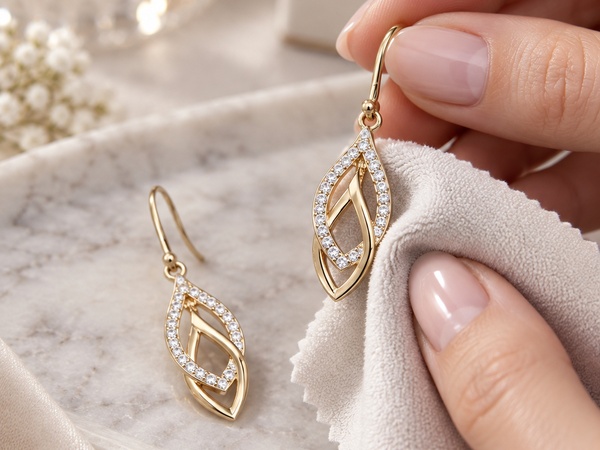
How do you clean gold earrings?
The posts and clasps of earrings can accumulate residue from hair products, makeup, or sebum.
Clean each loop separately to prevent them from scratching against each other. Pay special attention to the clasps, and do not force them open.
Before putting them back on, make sure they are completely dry and that the clasps are working properly.
How do you clean gold jewelry with gemstones?
If there are stones present, it is important to know what kind they are and how they are secured.
A properly set diamond can generally withstand gentle cleaning with a suitable product. Conversely, certain gemstones, pearls, or natural materials are more sensitive to water, acids, heat, or friction.
Before cleaning a piece of jewelry with gemstones:
-
Check that the stones are securely held in place;
-
Identify their nature;
-
Avoid prolonged immersion;
-
Do not use any product that is not intended for these stones;
-
Do not rub the claws;
-
If you have any questions, ask for advice.
For a piece of jewelry made up of several stones, the method should always be chosen based on the most fragile one.
Can you clean gold with baking soda, vinegar, or toothpaste?
Baking soda, vinegar, and toothpaste are often mentioned as tips for cleaning jewelry. However, using them is not without risk, especially on pieces that are set with gemstones, plated, or have a special finish.
Baking Soda
Baking soda comes in the form of a slightly abrasive powder. When rubbed on jewelry, it can cause micro-scratches or damage a polished surface.
It is strongly discouraged for use on:
-
gold-plated;
-
rhodium-plated white gold jewelry;
-
satin finishes;
-
sensitive stones;
-
antique jewelry;
-
delicate frames.
For routine cleaning, a mild soapy solution or a product specifically designed for jewelry will be easier to use.
Vinegar
Vinegar is an acidic substance. Even though gold itself may seem resistant, the other metals in the alloy, gemstones, adhesives, or certain finishes may react differently.
It should therefore not be considered a one-size-fits-all solution. Using it without knowing the exact composition of the jewelry may alter its appearance.
Toothpaste
Toothpaste often contains polishing or abrasive agents designed to clean teeth. These particles can scratch the surface of jewelry, get lodged under gemstones, or become trapped in the details of the setting.
It is best not to use it on gold jewelry, especially on polished, gem-set, or gold-plated pieces.
Why choose a gentle method?
A homemade solution may seem convenient, but it doesn’t always take into account the jewelry’s full composition. Lukewarm water, mild soap, a suitable cloth, or a product designed for jewelry care offer greater control.
If a stain persists, it’s best to ask a jeweler for advice rather than trying multiple products.
What products should you use to clean gold jewelry?
Accessories and products specifically designed for jewelry allow you to care for your jewelry with greater precision. However, they should always be chosen based on the material, finish, and gemstones used.
A soft cloth
A clean, lint-free, non-abrasive cloth can be used to remove surface marks after wearing. It is suitable for frequent cleaning and helps prevent the buildup of deposits.
It should be used without applying excessive pressure, especially on gold-plated and highly polished surfaces.
A polishing cloth suitable for gold
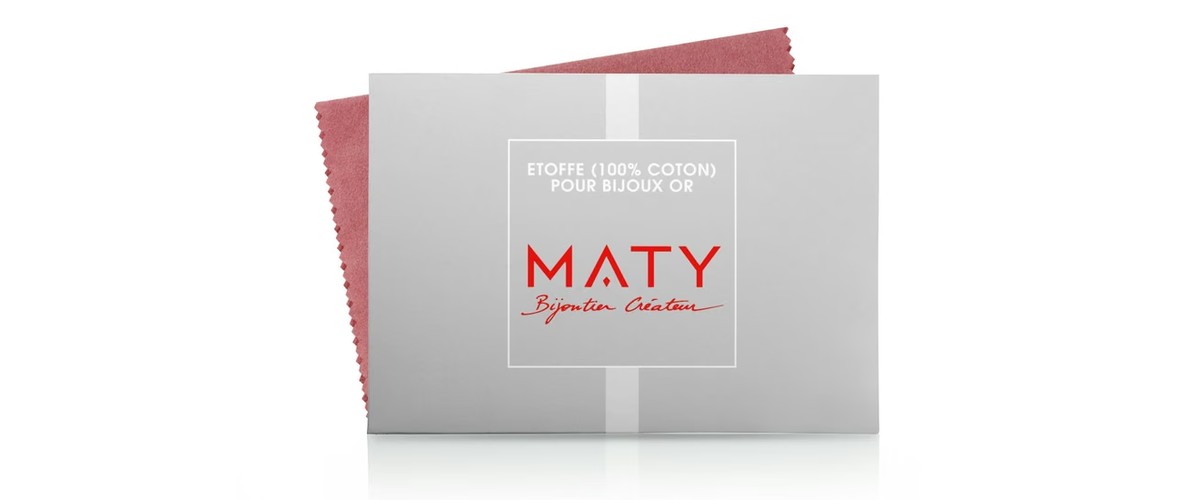
SEE THE CLOTH FOR POLISHING GOLD >
A cloth specifically designed for gold jewelry can restore its luster and remove certain surface marks. Follow the product's instructions and avoid using it on finishes that should not be polished.
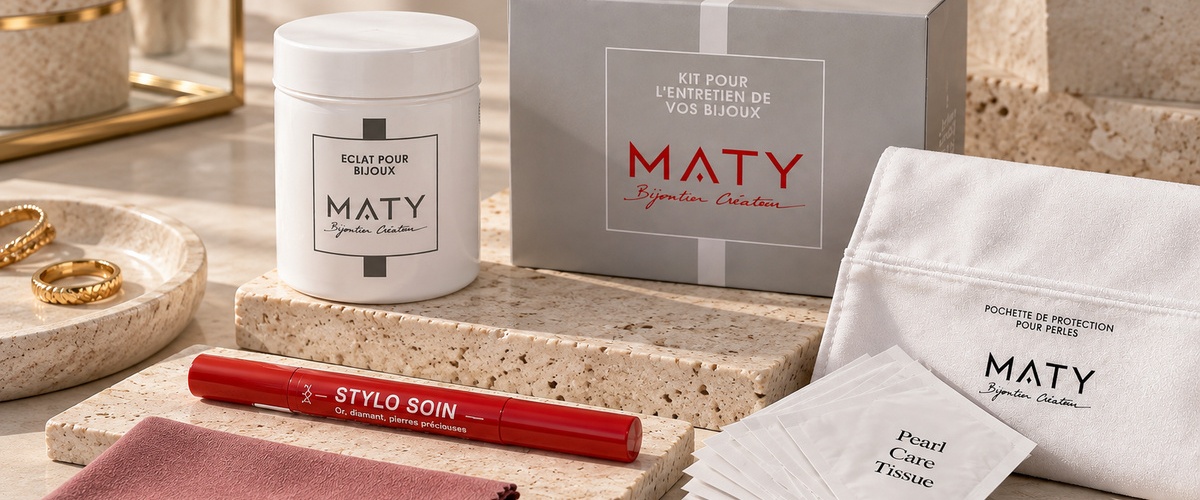
MATY offers, among other things, a polishing cloth specifically designed for gold jewelry, suitable for maintaining certain pieces.
A jewelry cleaning kit
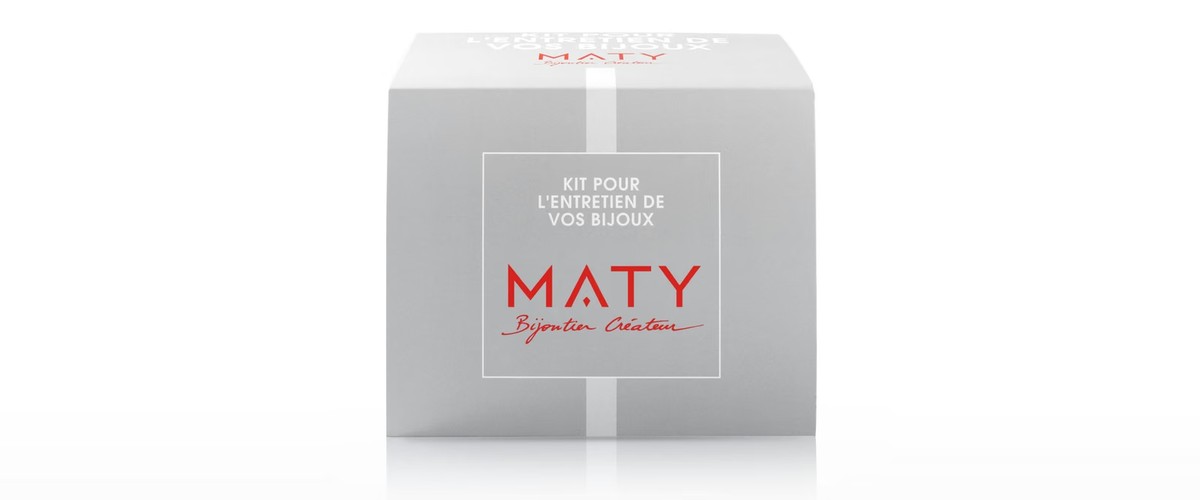
A care kit typically includes several accessories or complementary products. Before using it, check which materials and gemstones are compatible.
This type of solution allows for more precise application than a homemade recipe, provided you follow the instructions provided.
A skincare pen
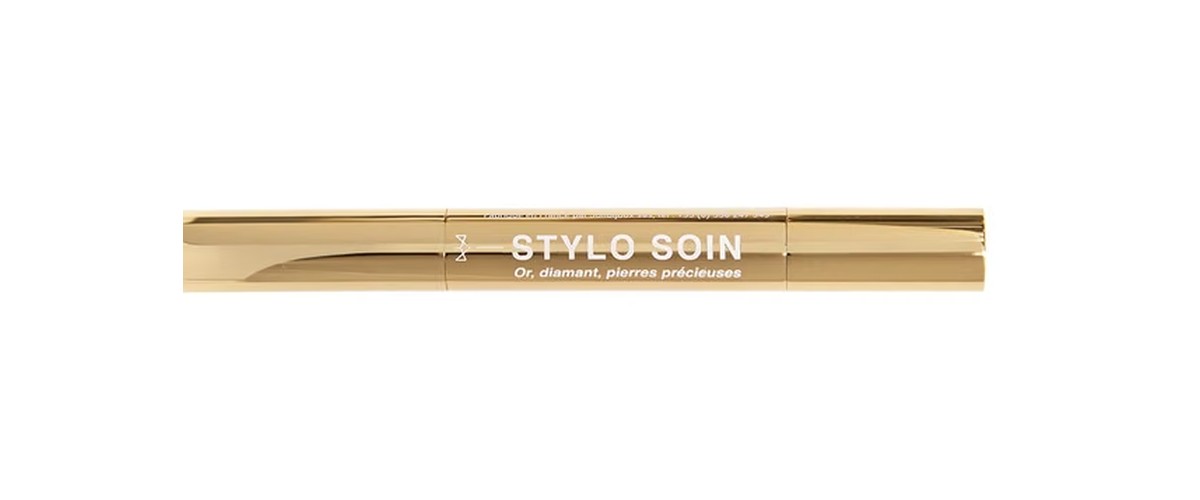
A cleaning pen can make it easier to clean certain hard-to-reach areas, such as around a gemstone or in the details of a frame.
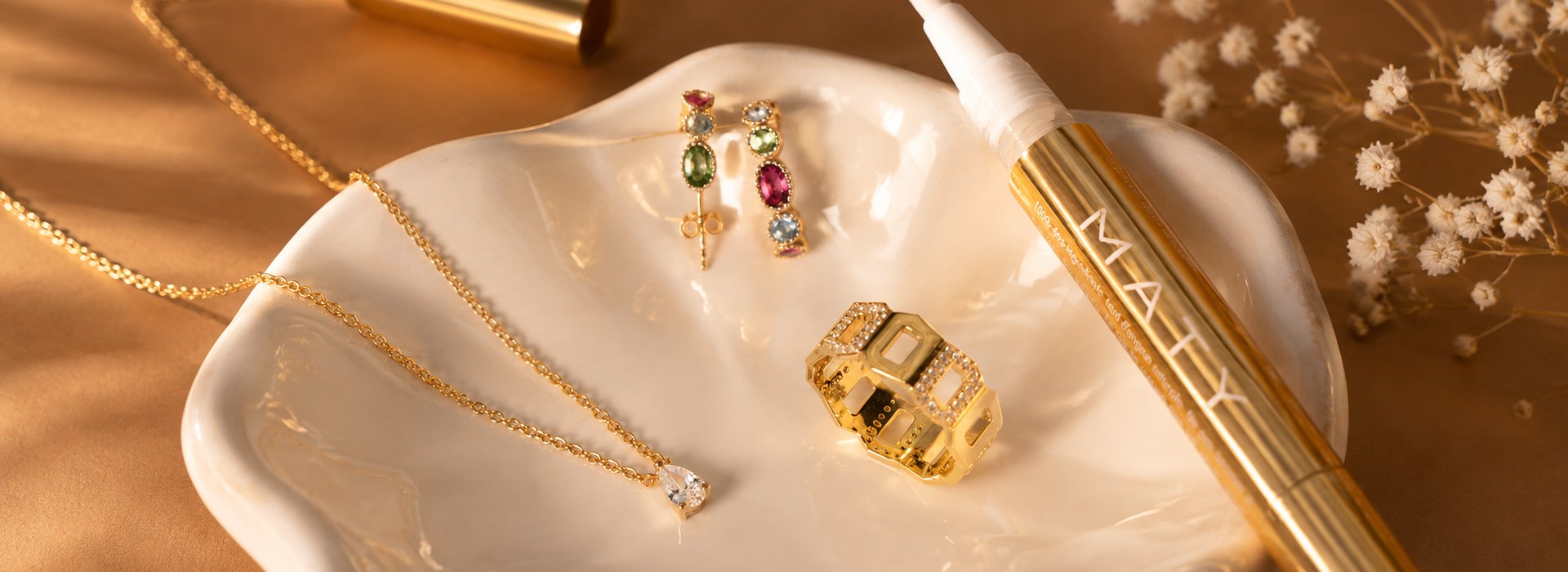
MATY offers a care pen designed for gold jewelry, diamonds, and certain gemstones. As with any product, you should check its compatibility with the specific piece of jewelry before use.
A Job Interview
Products intended for home use are designed for routine care only. They are not a substitute for polishing, checking the settings, rhodium plating, or repairs.
A jeweler can thoroughly clean the piece of jewelry while checking the condition of its setting, stones, and clasp.
What mistakes should you avoid to keep your gold jewelry from getting damaged?
A few simple steps can help prevent much of the damage caused by improper cleaning.
A Checklist of Things to Avoid
-
Do not clean a piece of jewelry without knowing what it is made of.
-
Do not use a stiff or worn brush.
-
Do not scrub a polished surface vigorously.
-
Do not use abrasive powder.
-
Do not use toothpaste on gold.
-
Do not submerge a fragile stone without first checking to see if it is suitable.
-
Do not expose the jewelry to water that is too hot.
-
Do not use bleach or household cleaning products.
-
Do not mix different cleaning products.
-
Do not handle a delicate chain or clasp roughly.
-
Do not clean a stone that moves in its setting.
-
Do not attempt to polish antique or precious jewelry yourself.
-
Do not put the jewelry away until it is completely dry.
Avoid long baths
Leaving a piece of jewelry to soak for a long time does not necessarily improve the results. On the contrary, it can weaken certain joints or damage delicate gemstones.
A brief soak is usually sufficient for routine cleaning, provided the jewelry is suitable for it.
Do not try to remove scratches by rubbing them
Scratches are not stains. Scrubbing harder will only create new ones or damage the metal's finish.
When there are many of them or they are deep, only a professional can determine whether polishing is possible and advisable.
Do not use the same product on all pieces of jewelry
A product designed for yellow gold and diamonds may not necessarily be suitable for gold-plated items, pearls, or delicate gemstones.
Always read the product instructions and ask for advice if you are unsure about the composition of the jewelry.
How should you care for your gold jewelry on a daily basis?
Regular maintenance and a few simple habits can help you space out more thorough cleanings.
Put on your jewelry after applying cosmetics
Perfume, lotions, makeup, and hair care products can leave residue on jewelry.
Get into the habit of putting on your rings, necklaces, and earrings once you’re all set. At night, take them off before removing your makeup or applying your skincare products.
Remove your jewelry before engaging in certain activities
It's best not to wear gold jewelry:
-
during a sporting activity;
-
at the pool;
-
during manual labor;
-
while cleaning;
-
in the shower, depending on the type of jewelry;
-
when using chemicals;
-
at the beach or in the ocean.
This helps prevent impacts, scratches, and contact with substances that could damage their appearance.
Wipe down your jewelry after wearing it
Gently wiping the area with a soft cloth helps remove some of the marks left by the skin before they build up.
This is especially helpful for jewelry worn very often, such as wedding rings, necklaces, and earrings.
Store each piece of jewelry separately
Jewelry can get scratched when stored in contact with other pieces. Store it in a jewelry box, a soft pouch, or separate compartments.
Unclip the chains before storing them, and lay them flat to minimize tangling. Also, avoid damp areas and prolonged exposure to direct light.
Adjust the cleaning frequency
There is no one-size-fits-all schedule for all jewelry. A piece of jewelry worn every day will require more frequent care than one reserved for special occasions.
Gentle cleaning can be performed when the jewelry appears dull or has visible marks. An occasional professional inspection is recommended for jewelry with gemstones, precious pieces, or items that see heavy use.
When should you take a piece of gold jewelry to a jeweler?
Some situations call for the expertise and skill of a professional. Taking a piece of jewelry to a jeweler not only restores its luster but also ensures its durability.
Seek advice when:
-
the jewelry remains dull after gentle cleaning;
-
it has deep scratches;
-
a stone seems to be moving;
-
a claw appears damaged;
-
a link or clasp is weakened;
-
The white gold piece of jewelry appears to have lost its rhodium plating;
-
the frame is warped;
-
the jewelry is antique or particularly valuable;
-
you don't know what kind of stones they are;
-
The item has great sentimental value.
For professional polishing
Polishing can reduce the appearance of some scratches and restore the luster of a gold surface. However, it removes a very small amount of material and should not be done too often.
A professional will be able to determine whether this procedure is appropriate given the condition and finish of the jewelry.
To renew the rhodium plating on a piece of white gold jewelry
As the rhodium plating wears off, white gold may take on a slightly warmer hue. Re-rhodium plating restores its bright, uniform appearance.
This procedure cannot be replaced by cleaning at home.
To inspect the stones and the setting
A professional cleaning is also an opportunity to check the settings, prongs, links, and clasps.
This inspection is particularly important for an engagement ring, a gem-set wedding band, or a piece of jewelry worn every day.
With this care, your jewelry can retain its beauty and continue to tell your story for many years to come.
FAQ: How do you clean gold jewelry?
What is the best product for cleaning gold jewelry?
The most suitable product depends on the color of the gold, the finish, and any gemstones. For routine care of simple jewelry, warm water and mild soap may be sufficient. A product specifically designed for jewelry offers a more targeted solution.
How do you clean gold jewelry that has turned black?
Start by gently cleaning the piece to remove surface deposits. If the marks persist, do not scrub any further; have the jewelry examined instead. The change in appearance may be due to the alloy, a substance the jewelry has come into contact with, or its finish.
Can you clean gold jewelry with baking soda?
Baking soda is slightly abrasive and can cause micro-scratches or damage certain finishes. It is best to avoid using it, especially on gold-plated items, rhodium-plated white gold, gem-set jewelry, and antique pieces.
Can you clean gold jewelry with toothpaste?
Toothpaste is not recommended. Its abrasive agents can scratch the gold, damage the finish, and get lodged in the details of the frame.
How do you clean a gold ring with a gemstone?
First, identify the stone and make sure it is securely set. Use only a method that is compatible with the metal, the stone, and the setting. If you have any doubts or if the stone is loose, take the ring to a jeweler.
How do you clean a gold chain?
Gently place the chain in lukewarm, lightly soapy water if it does not have any fragile parts. Handle it without pulling on the links, rinse it thoroughly, and then let it dry flat on a soft cloth.
How do you clean white gold jewelry?
Opt for very gentle cleaning and avoid abrasive products, which could cause the rhodium plating to wear away more quickly. If the jewelry appears yellowed after cleaning, it may need to be re-rhodium-plated.
How often should you clean your gold jewelry?
How often you clean your jewelry depends on how often you wear it. Jewelry worn daily can be wiped down regularly with a soft cloth and cleaned when it looks dull. Jewelry with gemstones or precious metals should also be inspected periodically by a professional.

How to clean silver jewelry?
How do you clean earrings?