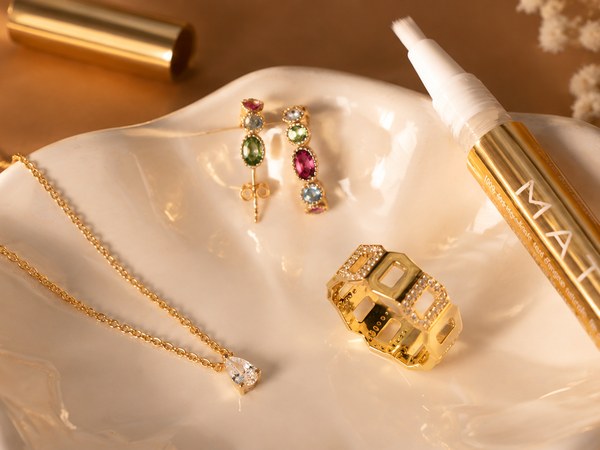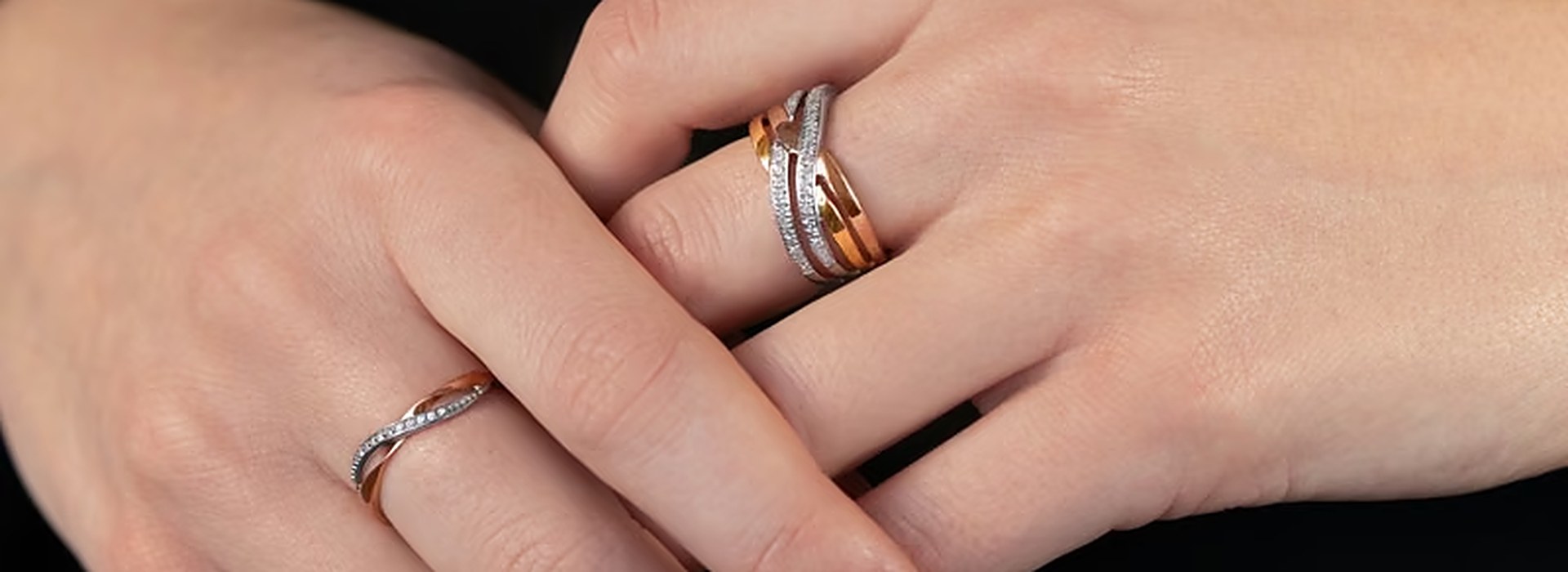
The gold ring is the quintessence of what the world of jewelry has to offer. A piece of jewelry that has become accessible to many, yet a priceless metal to others—precious and durable—it is the ultimate choice when it comes to giving a valuable gift. Maty puts pen to paper to compile everything you need to know about gold rings: their meaning, how they’re made, their history, pricing factors, the different types of gold used, and practical advice on how to choose, care for, and authenticate your jewelry.
A gold ring is a ring made from a solid gold alloy, most commonly 18-karat gold (750 parts per thousand, 75% pure gold) or 9-karat gold (375 parts per thousand, 37.5% pure gold), identifiable in France by its hallmark. A symbol of commitment, heritage, and style, a gold ring is chosen based on its fineness, color, weight, gemstones, and intended use. Maty, a French jeweler based in Besançon, has compiled everything you need to know about choosing, giving, authenticating, and caring for a gold ring.
Contents
- Understanding the Gold in a Ring: Purity, Colors, and Hallmarks
- The 9-karat gold ring
- The 18-karat gold ring
- Solid gold, gold-plated, vermeil: the differences
- The Meaning and History of the Gold Ring
- How Is a Gold Ring Made?
- Designs and styles: women's, men's, with gemstones
- Price of a gold ring
- Choosing the Right Gold Ring: Criteria, Size, and Occasion
- Authenticity, Benefits, Limitations, and Allergies
- Maintenance and Pruning
- Gold Ring Market and Trends
- Frequently asked questions
Understanding the Gold in a Ring: Purity, Colors, and Hallmarks
The idea that a gold ring is 100 percent pure is a myth that needs to be debunked; gold is never pure. In fact, it is alloyed with other metals to increase its hardness, and the proportion of pure gold is called the fineness. In France, only three gold finenesses are commonly used in jewelry: 750, 585, and 375 thousandths. Each is guaranteed by an official hallmark.
Gold fineness: carats and thousandths
|
Title |
Thousandths |
Pure gold |
French hallmark |
Use as a ring |
|---|---|---|---|---|
|
24-karat gold |
999 |
99,9 % |
Seahorse |
Too flimsy for an everyday ring |
|
18-karat gold |
750 |
75 % |
Eagle's Head |
The Standard of French Jewelry |
|
14-karat gold |
585 |
58,5 % |
Scallop |
A balance between durability and price, common abroad |
|
9-karat gold |
375 |
37,5 % |
Clover |
Minimum gold content required for the "gold" designation in France |
The higher the fineness, the more intense the color and the greater the intrinsic value. On the other hand, the metal is more malleable and scratches more easily. The scallop shell and clover hallmarks were established by Decree No. 95-612 of May 5, 1995.
The Colors of Gold
The color of a gold ring depends on the metals added to the pure gold, not on its karat weight. Both 18-karat yellow gold and 18-karat white gold contain exactly the same amount of gold.
|
Color |
Main Ingredients |
Feature |
|---|---|---|
|
Yellow gold |
Gold + Silver + Copper |
A shade similar to natural gold—the most traditional one |
|
White gold |
Gold + palladium or nickel, followed by rhodium plating |
Shiny silver luster; rhodium plating should be renewed every 1 to 2 years |
|
White gold |
Gold + palladium, without systematic rhodium plating |
Natural gray with no surface treatment (often referred to as "white gold" in the retail sector) |
|
Pink gold |
Gold + higher copper content |
A warm, coppery shade that has been very popular for the past twenty years |
|
Green gold |
Gold + higher proportion of silver |
A slightly greenish hue, for original parts |
Each color also conveys a message: yellow gold evokes tradition and warmth, white gold evokes modernity and simplicity, and rose gold evokes tenderness and romance.
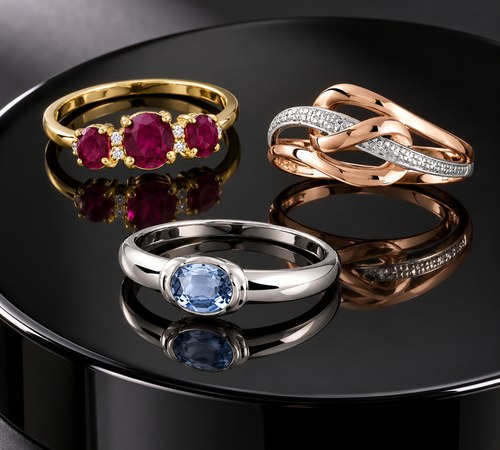
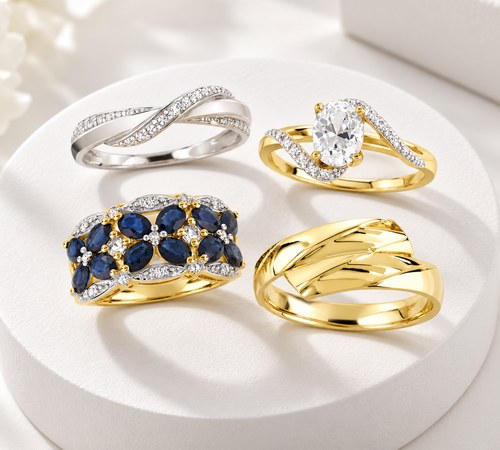
DISCOVER OUR YELLOW, WHITE, AND ROSE GOLD RINGS >
Yellow Gold Ring
An iconic color in jewelry, yellow gold gives each ring a shimmering glow. It is created by combining pure gold with silver and copper, which preserves a hue similar to that of the metal in its natural state. Maty offers rings in 9-karat (375 thousandths) and 18-karat (750 thousandths) yellow gold: delicate bands for stacking, solitaire rings, engagement rings, signet rings, and styles set with diamonds and colored gemstones. Stones such as rubies, sapphires, citrines, and garnets take on greater intensity against this golden hue. Gentle on the skin and requiring no rhodium plating, yellow gold retains its luster over the years. It is the ideal choice for jewelry worn every day or passed down from one generation to the next. Each ring is hallmarked and comes in its own jewelry box.
White Gold Ring
The white gold ring captivates with its bright, modern luster, which beautifully enhances both diamonds and colored gemstones. This metal does not occur naturally: it is yellow gold alloyed with other white metals, such as palladium or silver, and then coated with a thin layer of rhodium, which gives it its characteristic shine. At MATY, our white gold rings are available in 750/1000 (18-karat) gold and 375/1000 (9-karat) gold, depending on the desired level of purity. Whether it’s a solitaire engagement ring, a diamond-paved wedding band, or a fashion ring set with a sapphire, emerald, or ruby, white gold suits every style and occasion. Its neutral hue pairs easily with your other jewelry and is perfect for everyday wear. Good to know: Over time, the rhodium plating may fade slightly. Having it re-plated at a jewelry store will restore your piece’s full luster.
Rose Gold Ring
The rose gold ring has it all. Its color comes from an alloy of gold and copper: the higher the copper content, the deeper the shade. Unlike white gold, rose gold does not require rhodium plating. Its color is inherent to the metal itself and does not fade over time. At MATY, our rose gold rings are available in 750/1000 (18-karat) gold and 375/1000 (9-karat) gold. Whether it’s a solitaire ring to showcase a beautiful stone, a diamond-set wedding band, or a cocktail ring adorned with a morganite, amethyst, or rose quartz, rose gold particularly enhances stones with soft tones and white diamonds. Its warm hue flatters all skin tones and pairs easily with yellow or white gold. Good to know: Thanks to the copper it contains, rose gold is a fairly durable alloy, making it ideal for everyday jewelry.
Hallmarks: The Legal Guarantee
A gold ring sold in France generally bears two marks. The maker’s mark (a diamond shape for a French manufacturer) identifies the manufacturer or importer. The fineness mark (an eagle’s head, a scallop shell, or a clover) guarantees the gold content. Since 2001, the guarantee mark has no longer been required for gold items weighing less than 3 grams: a thin ring may therefore bear only the maker’s mark. A square-shaped mark indicates that the piece is gold-plated, not made of a precious metal.
The 9-karat gold ring
A 9-karat gold ring is a solid gold ring with a fineness of 375 parts per thousand: it contains 37.5% pure gold and 62.5% other metals, most commonly silver and copper. This is the most affordable option for wearing real gold, and the legal minimum for using the term “gold” in France.
Composition and Recognition
- Pure gold: 37.5%, or 375 grams of gold per kilogram of alloy.
- French hallmark: a clover, sometimes accompanied by the number 375.
- Legal status: official designation in France since 1995; prior to that date, jewelry had to have a fineness of at least 750 thousandths to be sold as “gold.”
- Color: a paler, softer shade of yellow than 18-karat gold, since it contains half as much pure gold.
Benefits of 9-karat gold
- A lower price: For the same weight, a 9-karat gold ring contains half as much pure gold as an 18-karat gold ring, which significantly reduces its price.
- Greater resistance to scratches and impacts: the high proportion of alloy metals makes the metal harder, which is an advantage for thin rings worn every day.
- Solid gold, not gold-plated: the gold runs through the entire thickness of the piece, so it won't "fade" like gold-plated jewelry.
- Real value: The ring retains a buyback value tied to the price of gold, proportional to its weight in pure gold.
Limitations to Be Aware Of
- A lower resale value: about half that of an 18-karat ring of the same weight, since it contains half as much gold.
- A slight risk of tarnishing: the copper and silver in the alloy may oxidize on the surface over time; a simple polish at a jeweler's is enough to restore its luster.
- Skin tolerance should be checked: since the product contains 62.5% alloy metals, people with highly sensitive skin should ask for the exact composition, especially for 9-karat white gold.
- A less intense brilliance: the color is less warm and less saturated than in 18-karat gold.
Who is it for, and what is it used for?
A 9-karat gold ring is particularly suitable for:
- thin rings and stacking bands, which many people have purchased.
- as a first piece of gold jewelry—for a birthday, coming-of-age celebration, or graduation.
- rings set with semi-precious stones (amethyst, topaz, citrine) that are still reasonably priced.
- for daily, heavy-duty use, thanks to its durability.
- during periods when the price of gold is high and you want to keep your budget reasonable.
For a wedding band or engagement ring meant to last for decades, 18-karat gold remains the gold standard.
The 18-karat gold ring
An 18-karat gold ring is a solid gold ring with a fineness of 750 parts per thousand: it contains 75% pure gold and 25% other metals, which give it its hardness and color. This is the standard fineness for French jewelry, which has been hallmarked with an eagle’s head since 1919.
Composition and Recognition
- Pure gold: 75%, or 750 grams of gold per kilogram of alloy.
- French hallmark: an eagle's head; abroad or in addition, the mark "750."
- Designation: In France, the official designation is “750-th gold”; “18 karats” is the common term.
- Color: a deep, luminous yellow, with white and pink gold tones that are richer than in the lower grade.
Benefits of 18-karat gold
- Unparalleled brilliance: the high gold content produces a warm, rich color that never fades.
- Excellent resistance to oxidation: 750 gold does not rust and hardly tarnishes at all.
- Better skin tolerance: With only 25% alloy metals, the risk of a reaction is lower, especially with yellow gold or white gold containing palladium.
- A heritage value: The buyback value tracks the price of gold and is twice that of a 9-karat ring of the same weight.
- The metal of choice for special occasions: wedding bands, engagement rings, solitaire rings, and family signet rings are traditionally made of 18-karat gold.
Limitations to Be Aware Of
- A higher price: for the same weight, it contains twice as much pure gold as 9-karat gold.
- Susceptibility to scratches: Because it is softer, 18-karat gold develops marks over time; these micro-scratches form a patina that can be removed by polishing.
- Don't choose a ring that's too thin: for a ring worn every day, a sufficient thickness prevents it from losing its shape.
Who is it for, and what is it used for?
The 18-karat gold ring is a must-have for:
- a wedding band or engagement ring, worn for decades;
- a ring set with a diamond or gemstone, which 750 gold highlights and protects;
- a signet ring or a piece of jewelry meant to be passed down;
- sensitive skin, opting for yellow gold or nickel-free white gold.
9-karat gold or 18-karat gold: Which should you choose?
|
Criterion |
9-karat gold (375) |
18-karat gold (750) |
|---|---|---|
|
Pure gold |
37,5 % |
75 % |
|
French hallmark |
Clover |
Eagle's Head |
|
Color |
Pale yellow, milder |
Bright, vivid yellow |
|
Hardness, scratch resistance |
Higher |
Weaker, develops a patina |
|
Tarnishing |
Possible over time |
Virtually nonexistent |
|
Skin tolerance |
Composition to be verified |
Generally better |
|
Price per unit weight |
About half as much pure gold |
Reference |
|
Surrender Value |
About half as much |
Doubles, with equal weights |
|
Ideal for |
Delicate rings, stacking rings, first piece of jewelry, on a budget |
Wedding ring, engagement, diamond, inheritance |
In summary: Choose 9-karat gold for stylish, delicate, and affordable jewelry that you’ll wear often; choose 18-karat gold for an engagement ring or heirloom piece that will retain its color and value.
Solid gold, gold-plated, vermeil: the differences
A solid gold ring is made entirely of gold throughout its thickness, whereas a gold-plated ring has only a thin layer of gold on the surface, measured in microns. This difference in structure determines its durability, price, and resale value.
|
Criterion |
Solid gold (9, 14, or 18 karat) |
Gold-plated |
|---|---|---|
|
Composition |
A homogeneous gold alloy, from the core to the surface |
A layer of gold deposited on a non-precious metal |
|
Sustainability |
Golden appearance retained indefinitely |
The layer wears down due to friction |
|
Price |
Higher |
Significantly more accessible |
|
Resale Value |
Linked to the price of gold |
Virtually zero |
|
Interview |
Standard cleaning, rhodium plating for white gold |
Gradual wear and tear, difficult to restore permanently |
|
Recommended Use |
Jewelry built to last, for everyday wear |
Trendy jewelry, budget-friendly, for occasional wear |
The Different Types of Veneer
Gold plating encompasses several methods that vary depending on the thickness of the gold layer applied and the manufacturing technique used, both of which directly affect the durability of the finished piece of jewelry.
|
Type |
Metal base |
Gold Thickness |
Estimated lifespan |
|---|---|---|---|
|
Vermeil |
Solid silver |
At least 5 microns of 750 gold in France |
The best of the veneers |
|
Gold-plated |
Brass or a similar alloy |
At least 3 microns in France |
Several years of regular use |
|
Gilded (with fine gold leaf) |
Brass or a similar alloy |
Less than 3 microns |
From a few months to two years |
|
Gold-plated |
Brass, silver, or other |
Less than 1 micron |
A few weeks to a few months |
- Gold plating, in the literal sense, refers to the application of a minimal layer of gold deposited through an electrolytic process, which gives it adequate durability.
- Vermeil is a regulated category; in fact, it consists of a layer of gold plated not onto a base metal but onto solid silver, offering greater comfort and higher quality.
- Gold-plated refers to a layer of gold that is much thinner than genuine gold plating, which makes it less expensive but also less durable.
- Gold plating is the most delicate technique of all; it is often used to temporarily restore the luster of antique jewelry or for entry-level pieces.
A ring is subjected to more friction than any other piece of jewelry. That's why solid gold—even 9-karat gold—is always a better investment than a plated ring for one that's worn every day.
What is the difference between a gold ring and a gold-plated ring?
The difference between a gold ring and a gold-plated ring lies in the type of metal used; consequently, the notable differences are in the jewelry’s durability, price, and value. A solid gold ring—regardless of its karat weight, whether 9, 14, or 18 karats—is made entirely of the specified gold alloy, from the core to the surface of the piece. The gold is distributed uniformly throughout the entire thickness of the metal.
In contrast, a gold-plated ring is made from a base metal—most often brass, copper, or silver—onto which a layer of gold is applied through an electrolytic process. This layer is extremely thin—measured in microns—and is so thin that it inevitably wears away over time and through friction, revealing the base metal underneath.
The Meaning and History of the Gold Ring
Putting a gold ring on your finger is never quite a trivial matter. For thousands of years, this circular piece of jewelry has been associated with the ideas of continuity, permanence, commitment, and eternity. It is precisely this shape—a closed circle—that has made the ring the ultimate symbol of unions and promises: a wedding band, an engagement ring, or a gift to commemorate an unforgettable memory.
It is the metal itself that is imbued with deep symbolic meaning. Gold has always been associated with opulence, purity, and a value that does not diminish over time. Unlike many metals, it does not oxidize or lose its luster over the years, which has made it a material associated with what is enduring and precious. Giving a gold ring, therefore, means giving a gift whose material value is matched by a strong symbolic value.
The meaning of a gold ring also varies depending on which hand and finger it is worn on:
What the finger wearing it says
|
Finger |
Traditional Meaning |
|---|---|
|
Left ring finger |
Romantic Commitment, Marriage, Engagement |
|
Right ring finger |
Weddings in Countries Where the Wedding Ring Is Worn on the Right Hand |
|
Little Finger |
Social status, family affiliation (signet ring) |
|
Major |
A fashion accessory, without any sentimental value |
|
Index |
Assertiveness, Power, Confidence |
|
Thumb |
Independence, strong personality |
The tradition of wearing a ring on the left ring finger stems from the ancient belief in a vein that connects that finger directly to the heart—the vena amoris.
A History Spanning Five Millennia
|
Period |
The Most Common Use of a Gold Ring |
|---|---|
|
Ancient Egypt |
A religious and royal symbol: gold is the flesh of the gods; the rings are adorned with scarabs and amulets |
|
Ancient Greece and Rome |
A personal seal used to authenticate documents; in Rome, the gold signet ring was long reserved for senators and knights |
|
Middle Ages |
The Church made the marriage covenant universal; the signet ring bearing a coat of arms signified nobility |
|
13th century |
The First Official Inspections of Precious Metals in France, Under Saint Louis |
|
Renaissance |
More sophisticated jewelry craftsmanship, new gemstone cuts |
|
19th century |
Gold rushes expand access to the metal without diminishing its prestige |
|
Since 1950 |
Maty, founded in Besançon, is making gold rings more accessible through online sales [To be verified and completed by Maty] |
|
Today |
Both a symbol of commitment and a fashion accessory (stacking rings, women's signet rings) |
How Is a Gold Ring Made?
Crafting a gold ring is a goldsmith’s art that combines artisanal skill with technical precision. The first step involves selecting the alloy. Pure gold, known as 24-karat gold, is actually too malleable to be used on its own in jewelry intended for everyday wear. It is therefore combined with other metals such as copper, silver, or palladium, in proportions that determine both the gold’s fineness (18-karat, 14-karat, etc.) and its final color.
The main stages in the manufacturing of a gold ring follow these steps in this chronological order:
- Alloy preparation: blending pure gold with additional metals according to the desired fineness and color
- The model is shaped either using the lost-wax casting process (a wax model is sculpted and then reproduced in metal using a plaster mold) or by directly shaping sheets or wires of gold that are hammered and soldered by hand
- Setting: the process of creating the prongs or claws that hold the stone(s) in place—a step that requires great dexterity to prevent a poorly set stone from coming loose.
- Polishing: achieving gold's unique luster through sanding followed by gradual buffing
- Rhodium plating (optional) for white gold only; a thin layer of rhodium is applied to give it a shiny silver hue
- Quality control and hallmarking: final inspection and application of the official hallmark certifying the fineness of the gold used
Each step in this design process affects the durability and value of the finished piece of jewelry. The lost-wax casting method is recommended for complex shapes and series that can be reproduced identically, while handwork is better suited for artisanal or one-of-a-kind pieces.
Designs and styles: women's, men's, with gemstones
Gold rings are distinguished by their purpose (wedding, engagement, signet), their design (band, pavé, solitaire), and their style (classic, minimalist, vintage, bohemian, statement).
The Main Types of Gold Rings
|
Type |
Feature |
A typical occasion |
|---|---|---|
|
Alliance |
A simple ring, sometimes textured or set with a continuous band |
Wedding |
|
Engagement ring |
Center stone, often a diamond |
Marriage Proposal |
|
Solitaire |
Single stone set in prongs |
Engagement, a classic gift |
|
You and Me |
Two stones side by side |
Symbol of Unity |
|
Chevalière |
Wide tray engraved with an initial or a design |
Family History |
|
Delicate ring (band) |
A narrow, sleek ring |
Daily port operations, stacking |
|
Paved Ring |
Small stones set side by side |
Special Occasions |
|
Multi-row ring |
Several rings joined together or movable |
Contemporary Style |
Styles
Style reflects the era, cultural influences, and aesthetic choices; a wide range of options is available to you:
- A classic and timeless style featuring clean lines, rounded shapes, and traditional settings, with a strong preference for yellow or white gold in designs that transcend trends.
- Minimalist style: extremely simple shapes, delicate bands, clean geometric lines, and an almost complete absence of superfluous ornamentation; pairs perfectly with a stack of several delicate rings.
- Vintage or retro styles with floral motifs, millegrain settings characteristic of the early 20th century, and geometric shapes inspired by Art Deco.
- Bohemian or artisanal style, organic shapes, deliberately irregular finishes, semi-precious stones in natural colors, and an authentic, handmade look.
- A style statement or avant-garde piece featuring bold volumes, asymmetrical or sculptural shapes, and daring combinations of materials and colors—designed to instantly become the focal point of an outfit.
Gold Ring for Women
For women, it comes in a wide variety of styles and sizes, making it a jewelry staple. It can be worn on its own or layered with other delicate rings to create a trendy stacked look.
Among the major categories of gold rings for women are:
- These delicate, understated rings—often crafted from 18-karat gold—are worn alone or stacked, sometimes engraved with a small design, set with a single stone, or featuring a textured detail.
- Statement rings, featuring bolder designs with large stones or unusual geometric shapes, make for jewelry that immediately catches the eye.
- Engagement rings, featuring specific design styles such as the classic solitaire, the three-stone trilogy ring, or designs set with small diamonds all around the band.
- Wedding rings, worn every day for decades and typically made of 18-karat gold for their durability.
- Signet rings, which have seen a marked resurgence in popularity among women in recent years, can be personalized with an initial, a design, or a center stone.
The resurgence of the signet ring among women is no coincidence. This style is returning to the forefront by breaking free from the exclusively masculine realm it once occupied. With a variety of styles, ring widths, and finishes, every woman can find a gold ring that reflects her personality.
Gold ring for men
Jewelry stores used to offer a limited selection of gold rings for men—their collections were often limited to wedding bands and signet rings—but the selection has expanded considerably in recent years. Today, men are spoiled for choice, with options ranging from the most understated pieces to the most statement-making ones.
The main styles of gold rings for men are as follows:
- The timeless signet ring, traditionally worn on the little finger, features a wider band than the rest of the ring, engraved with an initial or a coat of arms, or left plain.
- Men's wedding rings, ranging from simple, sleek designs to more elaborate styles featuring brushed finishes, contrasting color accents, or small, discreet stones set in the metal.
- A delicate or textured ring, worn alone or stacked on several fingers, for a contemporary, casual look.
- A wide ring with a matte or hammered finish, featuring geometric or graphic designs, for a bolder look.
Yellow gold, white gold, and—increasingly—rose gold, or gold combined with other materials such as titanium, have won over the hearts of male customers seeking personalized pieces. The choice of gold purity—often 18 karats for its durability—also remains an important factor.
Gold ring with a stone
A gold ring set with a stone combines the brilliance of the metal with that of a gem—whether it’s a precious, semi-precious, or synthetic stone. This type of ring is one of the most sought-after, especially for engagement and promise rings. The diamond remains the most iconic stone to pair with gold; it’s a legendary combination for engagement rings, thanks to its exceptional hardness and unparalleled sparkle.
|
Pierre |
Color |
Common Association |
|---|---|---|
|
Diamond |
Colorless, sometimes tinted |
Engagement rings, solitaire rings |
|
Sapphire |
Blue, but also pink or yellow |
Statement rings, vintage |
|
Emerald |
Deep green |
Exclusive Pieces |
|
Ruby |
Bright red |
Romantic Rings |
|
Amethyst |
Violet |
February's birthstone |
|
Garnet |
Deep red |
January's birthstone |
|
Topaz |
Blue, gold, or colorless |
Affordable Colored Rings |
|
Citrine |
Yellow to orange |
An alternative to yellow sapphire |
|
Peridot |
Olive green |
Summer Jewelry |
|
Moonstone |
Bluish reflections |
Bohemian style |
Pairing gold with gemstones: yellow gold warms up warm-toned gemstones (garnet, citrine); white gold makes diamonds and pastel-colored gemstones sparkle; rose gold complements pink gemstones like morganite. A prong setting lets light through; a bezel or channel setting offers better protection for the gemstone in everyday wear.
The choice of gold is crucial. Yellow gold accentuates the fire of warm-toned stones such as garnet or citrine; white gold highlights the transparency of diamonds and pastel-colored stones, making them appear even more luminous; while rose gold offers an aesthetic contrast with pink stones such as morganite. The type of setting also matters: a prong setting allows more light to pass through and highlights the stone’s cut, while a bezel or channel setting provides greater protection for the gem.
Price of a gold ring
The price of a gold ring depends on many factors that all come into play. The number one factor is undoubtedly the weight of the gold, measured in grams. The heavier the ring, the more gold is required, and the higher the price becomes, since the price of gold fluctuates daily on the markets. The gold fineness is also a key factor. An 18-karat gold ring, which contains 75% pure gold, will be more expensive per unit of weight than a 14-karat or 9-karat gold ring, which contain lower proportions of this precious metal. This is why two rings of the same size are sometimes priced anywhere from single to double the amount, depending on the karat weight indicated on the hallmark.
The cost of setting precious or semi-precious stones is then added to the cost of the precious metal. The price of a diamond varies depending on four characteristics: carat (weight), color, clarity, and cut. A gold ring set with a diamond can thus cost ten times as much as a ring without stones.
Manufacturing costs represent another expense category. A ring crafted with artisanal expertise—featuring delicate stone setting or meticulous hand-finished details—will be more expensive than a mass-produced model made using more industrialized processes, even if the amount of gold is comparable. Finally, the jeweler’s reputation and the services offered—such as the warranty, after-sales service, or certificate of authenticity—also affect the final price.
The Six Factors That Determine Price
- The weight of the gold, in grams: the heavier the ring, the more expensive it is.
- The headline: For the same weight, an 18-karat ring contains twice as much pure gold as a 9-karat ring. Two identical rings can therefore vary in price by a factor of two.
- The price of gold, quoted daily on the markets.
- Gemstones: their number, type, and quality. A diamond is evaluated based on the 4 Cs: carat (weight), color, clarity, and cut.
- The reason: delicate setting or hand-finished details cost more than mass production.
- The seller: warranty, after-sales service, certificate of authenticity.
To estimate the metal content, use this simple formula: ring weight × fineness × gold price per gram. Example: A 3-gram 18-karat gold ring contains 2.25 grams of pure gold; the same ring in 9-karat gold contains 1.125 grams.
Orders of magnitude
|
Ring type |
Approximate range |
|---|---|
|
Delicate 9-karat gold ring, without a stone |
About 100 to a few hundred euros |
|
18-karat gold ring, without a stone |
A few hundred euros |
|
18-karat gold ring with a semi-precious stone |
Several hundred euros |
|
18-karat gold wedding ring |
From a few hundred to over a thousand euros |
|
18-karat gold engagement ring with a diamond |
Several thousand euros, depending on the diamond |
These amounts are for reference only: the price of gold fluctuates daily, and each stone is unique.
Choosing the Right Gold Ring: Criteria, Size, and Occasion
To choose the right gold ring, start by considering how you’ll use it: a ring worn every day should have a sturdy band and a simple design, while a special-occasion ring can be more delicate. Then decide on the karat, color, comfort, and size.
The hardest part about buying a gold ring is finding the perfect size—a ring that doesn’t fit right, whether it’s too tight or too loose, can squeeze your finger, or you might end up losing it. Maty offers tips on how to determine your exact size and measure your finger.
The most reliable method is to measure the circumference of the finger using a flexible measuring tape or a thin strip of paper, wrapping it around the base of the finger. Mark the point where the ends meet, then measure the resulting length in millimeters, which corresponds to a ring size according to the standard conversion charts used in jewelry.
The Five Selection Criteria
- The occasion and the style: 18-karat wedding and engagement rings; delicate or fashion rings in 9- or 18-karat gold.
- Color: Yellow gold and rose gold complement warm skin tones, while white gold suits lighter complexions; the safest bet is to match the ring with the jewelry you already wear.
- The headline: 18-karat gold offers the best balance of brilliance, value, and durability; 9-karat gold is a solid and more affordable alternative.
- Comfort: width, thickness, and protruding stones affect how the ring fits on the finger and the risk of it getting caught.
- The seller's credibility: hallmarks, a detailed invoice specifying the fineness, and a certificate for the gemstones.
Finding the Right Size
In France, ring size corresponds to the circumference of the finger in millimeters. To measure it, wrap a flexible measuring tape or a thin strip of paper around the base of your finger, mark where the ends meet, and then measure the resulting length. Use the Maty size guide.
|
Finger circumference (mm) |
French size |
Inner diameter (mm) |
|---|---|---|
|
47 |
47 |
15,0 |
|
48 |
48 |
15,3 |
|
50 |
50 |
15,9 |
|
52 |
52 |
16,6 |
|
54 |
54 |
17,2 |
|
56 |
56 |
17,8 |
|
58 |
58 |
18,5 |
|
60 |
60 |
19,1 |
Three factors can affect the measurement: heat causes your fingers to swell; they are larger in the evening than in the morning; and a wide ring requires a half size to one size larger than a narrow ring. If you're unsure between two sizes, choose the larger one: it's easier to resize a ring smaller than it is to make it larger.
When is the right time to give a gold ring?
- Milestones in a romantic relationship: engagement, marriage, and anniversary.
- Birthdays, especially to celebrate a milestone birthday or coming of age.
- Family and religious events: the birth of a child, First Communion, baptism, and bar mitzvah, depending on the religion.
- Professional or academic achievements: earning a degree (bachelor's, master's), a major promotion, or social advancement.
- Personal rites of passage: overcoming a difficult challenge or reaching a significant milestone in life—including doing so as a gift to oneself
Who should you give a gold ring to?
|
Recipient |
Suitable ring style |
Symbolic |
|
Partner (couple) |
Engagement ring, wedding band, romantic jewelry |
Engagement, a celebration of the relationship |
|
Child or grandchild |
Delicate ring, signet ring |
An important milestone, an emotional bond |
|
Parent or grandparent |
Signet ring, a ring with character |
Recognition, Family Tradition |
|
Close friend |
A slim, understated ring |
Sincere attachment, without romantic overtones |
|
Oneself |
Depending on personal taste |
Celebrating an achievement, a treat for yourself |
Signet rings are often passed down from generation to generation within the same family line, creating a strong symbolic bond among family members. It is also perfectly acceptable—and increasingly common—to treat yourself to a gold ring to celebrate a personal achievement or simply to enjoy wearing a piece of jewelry you love.
Authenticity, Benefits, Limitations, and Allergies
How can you tell if a gold ring is real?
To verify the authenticity of a ring, you can use several methods—some of which you can do yourself, while others will require the help of a professional:
- Look for the hallmark: a small engraved mark on the inside of the ring that indicates the gold's fineness, such as 750 for 18-karat gold.
- Examine the appearance: Real gold generally shows no signs of rust or greenish discoloration, unlike costume jewelry, which is coated with a thin layer of gold that wears off over time.
- Check the weight: Gold is known for its density, so a gold ring feels heavier in your hand than a ring of the same size made of a lighter metal.
- Perform the magnet test: since pure gold is not magnetic, a ring that is irresistibly drawn to a magnet would contain a significant proportion of another metal (this test is not always sufficient, as some counterfeit alloys are designed not to react).
- Consult a professional—a jeweler or gemologist—who has access to state-of-the-art tools, such as a touchstone used in conjunction with chemical reagents, or X-ray fluorescence devices that accurately determine the composition of the alloy
- Keeping the receipt or certificate is the surest way to prove the origin and composition of a gold ring
Benefits of a Gold Ring
The gold ring has plenty of advantages:
-
- Resistance to oxidation: Unlike silver, steel, and gold, it does not rust or tarnish when exposed to air or moisture, ensuring that it retains its original appearance over the years.
- Highly hypoallergenic, like 18-karat gold; its low concentration of additional metals reduces the likelihood of an allergic reaction compared to jewelry made from other alloys.
- Versatile and stylish: 3 main shades (yellow, white, pink) that complement all skin tones and clothing styles.
- Timelessness: a wealth of designs that transcend trends without ever going out of style
- Intrinsic value: Unlike costume jewelry, a gold ring retains its value; it can be viewed as an asset, an investment, or a heirloom.
Limitations
Despite its qualities, the gold ring also has certain limitations:
- Although it costs more than jewelry made from alternative metals such as silver, stainless steel, or gold-plated metal, it’s important to remember that it is a safe-haven asset.
- Relative brittleness: The higher the gold fineness, the more malleable the metal becomes, and thus the more likely it is to scratch or bend.
- Regular maintenance is necessary, especially for white gold, whose rhodium plating naturally wears off over time and must be renewed every 1 to 2 years.
- A residual risk of an allergic reaction—though rare—associated with nickel-containing gold alloys, which are sometimes used in lower-karat white gold alloys
People with sensitive or atopic skin should be sure to carefully check the alloy's composition, opting, if necessary, for nickel-free 18-karat gold rings or yellow gold rings, which are generally better tolerated.
Can you be allergic to a gold ring?
A gold ring can cause a skin reaction, even though gold is often considered to be well tolerated by the skin. In practice, the sensitivities observed are frequently linked not only to the gold itself, but also to the various metals that make up the alloy. The gold used in jewelry is generally not pure: it is combined with other metals to improve its strength and hardness or to alter its color. Among the substances likely to cause irritation, nickel is one of the most common contact allergens. Its use—and especially its release from jewelry intended to remain in contact with the skin—is regulated by European legislation. However, some jewelry may still contain nickel in its alloy, particularly depending on its composition and origin. In a person with a sensitivity, wearing a ring can then cause itching, redness, irritation, or eczema localized to the finger.
The alloy’s composition therefore deserves more attention than just the jewelry’s color. A piece made of 18-karat gold, or 750 parts per thousand, contains 75% pure gold, while a piece made of 9-karat gold, or 375 parts per thousand, contains only 37.5%. A higher fineness thus implies a lower proportion of other metals, though this alone does not guarantee the absence of an allergic reaction: this depends above all on the specific nature of the metals used. White gold requires caution for people with a nickel allergy, as its light color is achieved by combining gold with various white metals. Formulations can vary considerably from one manufacturer to another, however, and some use palladium instead of nickel.
If you have sensitive skin or a history of allergies, there are a few precautions you should take:
- Ask the jeweler about the exact composition of the alloy, particularly whether it contains nickel.
- Choose jewelry made of gold with a high karat weight and a clearly identified composition.
- Avoid wearing the ring when your skin is damp or when using household cleaning products, cosmetics, or chlorine-based products, as these may aggravate any existing irritation.
- Temporarily remove the jewelry if you experience persistent redness or itching, and consult a healthcare professional if the symptoms persist.
Therefore, a reaction to wearing a gold ring does not necessarily mean that the gold itself is to blame. Identifying exactly which metals make up the alloy often helps to better understand the cause of the irritation.
Maintenance and Pruning
Cleaning a Gold Ring
Taking care of a gold ring helps preserve its original luster and extend its lifespan, while preventing the buildup of residue that dulls the metal's color.
Routine house cleaning can be done in a few simple steps:
- Soak the ring for a few minutes in lukewarm, slightly soapy water, using a mild soap without abrasive agents.
- Gently brush the jewelry using a brush with very soft bristles, paying special attention to hard-to-reach areas such as the undersides of the set stones.
- Rinse thoroughly with clean water
- Dry with a soft, lint-free cloth
However, certain actions and products should be avoided, as they can damage the surface of the gold or weaken the set stones:
|
To Do |
Things to Avoid |
|
Clean with warm, soapy water |
Prolonged exposure to chlorine (swimming pool) |
|
Dry with a soft, lint-free cloth |
Applying perfume, lotion, or cosmetics with the ring on your finger |
|
Store separately in a fabric-lined case |
Storage in direct contact with other jewelry |
|
Have the setting inspected once a year |
Prolonged wear during intensive manual activities |
|
Have the white gold rhodium-plated again if necessary |
Ignoring the appearance of micro-scratches without taking any action |
A professional service at a jeweler’s is highly recommended at least once a year. This good habit allows you to check the strength of the settings for any gemstones, thoroughly repolish the metal using specialized tools, and—for white gold rings—apply a rhodium plating when the protective layer begins to wear away. Visiting a jeweler allows for the early detection of any structural weaknesses—such as a slightly loose prong—before they lead to the loss of a stone or premature wear and tear on the jewelry.
Can a gold ring be resized?
Yes, a gold ring can generally be resized by two to three sizes without affecting its balance or strength. Beyond that, the proportions of the ring may change.
- To resize it, the jeweler opens the ring and adds a small amount of gold of the same fineness and color, then solder and polishes it.
- To make it smaller, he removes a section of the ring and then solder the two ends back together.
- For white gold, a new rhodium plating is often necessary after the procedure.
Resizing a gold ring is a common procedure in jewelry shops. However, whether it’s feasible depends on several factors: the ring’s design, the presence of any gemstones, engravings, or motifs, as well as the difference between the original size and the desired size. In most cases, a resizing of two to three sizes can be considered without compromising the piece’s aesthetic balance or structural integrity. When the difference is greater, the process requires more care: the shape of the ring may be altered, and certain decorative elements may no longer retain their original proportions.
The technique varies depending on whether the ring is being enlarged or resized. To increase its diameter, the jeweler opens the ring at a carefully chosen location and then adds a small amount of gold with the same characteristics as the original metal, particularly in terms of fineness and color. The piece is then soldered, reworked, and polished to achieve as uniform a finish as possible. To make the ring smaller, a portion of the ring is removed before the two ends are joined and soldered together.
However, certain configurations require specialized expertise and may sometimes limit scaling options:
- rings with stones set all the way around the circumference, because altering the ring may affect the evenness or strength of the setting;
- models featuring engravings, reliefs, or continuous decorative patterns, the continuity of which may be difficult to restore after restoration work;
- Jewelry that requires a size adjustment of more than one size, which could significantly alter the proportions or geometry of the design.
With white gold, there is also an additional step. After cutting, soldering, and polishing, a new rhodium plating may be necessary to restore a uniform color and surface finish across the entire ring. Regardless of the modification you’re considering, it’s best to have the ring resized by a professional jeweler like Maty. They will be able to determine the method best suited to the ring’s construction and perform the work while preserving its settings, structural integrity, and aesthetic appeal as much as possible.
Gold Ring Market and Trends
Trends observed:
- When the price of gold rises, buyers turn to 9- or 14-karat gold and lighter pieces;
- Once the trend stabilizes, the more substantial 18-karat rings are making a comeback;
- Yellow gold and rose gold are making a strong comeback after a long period of white gold's dominance;
- Stacking encourages people to buy several thin rings to wear layered;
- Signet rings are also becoming popular among women.
The gold ring market reflects both economic and cultural dynamics that vary by geographic region and time of year. Globally, gold remains one of the pillars of the jewelry industry, with jewelry consumption traditionally representing one of the main drivers of global gold demand, alongside investment and central bank reserves. The French jewelry market—where rings have historically been one of the best-selling categories alongside earrings and necklaces—experiences marked seasonal fluctuations. The end-of-year period, particularly around the holidays, as well as Valentine’s Day and the summer months—which coincide with wedding season—traditionally represent the busiest times of year for jewelers, with engagement rings and wedding bands accounting for a significant share of purchases during these periods.
The price of gold, which is quoted daily on international financial markets, directly influences consumer purchasing behavior. We observe:
- a tendency to opt for lower-karat gold (14- or 9-karat) or lighter designs during periods of sharp increases in the price of gold, in order to stay within budget.
- a preference for more substantial 18-karat gold rings during periods of price stability.
- a growing interest in rose gold and yellow gold, which are making a strong comeback after a long period of white gold's dominance.
- a craze for stacking thin rings, a trend that encourages people to buy multiple rings.
- a concentration of purchases during certain times of the year, particularly the end of the year, Valentine's Day, and the summer wedding season.
Frequently asked questions
What is the difference between a 9-karat gold ring and an 18-karat gold ring?
A 9-karat gold ring contains 37.5% pure gold (clover hallmark), while an 18-karat gold ring contains 75% (eagle's head hallmark). 18-karat gold has a richer color, greater durability, and is worth twice as much per unit weight; 9-karat gold is harder and more affordable.
Is a 9-karat gold ring made of real gold?
Yes. 9-karat gold is solid gold; it has been the legal standard in France since 1995 and is the minimum requirement for using the term “gold.” It should not be confused with gold-plated items.
Does a 9-karat gold ring turn black?
It may tarnish slightly over time, as its alloy contains 62.5% copper and silver. Cleaning it with soapy water or having it polished by a jeweler will restore its luster.
What name should you choose for a wedding band?
18-karat gold is the classic choice for a wedding band: it retains its color, is comfortable to wear, and can be passed down through generations. Choose a ring that’s thick enough for everyday wear.
How can you tell if a ring is 18-karat gold?
Look inside the ring for an eagle's head (France) or the mark "750." Rings weighing less than 3 grams may bear only the master's mark; in such cases, the invoice serves as proof of authenticity.
How much is a gold ring worth when sold?
Its buyback value is equal to its weight in pure gold (weight × fineness) multiplied by the current gold price, minus the buyer's margin. Gemstones and craftsmanship are rarely compensated.
Is white gold really gold?
Yes. White gold is an alloy of gold and white metals (palladium or nickel), plated with rhodium to give it its shine. At 18 karats, it contains as much pure gold as yellow gold.
Can you wear a gold ring every day?
Yes, that's one of its advantages. Just take it off when you're exercising, swimming, cleaning, or doing DIY projects.
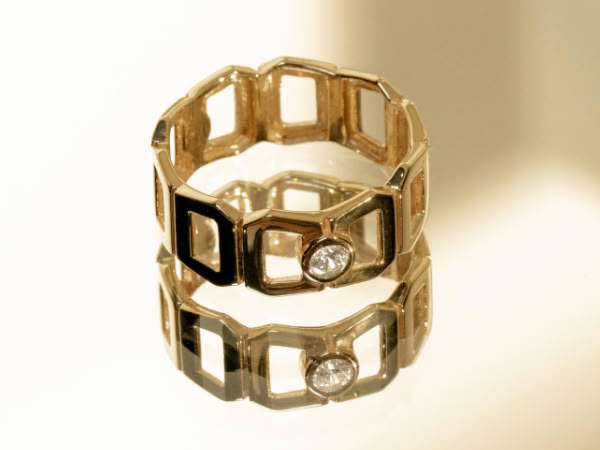
Ethical and eco-responsible: recycled gold for your jewelry
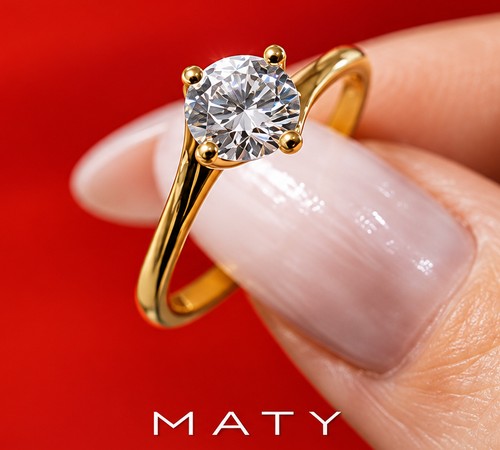
How can you tell if a ring is made of gold?